
REVIEW · MUSEUMS
Atomic Museum Admission Ticket
Atomic history hits different when it is in your hands. This Las Vegas visit pairs mobile ticket convenience with museum-grade storytelling about the Nevada Test Site and the nation’s nuclear weapons program, plus pop culture items that remind you the atomic age seeped into everyday life. I especially like how the exhibits translate big, complicated subjects into clear museum moments, and how you can control your pace. One thing to consider: it covers the whole atomic era (not just bombs), so if you want a short, one-topic hit, you may wish you had planned a tighter route.
Plan your timing and it will feel easy. The museum runs 9:00 AM to 5:00 PM every day, and the visit typically lands around 1 to 2 hours. You get a mix of hands-on learning, text-heavy placards, and at least one video stop, depending on what you choose to prioritize.
If you are staying near the Strip, this is a smart change of pace. It feels like a real museum, not a quick attraction, and it has that slightly eerie atmosphere people associate with the subject—without trying to be horror-themed.
In This Review
- Key Points You Should Know Before You Go
- Atomic History, Right Off the Vegas Strip
- What You Get for the $29 Ticket (and Why It Matters)
- How Long to Plan: 1 to 2 Hours That Fits Real Schedules
- Entering the Atomic Museum: Your Mission-First Start
- Inside the Exhibits: From WWII Atomic Work to the Nevada Test Story
- The Cryptography and Science Sections That Catch People Off Guard
- Video Stops and Close-Up Moments: Where It Feels Real
- Pop Culture Paraphernalia: When the Atomic Age Followed Us Home
- Self-Guided vs Headphones: Pick the Right Pace
- Practical Tips for a Smooth Visit
- Who Should Book This, and Who Might Prefer Another Plan
- Should You Book the Atomic Museum Admission Ticket?
- FAQ
- How much is the Atomic Museum admission ticket?
- How long does the Atomic Museum visit take?
- Is this ticket mobile?
- What are the Atomic Museum opening hours?
- Is there a guided option or is it self-guided?
- Where is the museum located and how do I get there?
- Are service animals allowed?
- When should I book?
- Can I cancel or change my ticket?
- What is included with admission?
Key Points You Should Know Before You Go
- $29 mobile ticket makes planning simple, and it is a notable value versus on-site pricing
- Nevada Test Site mission shows how the museum preserves history and educates the public
- You can go at your pace with self-guided exploring, plus an optional guided tour with headphones
- Expect more than bombs: WWII context, Manhattan Project, rockets, cryptography, and test sites
- Video and close-up exhibits help turn facts into something you can actually picture
- Good staff energy: friendly, helpful staff and strong docent-style explanations show up in the experience
One more to line up against this Las Vegas booking:




Atomic History, Right Off the Vegas Strip
Las Vegas is loud. So I like having at least one outing that goes quiet on purpose. The Atomic Museum gives you that straight-up contrast: a focused, museum-style walk through the Nevada Test Site story, the wider nuclear weapons program, and the science and decision-making around it.
What makes it compelling is the way it frames atomic development as a real national effort—science, politics, and secrecy all tangled together. You are not just seeing an isolated chapter. You are seeing how the United States built, tested, and justified the technology, and how that era ended up leaving traces that still show up in modern culture.
What You Get for the $29 Ticket (and Why It Matters)
The admission price is $29.00 per person. For a Vegas day, that is not pocket change, but it is also not a gamble. Here is why it feels like good value: you are buying access to a museum that connects multiple angles—history, science, and even pop culture artifacts—so one entry ticket can cover a lot of learning per hour.
There is also a practical money note. One clear tip from the experience: tickets bought day-of can cost more, and guided touring can be more expensive than the self-guided option. If you know you want to go, pre-paying is the smart move.
How Long to Plan: 1 to 2 Hours That Fits Real Schedules
This visit runs about 1 to 2 hours. That range is honest and useful, because you can shape it around your style.
If you are a fast reader, you can likely get through most exhibits in about an hour, especially if you focus on the big themes. If you like taking your time—reading placards, returning to sections for details, and slowing down for the video stop—two hours feels comfortable.
I like planning it as a half-day add-on rather than a must-do that devours your whole day. It pairs well with evenings on the Strip because you can finish, then wander back into lights and food.
One more to line up against this Las Vegas booking:
- Ticket for ARTE Museum Las Vegas★ 5.0 · 2,106 reviews
- Las Vegas Mob Museum Admission Ticket★ 4.5 · 1,295 reviews
- Madame Tussauds Wax Museum Las Vegas★ 4.4 · 601 reviews
- Titanic: The Artifact Exhibition at the Luxor Hotel and Casino★ 4.5 · 350 reviews
- Las Vegas: Titanic Artifact Exhibition at the Luxor Hotel★ 4.5 · 280 reviews
- Paradox Museum in Las Vegas: Exit Reality, Enter Fun Illusions★ 5.0 · 180 reviews
Entering the Atomic Museum: Your Mission-First Start
The museum experience begins with the mission and context. The Nevada Test Site Historical Foundation is behind the work of preserving and sharing the Nevada Test Site history and the nation’s nuclear weapons program. The museum you are visiting is the National Atomic Testing Museum, operating as a private National Museum with a Congressional charge to preserve and educate.
Why that matters for you: it sets expectations. You are not just wandering through old photos and objects. You are guided toward understanding what the museum is trying to do—make a hard topic accessible and teach you how the program affected the country, including what it meant scientifically and politically.
This approach helps the rest of the exhibits land with more meaning, because you understand what you are looking at and why it exists.
Inside the Exhibits: From WWII Atomic Work to the Nevada Test Story

This is the core of the visit, and it is where the museum earns its reputation.
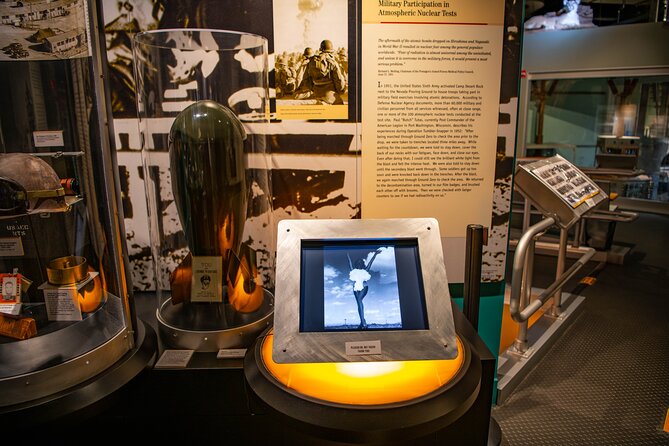
You will see sections that connect the atomic development era across time, including a portion focused on the United States’ atomic bomb development during WWII and the broader Manhattan Project context. That matters because the “atomic age” can feel like a single event if you only remember headlines. Here, you get the lead-up and the work behind the scenes.
The museum also covers the Nevada testing story in a way that is not just historical summary. It gives you a sense of what testing meant as a process—what was done, what needed to be learned, and how it fit into the bigger nuclear program. There are also exhibit areas that point you toward the scientific side of the subject, not only the political decisions.
You can expect to encounter themes like:
- Test sites and what they were used for
- The science behind what was being developed
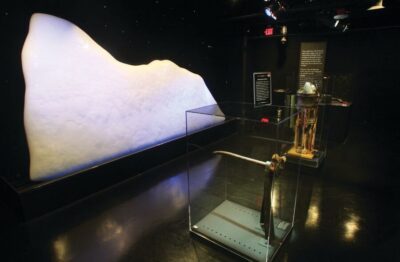
- Technology examples that include rocket engines
- A focus on both events and the practical mechanics of how development progressed
If you enjoy linking history to how things actually work, this portion will feel like a lot of payoff.
The Cryptography and Science Sections That Catch People Off Guard
One of the most praised parts of the museum is the cryptographic material. That surprises a lot of people because the atomic story often gets framed as pure physics and politics. Here, encryption and codes show up as part of how information was controlled and shared.
What I like about this kind of exhibit: it adds a human, systems-level layer. Nuclear weapons development is not only about what could be built. It is also about what people could say, what they could record, and how communications were handled—especially in a climate of secrecy.
There is also a broader science tone across the museum, including how the program’s technical side connected to real-world engineering. That combination of “how decisions happened” and “how the work functioned” makes the experience feel more than educational wallpaper.
Video Stops and Close-Up Moments: Where It Feels Real
You should plan on at least one video presentation as part of your visit flow. Video helps in this topic because it gives pace and structure when the placards get detailed.
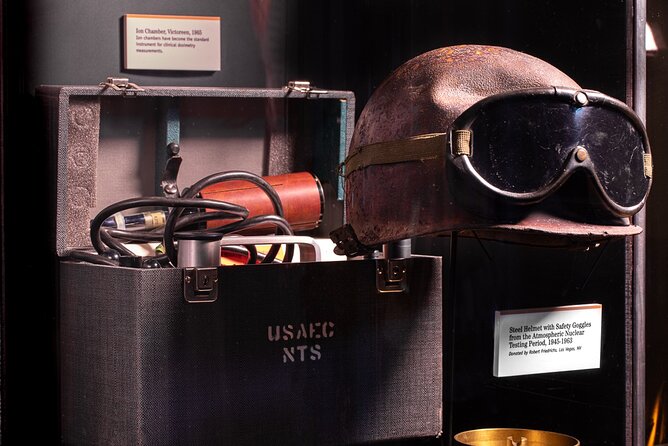
The museum also benefits from close-up, artifact-level presentation. You are encouraged to look carefully at photographs, descriptions, and materials tied to the era. One of the best compliments people give is that the exhibits feel well crafted, with details behind photos and objects that make it easier to understand what you are seeing.
And yes, there is an eerie feeling in the room for some people. Not because the museum is trying to scare you. More because the subject is inherently heavy, and the setting stays serious.
Pop Culture Paraphernalia: When the Atomic Age Followed Us Home
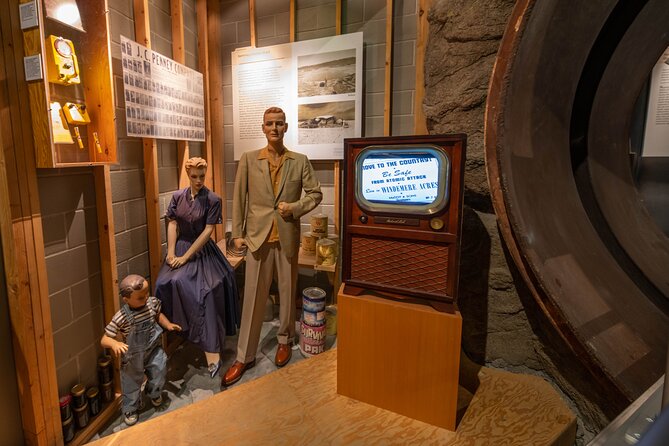
A neat twist in this museum is the inclusion of pop culture paraphernalia tied to the atomic era. That is not a distraction from the main story. It is actually a useful lens.
You get to see how atomic development didn’t only affect labs and policy rooms. It changed how people talked about the future, marketed ideas, and absorbed the era into everyday culture. It is the kind of exhibit that broadens your understanding of impact beyond government and science.
If you are the type of person who likes history links that explain why the past is still visible today, this section will click.
Self-Guided vs Headphones: Pick the Right Pace
You have a choice in how you experience the museum.
- Self-guided browsing works well if you want to set your own tempo, reread placards, and take photos.
- There is also an option for a guided tour with headphones, which can add clarity if you prefer explanations as you move room to room.
Here is my practical advice: if you love reading and you want control, self-guided is great. If you tend to miss context until someone points it out, headphones can be worth it.
Either way, plan for a pause or two. The museum is not a sprint.
Practical Tips for a Smooth Visit
A few small choices can make the difference between a quick walk and a meaningful visit.
Go when your brain is fresh. The museum is open 9:00 AM to 5:00 PM daily, so pick a time that is not right after a long night out.
Use your phone ticket at the door. This experience uses a mobile ticket, so keep your confirmation handy and pull it up before you reach the entrance.
Bring comfortable shoes. You are walking through multiple themed sections, and the layout is designed for reading and looking up close, not just speed.
Budget 90 minutes as a baseline. You can always keep going closer to 2 hours if you are into the details.
If you want help, ask. Staff and docent-style experts can add extra context, especially for sections like cryptography and the WWII/Manhattan Project framing.
About changes and refunds: this ticket is non-refundable and cannot be changed. If your plans are uncertain, wait to book until you are ready to lock it in.
Who Should Book This, and Who Might Prefer Another Plan
This museum works best for people who like history that includes science and policy, not just one-liners.
Book it if you:
- Want a break from casino-only Vegas
- Enjoy WWII and US science context
- Like technical details, including unexpected topics like cryptography
- Prefer museums where you can control your pace
You may want to think twice if you:
- Want only a quick, narrow look at atomic bombs without the broader program
- Feel impatient with text-heavy exhibit placards
- Expect something that feels modern in style rather than museum-classic
That said, even when people describe the experience as not perfect, the consistent message is that it is informative and worth the stop if you are curious.
Should You Book the Atomic Museum Admission Ticket?
I think this is a strong add-on if you want an honest, educational break in Las Vegas. For $29, you get access to a museum built to preserve and interpret the Nevada Test Site story, with themes that stretch across WWII development, testing, technology, cryptography, and pop culture. The optional guided tour with headphones also gives you a way to add context if you like that extra layer.
If your day is already packed, treat it like a smart “reset” moment. One hour can work. Two hours feels ideal if you plan to read and take your time.
If you want, tell me your travel dates and what you like most (history, science, WWII, or pop culture). I can suggest a good time slot and what to prioritize inside the museum so you leave satisfied, not rushed.
FAQ
How much is the Atomic Museum admission ticket?
The ticket price is $29.00 per person.
How long does the Atomic Museum visit take?
The experience is listed as about 1 to 2 hours.
Is this ticket mobile?
Yes. The admission ticket is delivered as a mobile ticket.
What are the Atomic Museum opening hours?
The museum is open Monday through Sunday from 9:00 AM to 5:00 PM.
Is there a guided option or is it self-guided?
You can browse on your own, and there is also an option for a guided tour with headphones.
Where is the museum located and how do I get there?
The Atomic Museum is in Las Vegas, and it is near public transportation.
Are service animals allowed?
Yes, service animals are allowed.
When should I book?
On average, this is booked about 10 days in advance.
Can I cancel or change my ticket?
This experience is non-refundable and cannot be changed for any reason.
What is included with admission?
Admission to the Atomic Museum is included, and you will have access to the exhibits focused on the Nevada Test Site and the nation’s nuclear testing program.
More Museums in Las Vegas
- Ticket for ARTE Museum Las Vegas
★ 5.0 · 2,106 reviews - Las Vegas Mob Museum Admission Ticket
★ 4.5 · 1,295 reviews - Madame Tussauds Wax Museum Las Vegas
★ 4.4 · 601 reviews - Titanic: The Artifact Exhibition at the Luxor Hotel and Casino
★ 4.5 · 350 reviews - Las Vegas: Titanic Artifact Exhibition at the Luxor Hotel
★ 4.5 · 280 reviews - Paradox Museum in Las Vegas: Exit Reality, Enter Fun Illusions
★ 5.0 · 180 reviews
More Tickets in Las Vegas
- Las Vegas Strip: The High Roller at The LINQ Ticket
★ 4.6 · 4,266 reviews - High Roller Wheel Admission Ticket at The LINQ
★ 4.5 · 3,379 reviews - Ticket for ARTE Museum Las Vegas
★ 5.0 · 2,106 reviews - Las Vegas: STRAT Tower Observation Deck Ticket
★ 4.5 · 1,469 reviews - Las Vegas Mob Museum Admission Ticket
★ 4.5 · 1,295 reviews - Las Vegas: High Roller Entry Ticket with In-Cabin Open Bar
★ 4.6 · 1,278 reviews
More Tour Reviews in Las Vegas
- Grand Canyon West, Hoover Dam Stop and Optional Lunch and Skywalk
★ 5.0 · 19,535 reviews - Grand Canyon West, Hoover Dam Stop, Breakfast, Lunch & Skywalk
★ 5.0 · 12,194 reviews - Half-Day Mojave Desert ATV Tour from Las Vegas
★ 5.0 · 7,350 reviews - Grand Canyon West Bus Tour with Hoover Dam and Optional Skywalk
★ 4.0 · 7,224 reviews - Ultimate VIP Hoover Dam Tour from Las Vegas with Lunch
★ 5.0 · 6,782 reviews - Lower Antelope Canyon and Horseshoe Bend Day Tour with Lunch
★ 5.0 · 6,764 reviews
Fresh off the Strip: new Las Vegas reviews






Museums, compared.
 ★ 5.0Ticket for ARTE Museum Las VegasFrom $502,106 reviews
 ★ 4.5Las Vegas Mob Museum Admission TicketFrom $341,295 reviews
 ★ 4.4Madame Tussauds Wax Museum Las VegasFrom $29601 reviews
 ★ 4.5Titanic: The Artifact Exhibition at the Luxor Hotel and CasinoFrom $36350 reviews
 ★ 4.5Titanic Artifact Exhibition at the Luxor HotelFrom $36280 reviews
 ★ 5.0Paradox Museum in Las Vegas: Exit Reality, Enter Fun IllusionsFrom $33180 reviews
 ★ 4.7Arte Museum Las Vegas Immersive Art ExhibitionFrom $50162 reviews
 ★ 4.0Admission to The Neon Museum in Las VegasFrom $25128 reviews
Browse the lists this tour appears in