

REVIEW · VALLEY OF FIRE TOURS
Lake Mead & Valley of Fire State Park Self-Guided Audio Tour
Your drive becomes a storybook road trip.
This Lake Mead and Valley of Fire self-guided audio tour turns a solo, no-pressure day into a guided route with location-triggered narration—so you know what you’re seeing and why it matters.
I especially love the hands-free setup: once you start the audio, it plays automatically based on where you are. I also like the value—it’s priced per group (up to 4 people), so the cost drops fast if you’ve got a car full.
The main drawback to plan around is tech-sync and phone handling: the audio depends on staying on the route and following the speed cues, and the app has limited support with some in-car systems (notably Android Auto).
In This Review
- Key things I’d zero in on before you go
- Lake Mead to Valley of Fire: why this works so well as a self-drive
- Price and what you actually get for $15 per group
- Getting the audio to behave: the phone setup that matters
- Planning the day: timing, distance, and when to hike
- Stop by stop: what you’ll actually see (and why the stories matter)
- Start at Lake Mead Visitor Center: setting the context fast
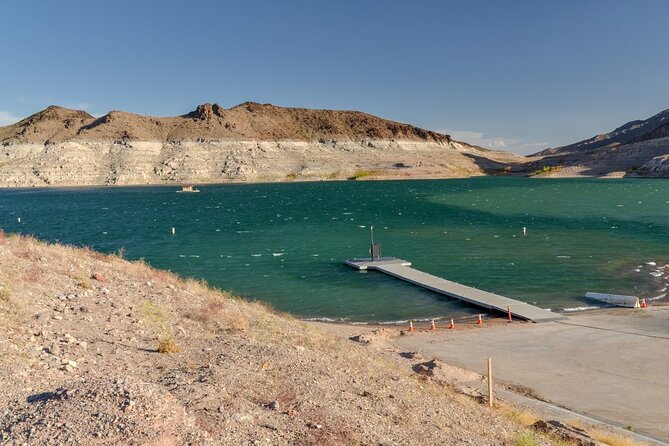
- Lake Mead Marina: floating docks and a moving location
- Hatchery Saddle Point: a defunct fish hatchery with a purpose
- Scenic Overlook: panoramic payoff with an easy stop
- Owl Canyon Trailhead: canyons that reappear
- Wetlands Trail: birdwatching with a checklist feel
- Las Vegas Wash: the channel that moves water back
- Anniversary Narrows Trail: an easy slot-canyon walk
- Northshore Summit Trail: short, steep, and worth it
- Redstone Dune Trail: the quick loop with color and texture
- Atlatl Rock: petroglyphs and a tool from ancient Pueblo life
- Fire Cave / Windstone Arch: red rocks and photo-friendly geometry
- Pastel (Pink) Canyon Trail: a smaller walk for color fans
- Fire Wave Trailhead: the ocean-wave illusion
- Practical value you only notice after you try it
- Who this tour fits best
- When you might want to skip it
- Should you book Lake Mead & Valley of Fire audio?
- FAQ
- How much does the Lake Mead and Valley of Fire audio tour cost?
- How long is the tour?
- Where does the tour start and end?
- Does the tour work offline?
- Can I start the tour anytime during the day?
- Are tickets or park admissions included?
- What device setup does the audio tour require?
- Does it work with Android Auto?
- What if I need to cancel?
Key things I’d zero in on before you go
- Location-triggered audio that starts and stops as you reach each stop
- Offline maps so you’re not stuck hunting a signal in the desert
- Birdwatching focus at the Wetlands Trail, with specific species to look for
- Short hikes that fit a 2–3 hour drive-and-walk plan
- Time-flexible pacing: you can pause for photos or skip stops you don’t want
- Lifetime access with no expiry, so you can repeat later on a return trip
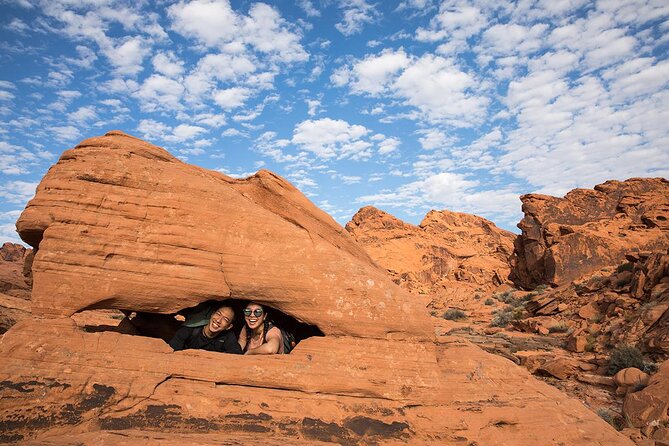
More of the flames at Valley of Fire




Lake Mead to Valley of Fire: why this works so well as a self-drive
I like tours where you can slow down when the view grabs you. This one is built for that. You’re in control—what time you start, which stops you linger on, and when you hop out for a short trail.
The audio is the real engine. It’s not just facts dumped at you while you’re moving. The stories are organized by location, so the narration lines up with the next viewpoint, canyon, or rock feature you’re actually looking at. That makes the drive feel purposeful, without turning the day into a rushed checklist.
It also helps that the route is long enough to feel like a proper road trip—about 68+ miles—but the on-foot pieces are mostly short. You get variety: marina docks, lake history, exposed canyons, then the red-rock drama of Valley of Fire.
One practical plus: you’re paying for one purchase per car, not per person. For a group of two to four, this can be a very cost-effective way to do a guided-style day without paying for a bus or a guide.
Price and what you actually get for $15 per group
At $15 per group (up to 4), the math is simple: your group’s total cost is low enough that you can justify it even if you only use part of the day.
What makes the price feel fair is what’s included:
- Offline maps for navigation when cell service fades
- Location-based audio that reduces the need to constantly check your phone
- A route that’s built around doable stops (most are short walks or viewpoints)
- Lifetime access with no expiry, so you can replay the same drive on a future trip
What’s not included is any extra entry you may need for parks or facilities. The tour notes mark each audio stop as Admission Ticket Free, but the overall parks can still have day rules. The safest mindset is: plan the audio stops as free to access, but be ready to handle any on-site requirements if they come up.
Getting the audio to behave: the phone setup that matters
This tour runs on your phone plus the Action’s Tour Guide App. After booking, you’ll get an email and text with setup instructions and a password. The big step is downloading the tour while you’re on strong Wi‑Fi or cellular, because it works offline after that.
On-site, there’s no person greeting you. You’ll:
- Open the app at the start point
- Launch the correct tour version for your planned direction
- Start listening and follow the route cues
Audio sync tip (important): if the app is telling you speed cues, stick close to them. If you go too fast, some stories can get cut off because the system thinks you’ve reached the next audio point already.
If you’re planning to play sound through your car: connect your phone using Bluetooth, USB, or AUX. The tour also notes compatibility with Apple CarPlay, and that Android Auto support isn’t available yet—so if you rely on Android Auto, expect the phone to output sound instead.
For the walking bits, headphones can help if your phone is in a cup holder and you’re trying to keep ears on the narration.
One more to line up against this Las Vegas booking:
- Red Rock Canyon Self-Guided Electric Bike Tour★ 5.0 · 783 reviews
- Las Vegas: Guided Las Vegas Desert ATV Tour★ 4.6 · 677 reviews
- Las Vegas Downtown & Fremont Street – Guided Walking Tour★ 5.0 · 636 reviews
- Las Vegas: Valley of Fire Guided Hike with Drinks and Snacks★ 4.9 · 548 reviews
- Las Vegas: Grand Canyon National Park South Rim Guided Tour★ 4.4 · 531 reviews
- Small Group Guided Colorado River & Emerald Cave Kayak Tour★ 5.0 · 500 reviews
Planning the day: timing, distance, and when to hike

The tour is designed for about 2 to 3 hours total, and it moves as a driving route with small stops. That said, your actual time will depend on two things:
- How often you pause for photos
- How long you linger on the trails
The itinerary includes several hikes that are short but meaningful:
- a 1.5-mile wetlands trail
- an easy 3-mile slot-canyon style hike
- a short but steep viewpoint climb
- two quick loops (around 30 minutes each)
A good strategy is to treat the trails as optional “value add” rather than chores. If you’re traveling with mixed hiking comfort, you can do most stops as pull-offs and overlooks, then choose one or two hikes for the day.
Also, since this is an outdoor route, bring the usual desert basics: water, sun protection, and shoes that handle uneven ground.
Stop by stop: what you’ll actually see (and why the stories matter)
Start at Lake Mead Visitor Center: setting the context fast
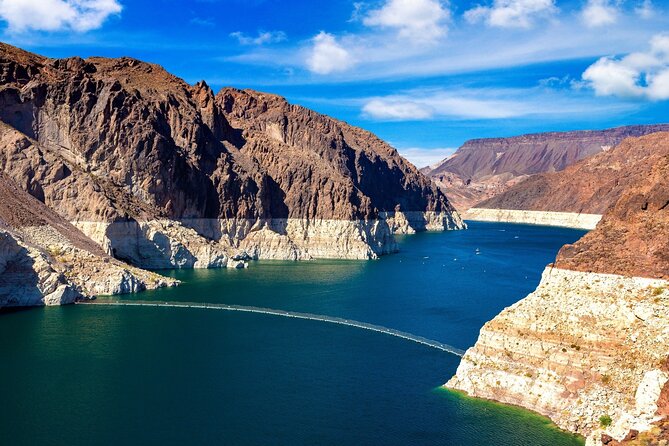
Your route begins at the Lake Mead Visitor Center near Lake Mead Marina. This is where the tour gets you oriented—so when you reach the docks, the canyons, and the exposed features, you understand the big theme right away: water levels, human changes, and what gets revealed when the lake drops.
This kind of framing is what makes self-guided audio feel like more than background noise.
Lake Mead Marina: floating docks and a moving location
At the Lake Mead Marina, the story focuses on how the marina setup didn’t stay fixed in one place. You’ll see the collection of platforms and docks, then hear why it exists where it does and how things can shift over time.
If you like practical history—how infrastructure responds to changing conditions—this stop sets the tone.
Hatchery Saddle Point: a defunct fish hatchery with a purpose
Next is Hatchery Saddle Point, named for a fish hatchery built in 1969 to grow species like striped bass and other trout for sport. Even if you don’t know much about lake ecology, you’ll get the human side: why hatcheries were built, and what sport fishing meant in that era.
If you’re a nature lover, this is a good bridge between the lake’s natural life and the human influence on it.
Scenic Overlook: panoramic payoff with an easy stop
At the Scenic Overlook, you’re there for one thing: views. From here you can see the Boulder Basin, Muddy Mountains, and Callville Mesa.
This is an easy win stop. Even if you skip the longer walks later, this viewpoint alone can justify the drive because it helps you map the region in your head.
Owl Canyon Trailhead: canyons that reappear
When the lake level drops, hidden terrain gets exposed—and Owl Canyon is a perfect example. This stop tells you what was submerged before and what now shows up again for hikers.
It’s a cool reminder that in desert places, the scenery isn’t static. It changes with time, and the audio helps you notice what you’d otherwise miss.
Wetlands Trail: birdwatching with a checklist feel
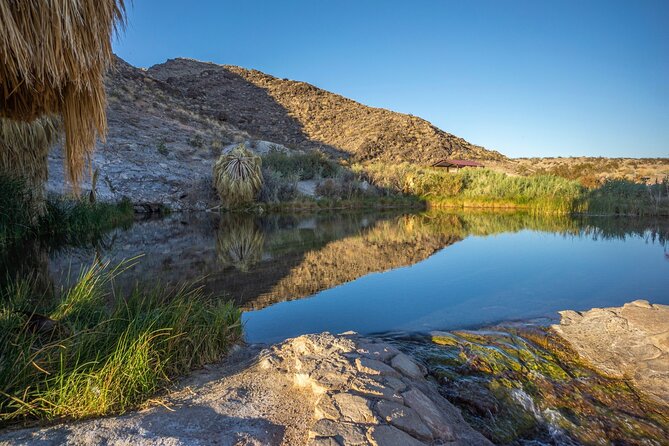
The Wetlands Trail is only about 1.5 miles and takes under an hour if you keep a steady pace. The best reason to go is birdwatching.
The audio calls out species you might spot, including the Black-throated Sparrow, House finch, and even a chance at a Great Blue Heron. You’ll also get a cue that dragonflies often show up in this corridor.
Even if you don’t spot every bird, I like stops like this because the story gives you something active to look for while you walk.
Las Vegas Wash: the channel that moves water back
At Las Vegas Wash, you’re not chasing a scenic overlook—you’re learning how excess water from the Las Vegas Valley heads back toward Lake Mead.
This is a “quiet mind” stop. If you enjoy how landscapes work—where water goes, what channels do—this part adds real context to the day.
Anniversary Narrows Trail: an easy slot-canyon walk
Then comes Anniversary Trails and the Anniversary Narrows Trail. This is an easy 3-mile hike through a slot canyon, typically around 1.5 hours.
This is one of your main on-foot commitments. If you want a desert hike with satisfying shapes and a sense of walking into the earth, plan time for this one.
Northshore Summit Trail: short, steep, and worth it
Northshore Summit Trail is short but steep. The reward is panoramic views of the Muddy Mountains, Bowl of Fire, and Bitter Spring Valley.
This is the kind of hike I like when you don’t want to be out all day but you still want a big view. It’s less about long distance and more about effort-to-reward.
Redstone Dune Trail: the quick loop with color and texture
The Redstone Dune Trail is an easy loop about half a mile, often under 30 minutes.
If you’re trying to keep the whole route near the 2–3 hour target, this stop is a friendly way to get out, stretch, and enjoy the sand-and-rock texture without a long time investment.
Atlatl Rock: petroglyphs and a tool from ancient Pueblo life
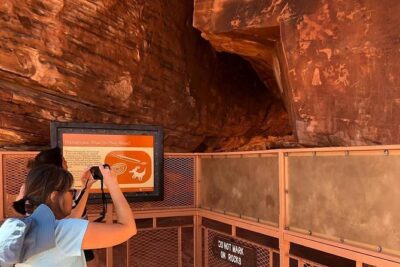
At Atlatl Rock, the audio explains what an atlatl is—a throwing tool used by Pueblo tribes to launch darts or spears. You’ll see petroglyphs on the rock tied to that story.
This stop adds a cultural layer to the desert scenery. Even if you’re not a stone-art expert, you’ll come away with a better sense of how people used tools and left marks on the land.
Fire Cave / Windstone Arch: red rocks and photo-friendly geometry
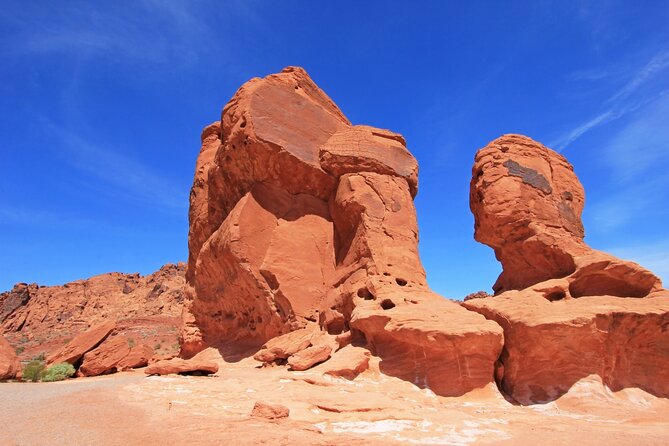
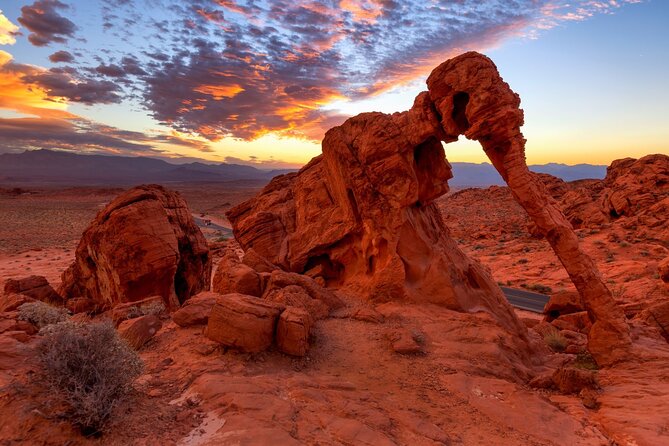
Next is Fire Cave/Windstone Arch. The audio tells you how Fire Cave was shaped by a mini wind tunnel carved into sandstone, and how Windstone Arch sat at the mouth.
The reason many people pause here is simple: the red tones plus the arch shape can look incredible in photographs. If the light is right, this may be one of the most visually striking stops of the whole drive.
Pastel (Pink) Canyon Trail: a smaller walk for color fans
At Pastel (Pink) Canyon Trail, you get a short mile-long hike that’s described as a quieter, special find inside Valley of Fire.
This is a good stop when you want one more desert walk, but you still want to keep the day efficient. If you’re balancing hiking with driving, it fits nicely.
Fire Wave Trailhead: the ocean-wave illusion
Finally in Valley of Fire, you’ll reach Fire Wave Trail, a 1.5-mile moderate hike that takes about an hour. The key attraction is a sandstone formation that looks like a frozen ocean wave.
This is the stop where the audio helps you slow down. Once you’re there, you’ll likely spend extra time noticing curves and layers, because the shape is the whole point.
Practical value you only notice after you try it
A few things make this tour feel worth it beyond the fact that it’s “self-guided.”
First, the narration is organized so you’re rarely guessing what to pay attention to. That cuts down on the usual self-guided frustration: pull in, stand around, wonder what’s the point, then rush on.
Second, the stops are designed as a mix of:
- lookout moments (quick, easy, high reward)
- walk moments (short trails that add real texture to the day)
- context moments (like the hatchery and Las Vegas Wash)
That mix is what keeps the route feeling like a complete experience rather than just a string of pull-offs.
Third, I like that the audio is built for repeating. With lifetime access, you can save the same drive for later when you want a different pace or better light.
Who this tour fits best
This is a great match if you:
- want a self-driven route without a guide pacing you
- like nature stops, short hikes, and photo breaks
- enjoy learning how a place works—water levels, ecology, and human impact
- want offline audio so your day doesn’t depend on cell service
It’s also a good choice for a group because it’s priced per car. Two people in one car is already good value; four makes it even better.
When you might want to skip it
You may want to think twice if:
- you strongly rely on Android Auto for audio control
- you don’t want to manage a phone for setup and navigation cues
- you dislike any form of speed-sync requirement while driving
If those are deal-breakers for you, you’ll probably prefer a traditional guided experience or a route you can follow with printed maps and your own timing.
Should you book Lake Mead & Valley of Fire audio?
Yes, if you want an easy-to-manage desert day that combines scenic viewpoints with short hikes and audio stories that help you see more than the obvious. The offline aspect and per-car pricing make it a practical buy.
I’d book it particularly if you’re aiming for variety: lake history near Lake Mead, then Valley of Fire’s red-rock features, petroglyph context at Atlatl Rock, and a couple of hikes that are short enough to keep you flexible.
If you know you’ll struggle with phone setup, audio syncing, or in-car integration, then test your comfort level before paying. Otherwise, this route is an efficient way to turn a drive into something much more satisfying.
FAQ
How much does the Lake Mead and Valley of Fire audio tour cost?
It costs $15.00 per group, up to 4 people.
How long is the tour?
The tour takes about 2 to 3 hours to complete.
Where does the tour start and end?
It starts at the Lake Mead Visitor Center (10 Lakeshore Rd, Boulder City, NV 89005) and ends at Fire Cove Road (Fire Cove Rd, Nevada 89040).
Does the tour work offline?
Yes. The tour includes offline maps and works without cellular or Wi‑Fi after you download it on-site.
Can I start the tour anytime during the day?
Yes. The experience is designed so you can start and pause at your own pace once you’re at the starting point.
Are tickets or park admissions included?
No. Attraction passes, entry tickets, and reservations are not included. The tour notes list Admission Ticket Free for the listed stops.
What device setup does the audio tour require?
After booking, you download the Action’s Tour Guide App and enter the password sent by email and text. The tour should be downloaded while you have strong Wi‑Fi or cellular.
Does it work with Android Auto?
The information provided says the app does not support Android Auto. You can connect your phone to your car stereo using Bluetooth, USB, or AUX, or use Apple CarPlay.
What if I need to cancel?
You can cancel for free up to 24 hours in advance for a full refund. If you cancel less than 24 hours before the start time, it’s not refunded.
More Tours in Las Vegas
- Half-Day Mojave Desert ATV Tour from Las Vegas
★ 5.0 · 7,350 reviews - Grand Canyon West Bus Tour with Hoover Dam and Optional Skywalk
★ 4.0 · 7,224 reviews - Ultimate VIP Hoover Dam Tour from Las Vegas with Lunch
★ 5.0 · 6,782 reviews - Lower Antelope Canyon and Horseshoe Bend Day Tour with Lunch
★ 5.0 · 6,764 reviews - Las Vegas Helicopter Night Strip Flight Tour with Optional Dinner
★ 4.5 · 5,693 reviews - Half-Day Emerald Cave Kayak Tour with Optional Hotel Pickup
★ 5.0 · 4,978 reviews
More Tour Reviews in Las Vegas
- Grand Canyon West, Hoover Dam Stop and Optional Lunch and Skywalk
★ 5.0 · 19,535 reviews - Grand Canyon West, Hoover Dam Stop, Breakfast, Lunch & Skywalk
★ 5.0 · 12,194 reviews - Half-Day Mojave Desert ATV Tour from Las Vegas
★ 5.0 · 7,350 reviews - Grand Canyon West Bus Tour with Hoover Dam and Optional Skywalk
★ 4.0 · 7,224 reviews - Ultimate VIP Hoover Dam Tour from Las Vegas with Lunch
★ 5.0 · 6,782 reviews - Lower Antelope Canyon and Horseshoe Bend Day Tour with Lunch
★ 5.0 · 6,764 reviews
More of the Valley of Fire
- Small Group: Valley of Fire Half Day Tour from Las Vegas
★ 5.0 · 2,130 reviews - Valley of Fire Guided Hike from Las Vegas
★ 5.0 · 1,611 reviews - Valley of Fire and Red Rock Canyon Day Tour from Las Vegas
★ 5.0 · 658 reviews - From Las Vegas: Valley of Fire State Park Tour
★ 4.8 · 623 reviews - Las Vegas: Valley of Fire Guided Hike with Drinks and Snacks
★ 4.9 · 548 reviews - From Las Vegas: Valley of Fire State Park Guided Day Tour
★ 4.8 · 468 reviews
Fresh off the Strip: new Las Vegas reviews






Valley of Fire Tours, compared.
 ★ 5.0Small Group: Valley of Fire Half Day Tour from Las VegasFrom $842,130 reviews
 ★ 5.0Valley of Fire Guided Hike from Las VegasFrom $1281,611 reviews
 ★ 5.0Valley of Fire and Red Rock Canyon Day Tour from Las VegasFrom $148658 reviews
 ★ 4.8From Las Vegas: Valley of Fire State Park TourFrom $109623 reviews
 ★ 4.9Valley of Fire Guided Hike with Drinks and SnacksFrom $129548 reviews
 ★ 4.8From Las Vegas: Valley of Fire State Park Guided Day TourFrom $99468 reviews
 ★ 4.5Valley of Fire TourFrom $119423 reviews
 ★ 5.0Valley of Fire State Park Day Tour from Las VegasFrom $109317 reviews
Browse the lists this tour appears in