REVIEW · LAS VEGAS
Las Vegas: Discovering King Tut’s Tomb Exhibit at the Luxor
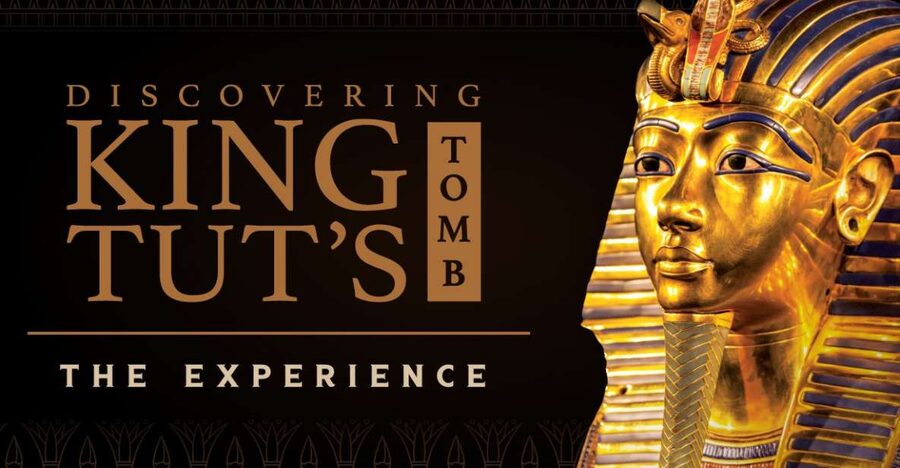
One of Las Vegas’s best history detours lives at the Luxor. I like how this experience turns a famous discovery into a guided story, and I especially love the look-and-touch feel of the ancient artifacts and replica treasures you get to see up close. One watch-out: it’s a virtual exhibit, so you’re not seeing the real tomb—still, the tradeoff is seeing a lot more clearly than you’d get from a typical museum stop.
If you want King Tut without the usual research rabbit hole, this is a clean way to connect the dots: Egypt’s afterlife beliefs, then the detective work behind the 1922 discovery. My other big plus is the Howard Carter angle—more than just names and dates, you get the feel of the excavation drama in a 3D recreated scene. The only drawback I’d flag is timing: with last admission at 7:00 pm, you’ll want to plan your day so you don’t arrive late and miss part of the exhibit.
In This Review
- Key Things That Make This King Tut Exhibit Worth Your Time
- King Tut Meets Las Vegas at the Luxor
- Price, Time, and What You Really Get for $40
- Part One: Tutankhamun’s Egypt and the Afterlife Beliefs
- Part Two: Following Howard Carter Into the 1922 Discovery
- Replicas That Let You Admire the Details Without Worry
- What to Look For as You Walk Through (So It Actually Clicks)
- Timing Your Visit: Open Hours and Last Admission
- Accessibility and Family Fit at the Luxor
- Who This King Tut Experience Is Best For
- Should You Book the Discovering King Tut’s Tomb Exhibit?
- FAQ
- What does the ticket include?
- How long is the experience valid?
- What are the opening hours and latest admission?
- How much does it cost?
- Are children allowed, and is there a free age?
- Is it wheelchair accessible, and can I get a refund if plans change?
Key Things That Make This King Tut Exhibit Worth Your Time
- Howard Carter’s hunt (1922): you follow the story behind one of history’s most famous archaeological finds.
- A 3D excavation-and-tomb recreation: you get to step inside a fully three-dimensional version of the site as it appeared at discovery time.
- Replica treasures made by expert craftsmen: you can admire the details without risking fragile originals.
- Two exhibition sections: you start with Tutankhamun’s Egypt and beliefs, then shift to the excavation journey.
- Strong artifact visuals: even brief comments about the experience highlight how impressive the statues and artifacts look.
Still deciding? See how a handful of Las Vegas favourites stack up:




King Tut Meets Las Vegas at the Luxor
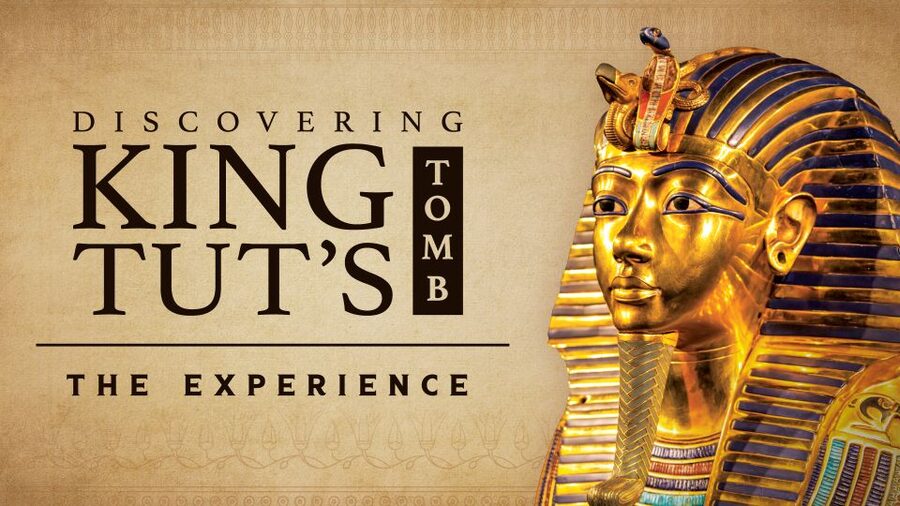
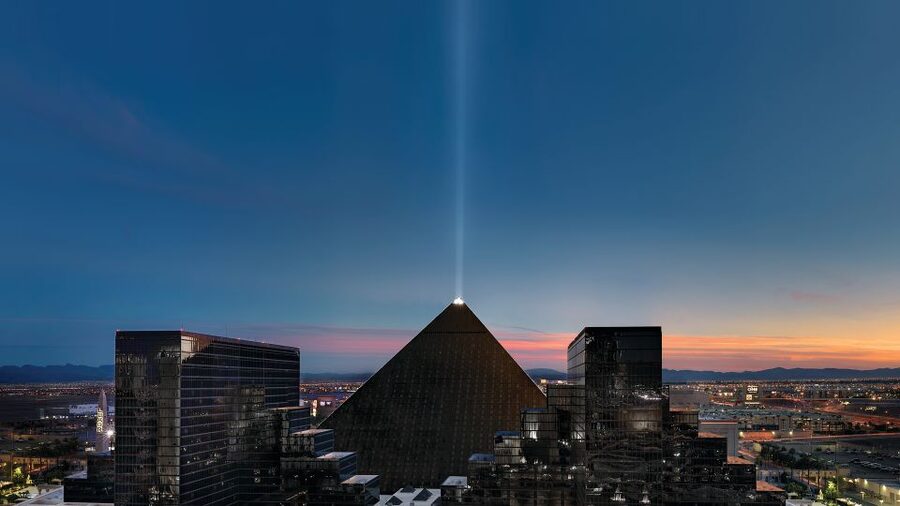
Las Vegas is great at doing spectacle. This time, the spectacle is historical. The Luxor’s Discovering King Tut’s Tomb experience is built around the famous tomb discovery and gives you a structured path through ancient Egypt—starting with who King Tut was, then moving into how archaeologists found the tomb and what they discovered.
You’re not just watching video screens. The exhibit uses a mix of media and physical objects, and the big payoff is the way it reconstructs the burial site and treasures so you can actually understand the scale and layout of what Howard Carter’s team uncovered. It’s the kind of place where your brain stops treating the story as trivia and starts treating it like an event.
And yes, the “why it matters” is baked in. The exhibit is framed around the 1922 moment—when Tutankhamun and his tomb became symbols of discovery—and then it hands you the context that usually takes multiple museum visits or a lot of reading.
Price, Time, and What You Really Get for $40
At $40 per person for a 1-day ticket, this is not the cheapest way to do a Las Vegas activity—but it also isn’t trying to compete with a budget museum. The value comes from what you get for that money: a full entry into the exhibit plus a guided, structured experience that covers both the ancient world and the archaeology behind the find.
Also, this is one of those tickets where you should be clear-eyed about the tradeoff. The exhibit uses replicas so you can enjoy the treasures without putting originals at risk. That choice keeps the experience more accessible and practical for visitors, but it does mean you’re not standing in front of the actual artifacts from the tomb.
One other planning point: the experience is non-refundable, so if your schedule is shaky, make sure you’re committing to that time window.
Part One: Tutankhamun’s Egypt and the Afterlife Beliefs
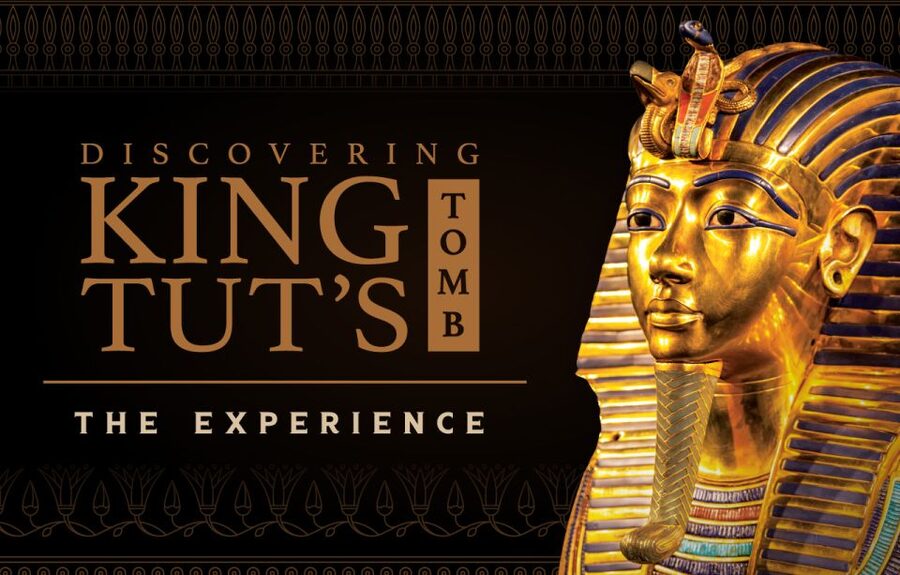
The exhibit is set up in two parts, and the first one does a smart job of giving you the “why” before the “wow.”
You travel back to the time of Tutankhamun and get a wealth of information about the broader culture of ancient Egypt. The focus isn’t just on the king himself. It’s on the way Egyptians thought about life, death, and especially the afterlife. That matters because King Tut’s tomb isn’t random. It’s part of a system of beliefs about what comes next.
Here’s what I like about this approach: if you’ve only ever heard a handful of facts about Tut, you leave with a clearer framework for interpreting what you’re seeing. Artifacts start to feel purposeful instead of decorative. You’re not just looking at objects—you’re learning what they were meant to represent in a world where the afterlife was a central idea.
This part also sets up the archaeology story that follows. When you transition to Howard Carter’s work, you’ll understand that the tomb discovery wasn’t just a lucky find. It was the outcome of long effort, careful attention, and the challenge of uncovering something lost.
- Grand Canyon West, Hoover Dam Stop and Optional Lunch and Skywalk★ 5.0 · 19,535 reviews
- Grand Canyon West, Hoover Dam Stop, Breakfast, Lunch & Skywalk★ 5.0 · 12,194 reviews
- Half-Day Mojave Desert ATV Tour from Las Vegas★ 5.0 · 7,350 reviews
- Grand Canyon West Bus Tour with Hoover Dam and Optional Skywalk★ 4.0 · 7,224 reviews
- Ultimate VIP Hoover Dam Tour from Las Vegas with Lunch★ 5.0 · 6,782 reviews
- Lower Antelope Canyon and Horseshoe Bend Day Tour with Lunch★ 5.0 · 6,764 reviews
Part Two: Following Howard Carter Into the 1922 Discovery
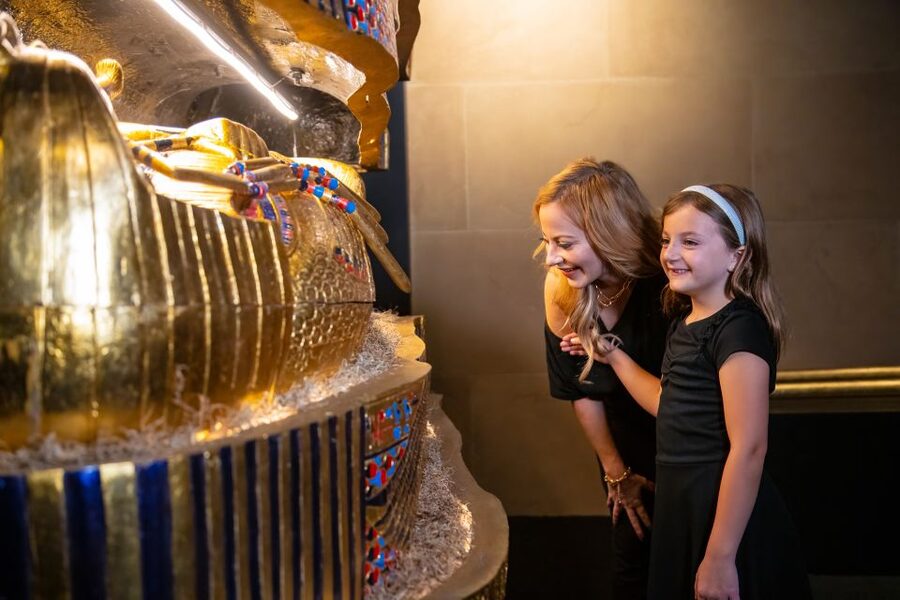
Then comes the second half, where the mood shifts from ancient Egypt’s beliefs to the modern drama of excavation.
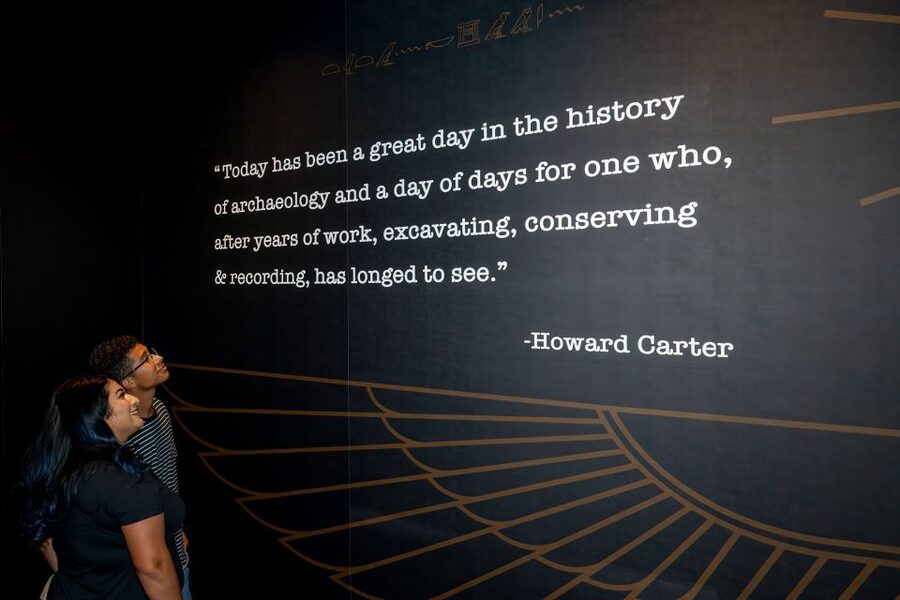
You follow Howard Carter as he worked to uncover the lost tomb of King Tutankhamun. This section is built around the challenges and triumphs of one of archaeology’s most significant discoveries, with the story timed around the 1922 discovery that turned Tut into a lasting symbol of what’s possible when you find the right clue.
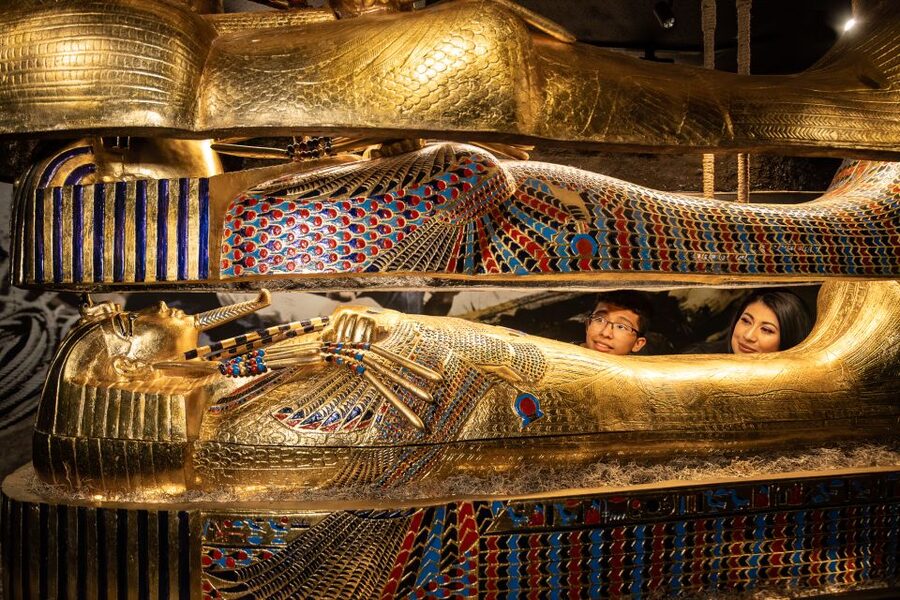
The standout here is the fully three-dimensional recreation of the excavation site, the legendary tomb, and its treasures—replicated in a way that reflects the moment of discovery. That means you’re not only told what happened. You get a sense of place and arrangement, which is huge for helping you “read” the tomb space.
One more reason this section lands: it’s not just the tomb as an object. You see it as an event—something witnessed by Carter and a small group at the time, not something vague and distant. The exhibit basically turns history’s best-known discovery into a story you can track start to finish.
Replicas That Let You Admire the Details Without Worry
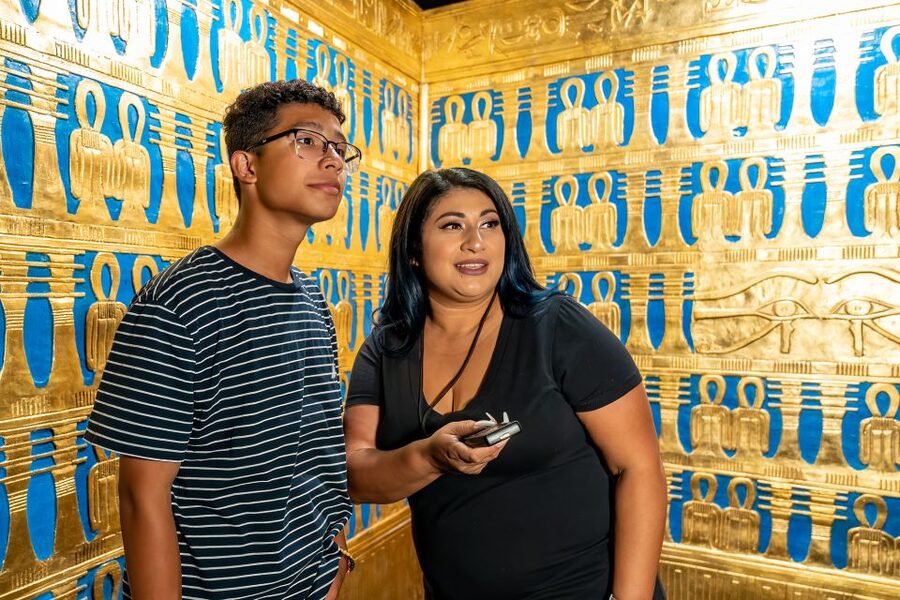
A lot of King Tut experiences hinge on the idea that you’ll see “treasures.” Here, that’s handled in a way that’s both practical and visitor-friendly.
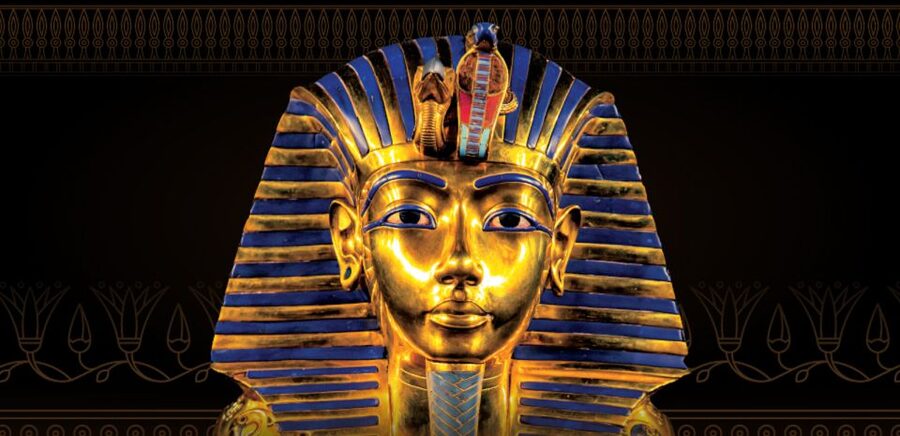
The exhibit explains that the replica treasures were made by expert Egyptian craftsmen in consultation with renowned Egyptologists. That’s important because replicas aren’t all created equal. You want accurate detail, not just a general “look.” In this case, the exhibit focuses on painstaking reproduction, so you can enjoy the craftsmanship and arrangement without damaging fragile originals.
This is where the experience feels like a good use of money. When something is fragile, museums often limit what you can experience. Replicas remove that barrier. You get a chance to admire the objects—especially the statues and artifacts—without the usual constraints that come with original collections.
If you’re the kind of person who notices shapes, proportions, and design motifs, you’ll appreciate this more than someone who just wants a quick highlight reel. The exhibit gives you a way to slow down and connect what you’re looking at to the story you heard in the first part.
What to Look For as You Walk Through (So It Actually Clicks)
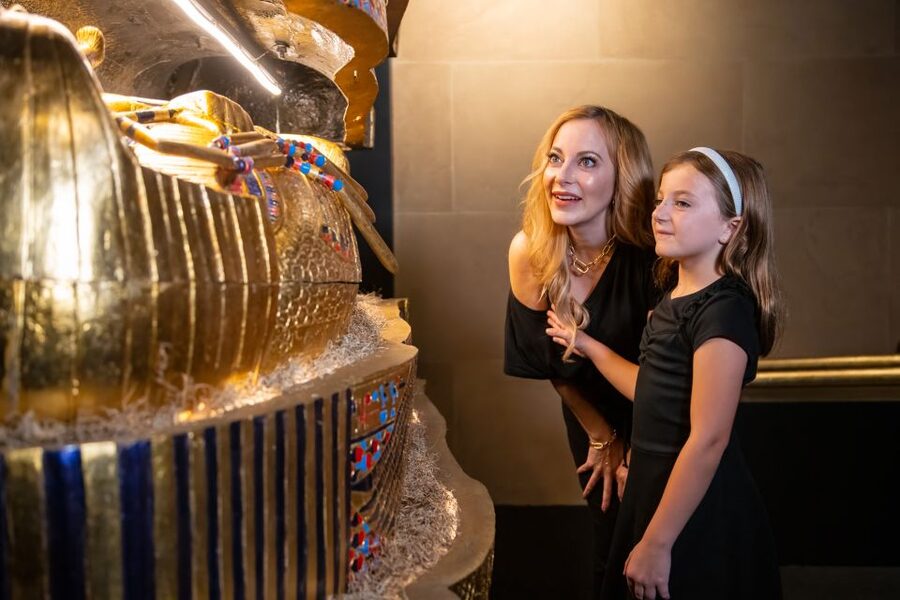
A virtual or reconstructed exhibit can be either engaging or confusing. The difference is what you do with it. Here’s how I’d approach it to get the most out of your $40 ticket.
First, pay attention to the transition from beliefs to discovery. When you’re in the Tutankhamun-era section, treat it like context-building. When you hit Howard Carter’s story and the 3D reconstruction, treat it like interpretation. You’ll naturally start noticing how the objects fit into a bigger worldview.
Second, spend time with the replicas like they matter—because the exhibit clearly frames them as treasures worthy of careful attention. Even a short look at the artifact assortment can be satisfying if you connect it to the afterlife beliefs you learned earlier.
Third, keep an eye on the 3D reconstruction moment. A realistic space helps your brain understand relationships: what’s close to what, what sits where, and how a burial site can feel like a designed environment rather than a pile of items. That’s the part that tends to make the story stick.
Timing Your Visit: Open Hours and Last Admission
The exhibit runs daily from 10:00 am to 8:00 pm, with last admission at 7:00 pm. Since you’re paying for a full entry, you’ll want to arrive with enough buffer to take your time through both parts.
Also note the exhibit is valid 1 day, and your ticket works only for that day window. If your day in Las Vegas is packed, try to schedule this so it’s not the last stop you squeeze in at the end of the night.
One smart move: treat it like a real attraction, not a quick bathroom-break stop. The story structure is the product here. If you rush, you’ll miss the payoff of how part one supports part two.
Accessibility and Family Fit at the Luxor
If you’re traveling with mobility needs, this experience is wheelchair accessible.
For families, the age rules are straightforward: guests under eighteen must be accompanied by an adult, and children ages three and under are free (no ticket required). So it can work well for families who want something calmer than a neon-heavy evening on the Strip.
That said, if you’re bringing kids, consider your own expectations for attention span. This is a history-and-archaeology experience with a two-part structure: culture and afterlife beliefs, then the Carter excavation story. It’s not an activity built around hands-on crafts or cartoon characters—so it’s best when your family likes stories, history, and visuals.
Who This King Tut Experience Is Best For
This exhibit is a strong fit if you fall into one of these groups:
- You love archaeology stories, not just famous names. The Howard Carter narrative gives this one extra spine.
- You want a structured intro to ancient Egypt without committing to a day of museum wandering.
- You care about how replicas and reconstructions are handled, especially when the goal is accuracy and careful craftsmanship.
- You want a family-friendly history stop in a major Vegas setting.
It might be less ideal if you want only the real, original artifacts with no reconstruction framing. This experience is designed around recreated scenes and replicas, and that’s the tradeoff you’re choosing when you buy the ticket.
Should You Book the Discovering King Tut’s Tomb Exhibit?
I’d book it if you want one high-value, story-driven history activity in Las Vegas that doesn’t require you to be an Egyptology expert. For $40, you’re paying for more than visuals—you’re paying for a two-part narrative, a 3D reconstruction, and replica treasures made to be admired closely.
Skip it only if you’re primarily looking for the actual original tomb artifacts or you know you dislike reconstructed exhibits. Otherwise, this is exactly the kind of experience that helps King Tut stop being a trivia answer and start being a real, human story—one connected to afterlife beliefs, and one connected to the moment Howard Carter’s work changed everything.
FAQ
What does the ticket include?
Your ticket includes entry to the Discovering King Tut’s Tomb exhibit at the Luxor.
How long is the experience valid?
The activity is valid for 1 day.
What are the opening hours and latest admission?
It is open daily from 10:00 am to 8:00 pm, and the last admission is at 7:00 pm.
How much does it cost?
The price is listed as $40 per person.
Are children allowed, and is there a free age?
Guests under eighteen must be accompanied by an adult. Children ages three (3) and under are free (no ticket required).
Is it wheelchair accessible, and can I get a refund if plans change?
The experience is wheelchair accessible. It is non-refundable, so you should plan carefully.
More Tour Reviews in Las Vegas
- Grand Canyon West, Hoover Dam Stop and Optional Lunch and Skywalk
★ 5.0 · 19,535 reviews - Grand Canyon West, Hoover Dam Stop, Breakfast, Lunch & Skywalk
★ 5.0 · 12,194 reviews - Half-Day Mojave Desert ATV Tour from Las Vegas
★ 5.0 · 7,350 reviews - Grand Canyon West Bus Tour with Hoover Dam and Optional Skywalk
★ 4.0 · 7,224 reviews - Ultimate VIP Hoover Dam Tour from Las Vegas with Lunch
★ 5.0 · 6,782 reviews - Lower Antelope Canyon and Horseshoe Bend Day Tour with Lunch
★ 5.0 · 6,764 reviews