
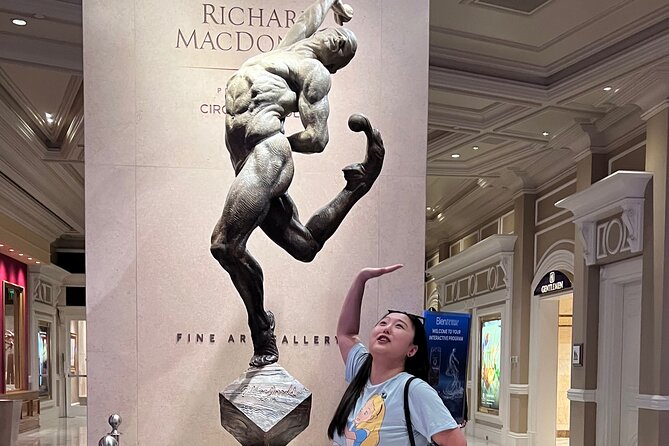
REVIEW · LAS VEGAS
Sustainability Scavenger Hunt of Las Vegas
Las Vegas can feel like a blur—this turns it into a game with purpose. I like the way the hunt blends sustainability lessons with real-world problem solving, using clues and silly challenges to keep you moving. I also appreciate the live remote host who texts support and encouragement, plus the photo check-ins where you earn points while you play.
There’s one important consideration: this is not a classic guided tour. It’s more like a structured scavenger hunt delivered through a mobile experience, and one low-rated review complained that the format can feel like a PDF and kid-style prompts via messaging. If you want a talk-to-a-human, commentary-heavy guide, you may find this style less satisfying.
In This Review
- Key things to know before you start
- How this sustainability scavenger hunt plays on the Strip
- The route: what each checkpoint feels like and why it matters
- Stop 1: Bellagio Conservatory & Botanical Garden—Start with a scenic anchor
- Stop 2: Paris Las Vegas—A themed checkpoint for clue-solving
- Stop 3: The Cosmopolitan Casino—Mid-route energy boost
- Stop 4: Flamingo Wildlife Habitat—Where the hunt adds surprise
- Stop 5: Forum Shops At Caesars Palace—A natural indoor/outdoor switch
- Stop 6: Planet Hollywood Casino—Chance to race the clock (in a fun way)
- Stop 7: The Gallery at Aria—Finishing strong and collecting your takeaways
- What the remote host actually adds (and what it can’t)
- Timing, walking, and phone sanity
- Value for different types of travelers
- Should you book this sustainability hunt?
- FAQ
- How long is the sustainability scavenger hunt?
- Where does the hunt start and where does it end?
- Is the experience offered in English?
- Is it family and dog friendly?
- Are service animals allowed?
- What fitness level do I need?
- What’s the cancellation policy?
- Can the tour be canceled if there are too few travelers?
Key things to know before you start

- Remote host support: You get a live, interactive host who replies as you go and reacts to your photo submissions for points.
- Indoor-outdoor rhythm: The game alternates between indoor and outdoor sections, so you’re not stuck in one kind of environment.
- Photo challenges with points: Expect moments where you stop, snap, and send photos to keep the momentum going.
- Real places on the Strip: Your checkpoints run through major landmarks, so you’re also getting a practical walk-through of the area.
- Built for groups and casual fun: It’s family-friendly and dog friendly, and it can work well for birthdays, bachelor(ettes), teams, and curious locals.
Still deciding? See how a handful of Las Vegas favourites stack up:




How this sustainability scavenger hunt plays on the Strip
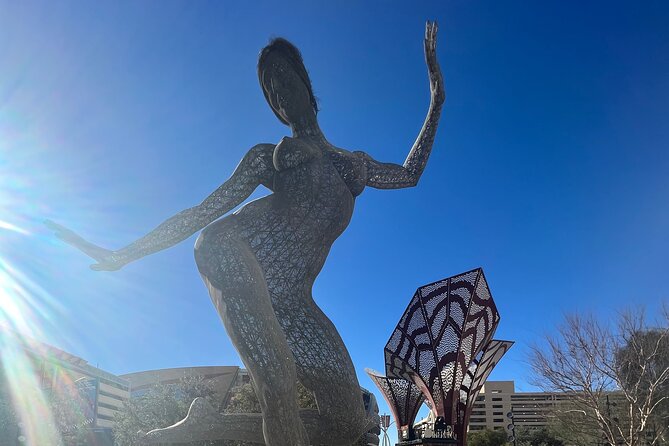
Think of this as a choose-your-own-adventure for the Las Vegas Strip, but focused on sustainability. You start at a scenic, local-favorite meeting spot and then receive a digital quest. From there, you head out on your own while a remote host stays in contact, cheering you on and helping you when you get stuck.
The experience is designed around action: walk between checkpoints, solve clues, and complete wacky challenges that pull you out of your comfort zone. The format matters. Instead of listening to a lecture for two hours, you’re making decisions and interpreting prompts in context—right there in the city.
It also helps that the route is paced with variety. The hunt alternates indoor and outdoor segments, so you’re not trapped in one kind of space. That rhythm can be a big deal in Las Vegas, where the conditions can change quickly and where indoor stops can double as a break from the heat (or wind).
Your phone is your tool, your scoreboard, and your communication line. You’ll use a mobile ticket, and you’ll interact with your host by sending photos as the game progresses. For some people, that’s the fun part: you get the feeling of being the hero in a video-game-like quest while learning something on the way.
The route: what each checkpoint feels like and why it matters
Your itinerary runs across seven well-known Las Vegas stops, with the game ending back where you started. The biggest value of this kind of route isn’t just seeing famous addresses—it’s how the checkpoints turn navigation into a mission. Each stop becomes a reason to pause, look closer, and solve something instead of just walking past.
Stop 1: Bellagio Conservatory & Botanical Garden—Start with a scenic anchor
You begin at Bellagio Conservatory & Botanical Garden. Starting here works because it’s a “reset” kind of location—scenic, a local favorite vibe, and a place where you can orient before the full-on Strip energy kicks in.
From a gameplay angle, the first stop is where you learn the pattern: you’ll figure out how the clues are delivered, what kind of challenges you get, and how your host interacts with you. If you’re bringing kids or a dog, this is also often the moment where everyone gets into the rhythm before you start moving faster through the rest of the area.
The main drawback with any opening checkpoint on a busy strip is simple: it can set expectations high. If you feel like the start is too “pretty” compared to the rest, you might notice a mood shift later. Still, as a launch pad, this is a smart way to begin.
- Grand Canyon West, Hoover Dam Stop and Optional Lunch and Skywalk★ 5.0 · 19,535 reviews
- Grand Canyon West, Hoover Dam Stop, Breakfast, Lunch & Skywalk★ 5.0 · 12,194 reviews
- Half-Day Mojave Desert ATV Tour from Las Vegas★ 5.0 · 7,350 reviews
- Grand Canyon West Bus Tour with Hoover Dam and Optional Skywalk★ 4.0 · 7,224 reviews
- Ultimate VIP Hoover Dam Tour from Las Vegas with Lunch★ 5.0 · 6,782 reviews
- Lower Antelope Canyon and Horseshoe Bend Day Tour with Lunch★ 5.0 · 6,764 reviews
Stop 2: Paris Las Vegas—A themed checkpoint for clue-solving
Next up is Paris Las Vegas. This checkpoint adds a strong sense of place, which can make the clue-solving feel more playful. When you’re hunting, location mood matters: themed environments tend to encourage silly challenges and photo tasks.
Because the hunt is not a sit-down tour, Paris Las Vegas is best experienced while you’re actively searching. You’ll likely be scanning your surroundings for whatever the clue is pointing to—then translating that into the kind of answer or action the game expects.
One thing to watch: the Strip is full of distractions. If you’re easily sidetracked by stores, music, or crowds, you may lose time. The trick is to keep your team focused on the next instruction rather than wandering for too long.
Stop 3: The Cosmopolitan Casino—Mid-route energy boost
The Cosmopolitan Casino lands you in the middle of the scavenger path. At this stage, the game usually feels most “on rails”: you’ve got the app/format figured out, and you know how to work with your remote host’s help.
This is a good stop for bonding. Scavenger hunts turn strangers into collaborators fast, even when you’re a couple or a small friend group. I like that the game includes moments where you can interact with locals to solve clues. That nudges you past the “walk-and-look” version of sightseeing.
A possible consideration is speed. Since this is an approx. two-hour experience, you’re moving through checkpoints rather than hanging out. If you want deep downtime at each property, this probably won’t feel like the right fit.
Stop 4: Flamingo Wildlife Habitat—Where the hunt adds surprise
Flamingo Wildlife Habitat is another checkpoint that shifts the tone. It’s part of what makes this kind of hunt more entertaining than a straight route: the clues land you in different kinds of environments, not just inside casinos.
This is also where you may notice the sustainability theme working in a practical way. Even if you don’t get a “lecture,” you’re learning through prompts—solving clues tied to sustainability ideas in the area. It’s a different learning style: instead of memorizing facts, you apply thinking while you move.
If you’re traveling with dogs, this stop can be a relief because it’s a change from the typical “hallway casino” feeling. That said, you’ll still be walking parts of the route, so plan breaks and water as needed.
Stop 5: Forum Shops At Caesars Palace—A natural indoor/outdoor switch
Forum Shops At Caesars Palace is a high-potential checkpoint for anyone who appreciates indoor structure. The hunt alternates between indoor and outdoor segments, and this stop is likely one of the places where the game becomes more “hands-on” in a sheltered setting.
When the hunt moves indoors, it often becomes more about scanning, reading cues, and following instructions carefully. That’s useful if you’re playing on a schedule or you want less exposure to the elements.
The drawback here is pacing. Indoor areas can tempt you to stop, browse, or get pulled into distractions. If you’re trying to finish within the approx. two hours, keep your eyes on the next clue prompt and don’t treat each indoor section like a shopping trip.
Stop 6: Planet Hollywood Casino—Chance to race the clock (in a fun way)
Planet Hollywood Casino keeps the action moving toward the end. By now, your team’s got a sense of the game loop: solve, do the challenge, send the required photo (when prompted), and get feedback from your host.
This is also a common moment for morale to rise. One of the higher-rated experiences described the sense of accomplishment—getting a lot done in a short time and feeling like a hero in the quest. If your group likes friendly competition, this stop can become a “push” point.
One practical consideration: because the host support is remote, you’ll want to keep your phone charged and your message notifications on. The game is built around quick check-ins; losing connectivity can slow you down.
Stop 7: The Gallery at Aria—Finishing strong and collecting your takeaways
The final major checkpoint is The Gallery at Aria, before the game loops back to the start. Finishing at a major landmark is smart because it gives you a sense of completion: you reach the last required place, then return with your photos, your answers, and your story.
This is a good place to reflect on what “sustainability” meant in this context. You’re not just hearing words; you’re encountering the idea through clues, questions, and challenges. The best hunts leave you with a changed way of looking at the city, not just better route knowledge.
The downside of any end-point is the letdown factor. Once you feel done, it’s tempting to slow down too early or stop focusing on the final tasks. If you want a clean finish, stay task-focused right up to the last instruction.
What the remote host actually adds (and what it can’t)
The remote host is one of the most praised parts of the experience. You get an interactive support presence, and you can text photos to your host. That creates a feedback loop: the game doesn’t feel like you’re trapped alone with a phone.
In one strongly positive experience, the host was described as great and the group loved the alternate-reality feel. Another positive review highlighted customer service and the way the experience made people feel accomplished and inspired—like they’d learned while still laughing.
But that remote model has a downside too. A low-rated review criticized the format as not a real tour, claiming it felt like a PDF and basic prompts delivered via messaging while you explore parts of the Strip that don’t feel closely tied to sustainability.
Here’s the practical takeaway: this is best if you enjoy gamified learning and you like working out clues on the fly. If you’re expecting a guided conversation about sustainability with a serious expert vibe, you might feel shortchanged.
Timing, walking, and phone sanity
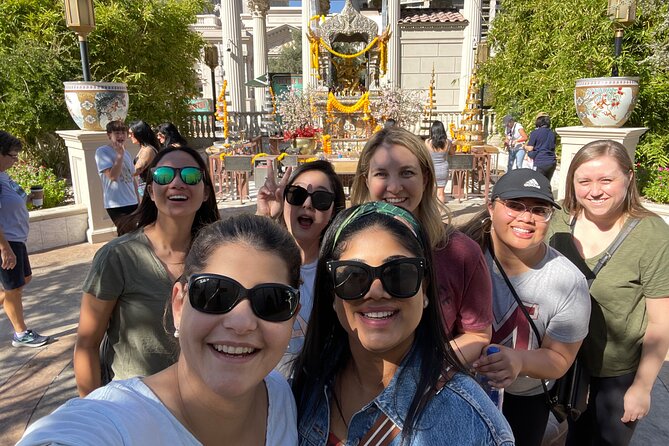
The hunt runs about 2 hours. That’s a sweet spot in Las Vegas: long enough to feel like you’ve done something meaningful, short enough that you won’t need to rearrange your whole trip.
You also have a moderate physical fitness requirement. Translation: you should be comfortable walking the Strip between major landmarks and keeping up while you complete clue tasks. The game alternates indoors and outdoors, so you may deal with sun, wind, and indoor transitions.
Your phone is central. You have a mobile ticket, you’ll get your quest digitally, and you’ll communicate by texting photos to your host. I’d treat phone battery like it’s critical infrastructure. Bring a charger if you can, and double-check your signal.
Group size is capped at 50 travelers, so it’s not a cattle-car experience. That’s good for scavenger hunts because you don’t want too many teams overlapping your solving time. Still, because this is Las Vegas, you may feel general foot traffic around major properties.
Value for different types of travelers
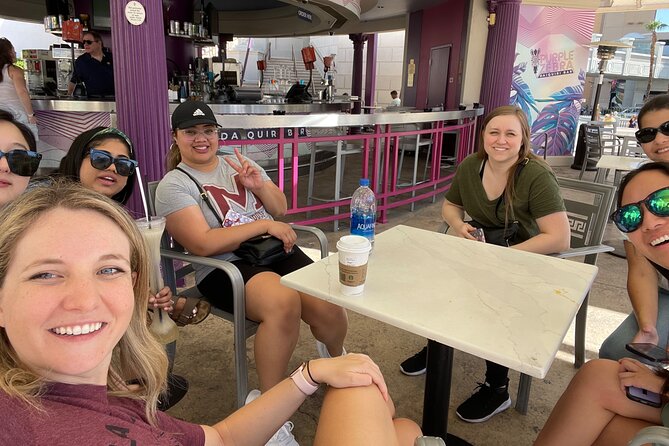
This kind of activity isn’t just for families, though it’s family-friendly and dog friendly. It’s also built for people who want a structured way to explore without spending the whole time researching on their own.
- Couples: Great if you want a shared challenge and a way to avoid “where should we go” debates.
- Families: It’s designed for interactive play with bonus challenges and frequent check-ins. If your kids love puzzles and photos, you’ll probably enjoy it.
- Groups and celebrations: Birthdays and friend groups often like the “team wins” vibe and the laugh-out-loud moments described in high-rated experiences.
- Corporate teams: The provider offers custom events and virtual team builders, so this can work as a low-pressure bonding activity.
Who might not love it? If you want a traditional guided narration with deep, adult-focused explanations and sustained human interaction, this may feel too light or too phone-driven for your taste.
Should you book this sustainability hunt?
I’d book it if you want a fun, moving activity that helps you learn about sustainability ideas while you get your bearings on the Strip. I also think it’s a strong “first Vegas day” type of plan because it pushes you through a cross-section of major landmarks and turns navigation into a mission.
I’d hesitate if you’re the person who hates scavenger hunts, or if you’re expecting a serious guide-led lecture. The format is interactive and remote, and one complaint was that the prompt style can feel aimed at younger players. That doesn’t mean it’s bad—but it does mean your expectations need to match the delivery.
If you’re curious, pack your sense of humor, keep your phone charged, and treat each checkpoint like a puzzle you’re solving together. When it clicks, it turns sightseeing into a story you remember.
FAQ

How long is the sustainability scavenger hunt?
It’s listed as about 2 hours.
Where does the hunt start and where does it end?
It starts at 3500 Las Vegas Blvd S, Las Vegas, NV 89109, USA, and it ends back at the meeting point.
Is the experience offered in English?
Yes, it’s offered in English.
Is it family and dog friendly?
Yes, it’s described as family and dog friendly.
Are service animals allowed?
Yes, service animals are allowed.
What fitness level do I need?
You should have a moderate physical fitness level.
What’s the cancellation policy?
You can cancel for a full refund up to 24 hours in advance. If you cancel less than 24 hours before the start time, the amount you paid is not refunded.
Can the tour be canceled if there are too few travelers?
Yes. If it’s canceled because the minimum isn’t met, you’ll be offered a different date/experience or a full refund.
More Tour Reviews in Las Vegas
- Grand Canyon West, Hoover Dam Stop and Optional Lunch and Skywalk
★ 5.0 · 19,535 reviews - Grand Canyon West, Hoover Dam Stop, Breakfast, Lunch & Skywalk
★ 5.0 · 12,194 reviews - Half-Day Mojave Desert ATV Tour from Las Vegas
★ 5.0 · 7,350 reviews - Grand Canyon West Bus Tour with Hoover Dam and Optional Skywalk
★ 4.0 · 7,224 reviews - Ultimate VIP Hoover Dam Tour from Las Vegas with Lunch
★ 5.0 · 6,782 reviews - Lower Antelope Canyon and Horseshoe Bend Day Tour with Lunch
★ 5.0 · 6,764 reviews