
REVIEW · GRAND CANYON SOUTH RIM TOURS
45-minute Helicopter Flight Over the Grand Canyon from Tusayan, Arizona
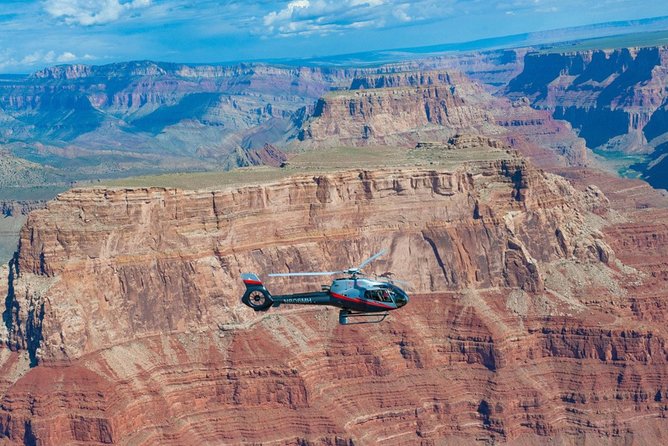
Hovering over the Grand Canyon feels unreal. In 45 minutes, you get a rare aerial sweep from the South Rim to the North Rim, with panoramic windows and landmark narration.
What I like most is the wraparound-window sightlines and the way pilots keep things smooth and professional, so the flight feels controlled instead of scary. One consideration: seating is assigned by weight and balance, and if you’re over 275 lbs you may need an extra seat for comfort and safety.
In This Review
- Key things I’d prioritize
- Why this Grand Canyon flight feels different (and worth the cost)
- EC130 comfort and the “I can breathe” safety factor
- Your 45 minutes in the air: Tusayan to North Rim and back
- Leaving the South Rim: the first drop-away view
- Kaibab National Forest: the world’s big ponderosa pines
- The North Rim comes into view
- Painted Desert + Desert View Watchtower: landmark detail from above
- Marble Canyon + Point Imperial: where it gets historic and high
- Flying through the Dragon Corridor
- Returning to the South Rim and landing
- What you’ll actually see: landmarks that make this more than a generic canyon ride
- Timing matters: when to go for best light and best odds
- Price and value: what $394.88 buys you (and what it doesn’t)
- You’re paying for
- You’re not paying for
- Meeting point and getting ready in Tusayan
- Bring what matters
- Weight and seat rules (read this part carefully)
- What to expect from the pilot and staff
- Who should book this helicopter flight?
- Should you book the 45-minute Grand Canyon helicopter from Tusayan?
- FAQ
- What’s the helicopter flight duration?
- Where is the meeting point?
- Do I need photo ID to fly?
- What aircraft do they use?
- Is hotel pickup included?
- What’s the weight limit for passengers?
- What happens if weather is bad?
Key things I’d prioritize
- South Rim to North Rim in one hop: you see both rims without long drives
- Panoramic, wraparound windows: big views and easier photo angles
- EC130 helicopter setup: headsets and a calmer cabin experience
- Specific canyon landmarks: Painted Desert, Desert View Watchtower, Marble Canyon, Point Imperial
- Small group size: capped at about 7 people for a less chaotic feel
More runs to the Grand Canyon, compared
Why this Grand Canyon flight feels different (and worth the cost)
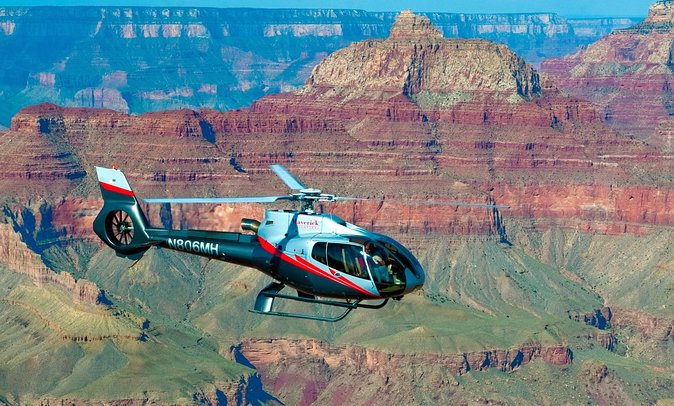
Driving to overlooks is great, but it’s still a “one side at a time” experience. This helicopter route compresses a huge chunk of the Grand Canyon into a single loop: you lift off near Tusayan on the South Rim, then fly across to the North Rim before heading back.
That shortcut matters because the Grand Canyon isn’t just big. It’s layered. From the air you can actually connect the dots between:
- thick forested areas (Kaibab National Forest)
- the river’s bend and carved walls
- signature points like Desert View and Point Imperial
- the canyon’s deepest, widest section through the Dragon Corridor
You’re paying for time and perspective. At a little under an hour in the air, you’re not trying to “cover” the canyon with multiple stops and shuttles. You just look, photograph, and soak in scale.
EC130 comfort and the “I can breathe” safety factor
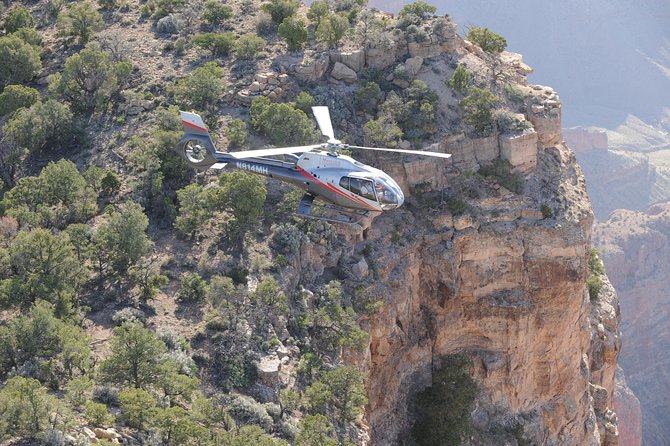
This flight uses Airbus EC130 helicopters (described as an ECO-Star experience with panoramic windows). What that means for you in practice is a cabin layout designed for viewing—less looking through narrow openings and more getting a full arc of the canyon in front of you.
From the experience details and the way the operation is run, the vibe is built around feeling secure:
- Pilots are positioned to fly the route cleanly, even in windier conditions.
- The helicopter experience includes comfort features like headsets so you can follow the pilot’s landmark talk.
- The ride is commonly described as smooth, which is huge if you’re the type who worries about motion.
Two practical notes for your comfort:
- Pilots can’t assist with boarding and disembarking due to insurance rules. So wear footwear you can move in confidently, and plan for a normal, careful climb.
- Seats are assigned after check-in based on legal weight and balance limits, and they don’t guarantee you’ll sit next to your group.
If you’re sensitive to noise or just want clear narration, arrive early enough to settle in—then keep your headset on during the key sighting moments.
Your 45 minutes in the air: Tusayan to North Rim and back
You depart from Maverick Helicopters in Grand Canyon Village (107 Corsair Dr). After check-in, you’ll fly for about 45 minutes total, and the route is built to show you a connected story: forest → canyon edge → river viewpoints → signature North Rim features → the Dragon Corridor → back to the South Rim.
Here’s what you’ll experience in order.
More of the South Rim from Vegas
- Desert View Grand Canyon Jeep Tour★ 4.5 · 269 reviews
- 25-min Grand Canyon South Rim EcoStar Helicopter Tour with Optional Hummer★ 4.5 · 229 reviews
- Grand Canyon Tour from Tusayan★ 5.0 · 158 reviews
- Grand Canyon South Rim Sunset Tour with Dinner included★ 5.0 · 158 reviews
- Tusayan: Grand Canyon Desert View & South Rim Pink Jeep Tour★ 4.6 · 113 reviews
- Grand Canyon South & East Rim: Driving & Walking Audio Tour★ 4.0 · 112 reviews
Leaving the South Rim: the first drop-away view
You start in Tusayan at the South Rim. As the helicopter clears the immediate area, the canyon edge opens up fast—one moment you’re in the rim region, and the next you’re looking down into the sculpted world below.
This is where the air view does something ground viewpoints often can’t: it shows the canyon’s drop in real depth. You can also start building mental geography for the rest of the flight because you’ll see how the rim line relates to the river corridor.
Photo tip: The early minutes can give you your best “getting oriented” shot, because you’re higher and angles are clear before the route dives into tighter canyon features.
Kaibab National Forest: the world’s big ponderosa pines
Soon you’re flying over Kaibab National Forest, a massive area of about 1.6 million acres, which borders both the north and south rims of the Grand Canyon. You’ll be looking at dense forest patterns, including some of the world’s largest ponderosa pines.
Why this matters: it’s a visual reset. The Canyon isn’t all bare stone. You’ll see how the rim transitions into green, and then how the canyon walls cut through that terrain. It makes the whole place feel more real than a flat “rock bowl” impression.
What to expect: from the air, tree tops create a textured carpet, and you can spot forest breaks that lead the eye toward where the canyon opens.
The North Rim comes into view
When you reach the canyon edge, the South Rim gently drops away and the North Rim and east end come into view. This is one of the most dramatic moments because you’re not just looking at a single side. You’re seeing the canyon’s span.
Ground tours often help with depth using elevation changes, but the helicopter does it with perspective. You get the sense of distance between rims, and you can visually trace the canyon’s arc instead of guessing it.
Consideration: If you’re prone to motion sensitivity, look straight ahead at the horizon during turning moments. It tends to feel steadier than tracking only the edges.
Painted Desert + Desert View Watchtower: landmark detail from above
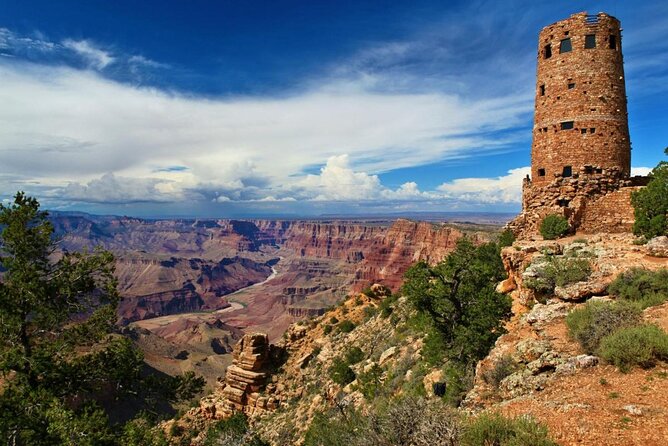
As you follow the Colorado River upstream, you’ll get a look at the 146-square-mile Painted Desert and the 70-foot Desert View Watchtower, a National Historic Landmark.
From the air, the Painted Desert often reads like a patchwork—color shifts that are hard to appreciate at ground level unless the light hits right. The Watchtower is also easier to recognize from above because it stands out structurally against the rim.
Why this segment is valuable: you’re seeing both the natural color layers and a human landmark built to frame that view. It’s a good reminder that the canyon has long been a destination, not just scenery.
Marble Canyon + Point Imperial: where it gets historic and high
Next comes Marble Canyon, which marks the beginning of the Grand Canyon’s formation, plus Point Imperial—the highest point on the North Rim at 8,803 feet (about 2,683 meters).
You’ll also see how Point Imperial overlooks the Painted Desert and the eastern end of the Grand Canyon. From the air, “highest point” becomes more than trivia. You can literally see why that elevation gives views across multiple sections.
What you’ll notice: the canyon geometry starts to feel more “architectural” here—layering, edges, and river path become easier to understand when you’re not standing right next to the rim.
Flying through the Dragon Corridor
The route then takes you through the Dragon Corridor, described as the canyon’s widest and deepest section. This is where your brain starts working overtime, because the scale compresses and stretches at the same time: walls look closer, yet the canyon’s breadth looks enormous.
If you want one “wow” moment, it’s usually here—when you’re both inside the canyon’s core geometry and still able to spot the river thread below.
Photo tip: Try quick bursts rather than one long shot. You’ll likely change angles more than you expect in a short time window.
Returning to the South Rim and landing
At the end, you cross back over the Colorado River and fly over the South Rim and Kaibab National Forest before landing. This final segment is useful because it connects what you just saw in the canyon with the rim neighborhoods around Tusayan—so the whole route feels like one continuous loop rather than separate scenes.
What you’ll actually see: landmarks that make this more than a generic canyon ride
A lot of helicopter experiences claim broad canyon views. This one is structured around specific features that you can name afterward, which makes the flight more satisfying.
You’re seeing:
- Kaibab National Forest and its big ponderosa pine presence (a green-to-stone transition)
- the Painted Desert (color layers that feel different from above)
- Desert View Watchtower (a distinct structure with an observation deck)
- Marble Canyon (the “beginning” section of the canyon)
- Point Imperial (North Rim high point with broad overlooks)
- the Dragon Corridor (widened, deepest zone)
Even if you don’t memorize the names, the landmarks give you anchors. Your photos will look less random because you can match each image to a named feature.
Timing matters: when to go for best light and best odds
You can choose among departure times, and timing affects what you feel in the air.
Here’s how to think about it:
- Sunset flights are popular. That usually means warmer light and canyon shadows that emphasize depth.
- Midday flights can offer detailed views of canyon walls, though you may get more contrast and bright spots.
- Early morning can be a smart summer choice because it tends to be cooler in the canyon region.
If you’re photo-focused, pick the time that matches your tolerance for heat and your preference for shadow depth. If you’re mainly after the widest “wow” feel, sunset is often the best bet.
Price and value: what $394.88 buys you (and what it doesn’t)
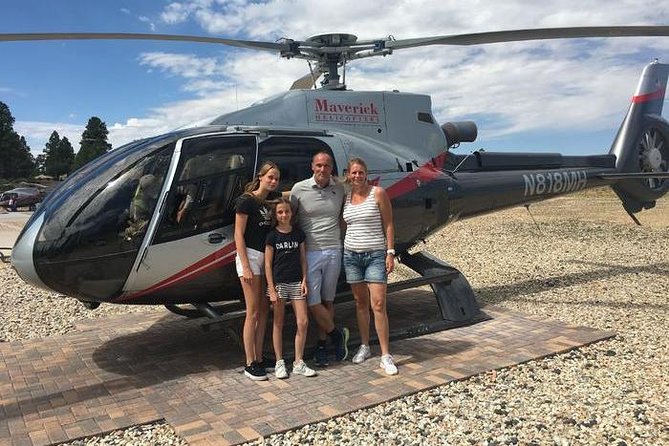
At $394.88 per person for about 45 minutes, this isn’t a budget move. But value in the Grand Canyon isn’t just “minutes.” It’s access to a view that’s otherwise hard to get.
Here’s how I’d judge the value for you:
You’re paying for
- seeing both rims in one flight
- a route built around recognizable landmarks
- panoramic windows that improve your photo odds
- a small-group environment (up to about 7 people)
- pilot narration through the flight
You’re not paying for
- hotel pickup/drop-off (you’ll need your own transport)
- guaranteed seat location next to your party
So the “value test” is simple. If you want a major portion of the canyon in one shot, and you’re okay paying for the shortcut, it’s a strong buy. If you’re already happy doing lots of rim viewpoints by car and short walks, you might feel the price less justified.
Meeting point and getting ready in Tusayan
No hotel pickup means you should plan to drive in. The meeting point is Maverick Helicopters, 107 Corsair Dr, Grand Canyon Village. There’s free parking for self-driving customers.
Plan your day around the fact that you’ll need time to check in and get seated. Helicopter seating is assigned after check-in based on weight and balance, so don’t assume a specific row or perfect sightline for every person.
Bring what matters
- Photo ID is required for anyone 18+. It must be an original government-issued photo ID. Copies and digital IDs aren’t accepted.
- Cameras are a good idea, and sunglasses help with brightness.
- Wear shoes you can walk in.
- Only bottled water is permitted onboard. Snacks may be available at the terminal and on some flight options.
Weight and seat rules (read this part carefully)
There’s a stated total weight per passenger limit of 275 lbs. If you’re over that, you’ll be asked to purchase an additional seat on the day of the tour to meet aircraft comfort and safety requirements.
This isn’t just a formality. It affects how your party is seated because assignments are based on weight and balance. If you fall near the limit, confirm details when you book so you don’t get surprised at check-in.
What to expect from the pilot and staff
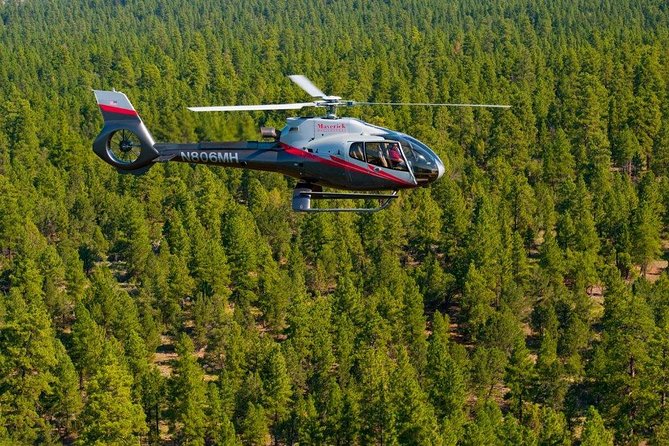
This flight is built around clear in-cabin communication. The headset setup helps you follow the pilot’s narration, which in turn makes landmarks easier to recognize in real time.
In customer feedback, pilots have been named on different flights, including Forrest, Drew, Dylan, Gabriel, Braydan, Colin, Jeff, and Dunkin. That tells you one thing: you’re likely to hear a real, human style of canyon talk, not just a silent sightseeing loop.
Two useful expectations:
- The staff runs the operation in a streamlined way, so you’re not stuck waiting long before flight time.
- Pilot assistance is limited due to insurance rules, so bring confidence and follow staff directions.
One small caution: if you’re sensitive to sound, I’d still assume headset volume can vary by person and seat location. If you’ve ever had trouble hearing on planes, you may want to mention it during check-in so they can point you to the best fit.
Who should book this helicopter flight?
I’d book this if you:
- want the quickest way to see a lot of the Grand Canyon in one outing
- care about photos and want bigger windows and better angles than most overlooks
- are short on time in the area but still want both rims
- value a smooth-feeling ride and tight operation
I’d think twice if you:
- hate noise or you’re highly motion-sensitive
- need a guaranteed seat next to a specific person
- aren’t able to meet the ID requirement at check-in
- are traveling with service animals (service animals are not permitted)
Should you book the 45-minute Grand Canyon helicopter from Tusayan?
Yes, if your goal is maximum Grand Canyon impact in minimal time. The value comes from the route design—forest-to-river-to-landmarks-to-dragon-corridor—plus the panoramic-window comfort that makes the views feel immediate.
Book it now if you already know this is the experience you want. Flights are commonly booked about 36 days in advance on average, and weather can affect scheduling. If you can be flexible with departure time and you’re prepared with the right ID, this is one of the most efficient ways to get both the South Rim and North Rim into a single, memorable flight.
FAQ
What’s the helicopter flight duration?
It’s about a 45-minute helicopter flight over the Grand Canyon.
Where is the meeting point?
You’ll meet at Maverick Helicopters, 107 Corsair Dr, Grand Canyon Village, AZ 86023, and the activity ends back at the same meeting point.
Do I need photo ID to fly?
Yes. Per FAA regulations, all travelers 18 and older must show an original government-issued photo ID at check-in. Photocopies or digital IDs are not accepted.
What aircraft do they use?
The flights use Airbus EC130 helicopters.
Is hotel pickup included?
No. Hotel pickup and drop-off are not included.
What’s the weight limit for passengers?
The total weight per passenger is listed as 275 lbs. If you’re over that limit, you may be required to purchase an additional seat on the day of the tour.
What happens if weather is bad?
This experience requires good weather. If it’s canceled due to poor weather, you’ll be offered a different date or a full refund. Pilots make the safety decision for the flight.
More Flights Over Grand Canyon National Park
- Grand Canyon Helicopter 45-Minute Flight with Optional Hummer Tour
★ 4.5 · 312 reviews - 25-min Grand Canyon South Rim EcoStar Helicopter Tour with Optional Hummer
★ 4.5 · 229 reviews - Helicopter Tour of the North Canyon with Optional Hummer Excursion
★ 4.5 · 190 reviews - 25-minute Grand Canyon Dancer Helicopter Tour from Tusayan, Arizona
★ 5.0 · 65 reviews - Grand Canyon West Rim-Helicopter Tours- Dream Plus Flight
★ 4.5 · 10 reviews
Back to the South Rim
- 4-Hour Biblical Creation + Sunset Tour • Grand Canyon National Park South Rim
★ 5.0 · 718 reviews - Desert View Grand Canyon Jeep Tour
★ 4.5 · 269 reviews - 25-min Grand Canyon South Rim EcoStar Helicopter Tour with Optional Hummer
★ 4.5 · 229 reviews - Grand Canyon Tour from Tusayan
★ 5.0 · 158 reviews - Grand Canyon South Rim Sunset Tour with Dinner included
★ 5.0 · 158 reviews - Tusayan: Grand Canyon Desert View & South Rim Pink Jeep Tour
★ 4.6 · 113 reviews
The Grand Canyon, More Ways Out
- Grand Canyon Signature Hummer Tour with Optional Sunset Views
★ 5.0 · 1,662 reviews - 3 Hour Off-Road Sunset Safari to Grand Canyon with Entrance Gate Detour
★ 5.0 · 904 reviews - 4-Hour Biblical Creation + Sunset Tour • Grand Canyon National Park South Rim
★ 5.0 · 718 reviews - Grand Canyon West: All Access Ticket
★ 3.0 · 466 reviews - 3 Hour Back-Road Safari to Grand Canyon with Entrance Gate By-Pass at 9:30 am
★ 5.0 · 430 reviews - Grand Canyon Landmarks Tour by Airplane with Optional Hummer Tour
★ 4.5 · 357 reviews
Fresh off the Strip: new Grand Canyon National Park reviews

Grand Canyon South Rim Tours, compared.
 ★ 4.5Grand Canyon National Park South Rim Bus Tour from Las VegasFrom $713,071 reviews
 ★ 4.3From Las Vegas: Grand Canyon South Rim Day TripFrom $862,147 reviews
 ★ 4.0Grand Canyon National Park South with Optional UpgradesFrom $992,044 reviews
 ★ 5.0Grand Canyon National Park South from Las Vegas with Lunch, WiFiFrom $791,966 reviews
 ★ 5.04-Hour Biblical Creation + Sunset Tour • Grand Canyon National Park South RimFrom $149718 reviews
 ★ 4.6Grand Canyon National Park South w/Lunch, Free WiFiFrom $119669 reviews
 ★ 4.4Grand Canyon National Park South Rim Guided TourFrom $150531 reviews
 ★ 4.5Grand Canyon National Park South Rim Small Group Bus TourFrom $140330 reviews
Browse the lists this tour appears in