REVIEW · AUDIO TOURS
Las Vegas Strip Self-Guided Walking Audio Tour
The Strip feels different when stories guide your feet. This self-guided audio walk uses offline maps and GPS-triggered audio so you can wander between hotels without hunting for signal.
I like that it is hands-free: the narration plays automatically when you reach each stop, and you can pause for breaks. I also love the sweep of the route, from the 45-foot MGM lion to the final Mandalay Bay details, with 35+ audio stories over 4+ miles.
The only catch: audio quality depends on your phone and headphones, and you might miss content if you start away from the official starting point. Bring headphones and give your setup a minute before you start walking.
In This Review
- Key takeaways before you hit the sidewalks
- Start at Tropicana, then let the Strip narrate itself
- Offline maps and the phone rules that keep the tour smooth
- Planning your pace: 4+ miles, 35+ stops, and plenty of chances to pause
- Leo the Lion at MGM Grand: the start that feels like opening credits
- The Strip map lesson: Paradise, not Las Vegas
- MGM Grand and Planet Hollywood: old-school scale, then brand reinvention
- Paris Las Vegas: a whole movie set of Europe
- Horseshoe Las Vegas: new name, deep naming echoes
- Flamingo: the oldest party starter, and why its details matter
- Harrah’s: a long-running spot with a surprising prior owner
- Venetian and the Sinatra link
- Mirage: Michael Milken, Steve Wynn, and a twist of money
- Caesars Palace and the Teamsters connection
- Bellagio: Lake Como inspiration and the lake that almost was
- ARIA and CityCenter: tech-forward rooms that run themselves
- Waldorf Astoria (Vegas version): old-world name, new setting
- Park MGM: the smoke-free pivot
- New York-New York and the 2010 stamp scandal
- Excalibur, Luxor, Mandalay Bay: castles, pyramids, and a final naming puzzle
- Price and value: when $14.99 turns into hours of walking
- Who this walking audio tour is best for
- Should you book this Las Vegas Strip self-guided audio tour?
- FAQ
- How long does the Las Vegas Strip self-guided audio tour take?
- What does it cost?
- Do I need a cellular connection during the tour?
- What language is available?
- Where do I start the tour?
- How do I start the audio once I’m onsite?
- Can I cancel for a full refund?
Key takeaways before you hit the sidewalks
- Offline-first navigation: download maps while you have strong wifi/cellular, then keep going without data.
- Auto-play, location-based stories: the audio starts when you reach the next destination on the route.
- Lifetime access: no expiry date, so you can reuse it on future trips instead of buying twice.
- Real walking distance: 4+ miles with 35+ stories; plan on comfortable shoes and a realistic pace.
- Easy to control your time: start, pause, and resume whenever you want, even if you duck into nearby shelter.
One more to line up against this Las Vegas booking:
Start at Tropicana, then let the Strip narrate itself
Las Vegas works best when you stop trying to “do everything” and instead follow your curiosity. This tour is built for that mindset. You begin at Tropicana Las Vegas – a DoubleTree by Hilton (3801 Las Vegas Blvd S), then the app guides you from landmark to landmark with audio that starts when you reach each story point.
No one meets you. No group to wait for. That sounds small, but it matters on the Strip where things get loud, crowded, and oddly disorienting. You can walk at your speed, slow down to read plaques or take pictures, and keep the story going when you’re ready.
Timing is also forgiving. The route is designed for about 1–2 hours, but you’re not on a bus schedule. If you’re the kind of person who stops every five minutes to look up at something shiny, you’re still fine.
Offline maps and the phone rules that keep the tour smooth
Here’s the practical part that makes or breaks an audio tour: setup time. After booking, you’ll get an email/text with instructions and a password. You then download Action’s Tour Guide App. The key line is that you must download the tour while you’re on strong wifi/cellular—after that, it works offline.
For the best experience, the tour recommends:
- iPhone running iOS 15+
- Android version 9+
- iPad/tablet with GPS and cellular connectivity
Also, bring a backup plan for audio: headphones are strongly recommended, and the Strip can be noisy. If you struggle to hear in crowds, you’ll end up reading captions from your screen instead of enjoying the narration—exactly the kind of hassle you bought the tour to avoid.
One more thing I appreciate: you can start and pause the tour anytime, including over multiple days. That’s handy if you want to do the Strip in chunks, or if weather makes you change plans.
Planning your pace: 4+ miles, 35+ stops, and plenty of chances to pause
The route is over 4 miles long with 35+ audio stories. That means you’re not just “learning a little.” You’re doing a real walking loop along a huge chunk of the Strip hotel belt.
So I suggest you treat it like a light mini-adventure:
- Wear shoes that you’d be happy to wear for 90 minutes outdoors.
- Expect stops to take longer if you’re taking photos or standing in place to listen.
- If you get tired, pause the tour and take a break—then jump back in later.
Rain doesn’t automatically ruin this kind of experience because you can keep going on your own time. The Strip is full of hotel entrances, covered areas, and places to duck out of weather for a moment while you reset your walking pace.
One more to line up against this Las Vegas booking:
- Red Rock Canyon Self-Guided Electric Bike Tour★ 5.0 · 783 reviews
- Las Vegas: Guided Las Vegas Desert ATV Tour★ 4.6 · 677 reviews
- Las Vegas Downtown & Fremont Street – Guided Walking Tour★ 5.0 · 636 reviews
- Las Vegas: Valley of Fire Guided Hike with Drinks and Snacks★ 4.9 · 548 reviews
- Las Vegas: Grand Canyon National Park South Rim Guided Tour★ 4.4 · 531 reviews
- Small Group Guided Colorado River & Emerald Cave Kayak Tour★ 5.0 · 500 reviews
Leo the Lion at MGM Grand: the start that feels like opening credits
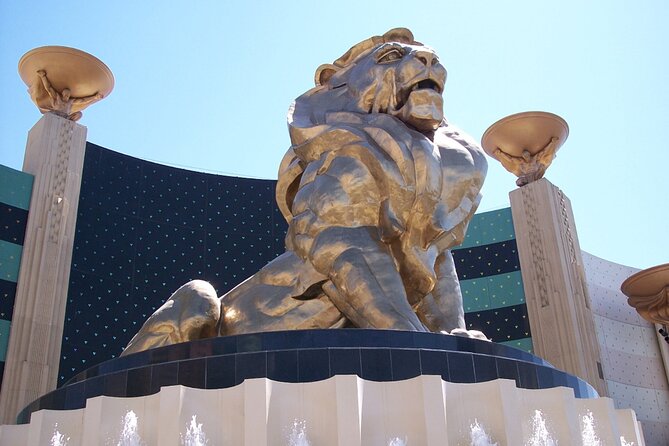
Your first anchor is Leo the Lion, the huge golden MGM Grand lion you’ll spot on your right. The story here is more than “look at the lion.” It gives you a sense of how Las Vegas builds identity with recognizable symbols.
Leo is 45 feet tall and weighs about 50 tons. It’s one of the largest bronze sculptures in the U.S., and it’s named for the real-life Leo the Lion who roared from the Metro-Goldwyn-Mayer logo from 1957 until 2021. The MGM logo is now CGI, but the iconic look—and that famous roar—still get referenced.
Why this stop works: it sets the tone. Vegas is full of themed references, and this tour starts by showing you that Las Vegas didn’t invent spectacle—it scaled it.
The Strip map lesson: Paradise, not Las Vegas
A quick story point clarifies something that surprises a lot of people: The Strip isn’t technically in Las Vegas. It exists in an unincorporated area called Paradise, which stayed unincorporated until 1950.
That’s the kind of fact that changes how you look at a city. Instead of seeing one big continuous road, you start noticing boundaries, jurisdictions, and why planning feels the way it does.
MGM Grand and Planet Hollywood: old-school scale, then brand reinvention
Next up, you’ll come back to the MGM Grand presence—this time with a focus on the resort’s modern footprint. The MGM Grand casino opened its new location here in 1993, during a period when the Strip was expanding fast.
Then the tour moves to Planet Hollywood Resort and Casino (in operation since 2007). The story connects it to the site’s previous life: it used to be the Aladdin casino, operating from 1966 to 1997.
What I like about these stops: you get a sense of Vegas real estate as a living thing. Brands change. Icons repeat. The sidewalk stays, but the story on the building reshuffles over decades.
Paris Las Vegas: a whole movie set of Europe
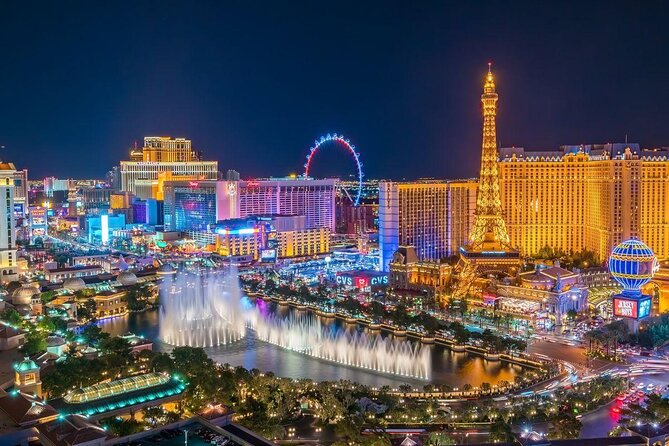
Then you hit Paris Las Vegas, with replicas of the Eiffel Tower, Arc de Triomphe, and La Fontaine des Mers. It opened in 1999 and is described as the work of French cinema icon Catherine Deneuve.
The audio also explains the design idea: a façade that mixes elements associated with major Paris landmarks and neighborhoods. This isn’t just visual mimicry. It’s Vegas doing translation—turning culture into a photo-friendly experience.
Drawback to keep in mind: if you’re expecting “secret tips,” you may feel the stories are more about identifying what you’re seeing than hidden tricks. The value here is clarity and context.
Horseshoe Las Vegas: new name, deep naming echoes
After Paris comes Horseshoe Las Vegas. The tour’s version frames it as a modern opening: Horseshoe opened in 2023 on the former site of Bally’s Las Vegas, which itself had replaced the earlier MGM Grand location.
The name has meaning too. It pays tribute to Binion’s Horseshoe on Fremont Street, known as “Glitter Gulch,” where the original Horseshoe ran for nearly 40 years under Benny Binion. The Strip keeps recycling legends—but it does it with updated branding.
Flamingo: the oldest party starter, and why its details matter
One of the most satisfying stops is Flamingo Hotel and Casino, opened in 1946 and described as the oldest continuously operating resort on the Strip.
The audio emphasizes how Flamingo shaped the style of the next wave of resorts in the 1950s and ’60s. It uses Art Deco architecture that nods toward Miami Beach, and it portrays Flamingo as a place of rules and ceremony—like dealers in white suits and tails, and a request for players to remove their hats inside.
This is the kind of story that gives you a feel for how “high-end Vegas” was built. Not by accident. By design.
Harrah’s: a long-running spot with a surprising prior owner
Next is Harrah’s Las Vegas, occupying its position since 1992. The story also points backward: before Harrah’s, the site was the Holiday Inn and Casino, noted in the tour as being among the few casinos run by a woman.
That angle is worth your attention. Vegas history isn’t only about who built buildings. It’s also about who ran them, and what that meant in different eras.
Venetian and the Sinatra link
Then comes The Venetian, introduced with the prior identity of the location: it used to be the Sand Resort, a favorite haunt of Frank Sinatra and his Rat Pack circle.
This is one of those tour moments that makes your photos feel smarter. You’re not just capturing a skyline façade. You’re capturing a site tied to the entertainment machine that helped shape Las Vegas culture.
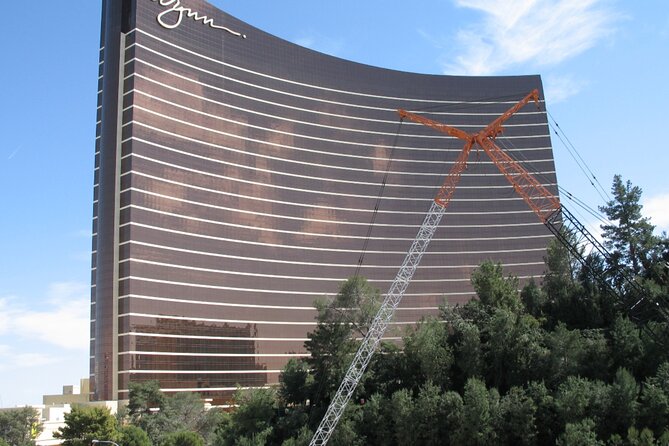
Mirage: Michael Milken, Steve Wynn, and a twist of money
You’ll then reach The Mirage, credited in the tour as a 1989 glimpse into the city’s future. The audio adds a name you’ll recognize from major financial headlines: Michael Milken, described as funding the resort through sold bonds.
But then the story hits a complication: Milken was indicted on 98 counts of racketeering and securities fraud eight months before The Mirage opened. The tour notes a quote attributed to owner Steve Wynn, giving Milken due credit for changing the company’s direction.
Why this stop is memorable: it’s Vegas as a collision between showmanship and high finance. The Strip is glitz, but the engine includes real-world risk and consequence.
Caesars Palace and the Teamsters connection
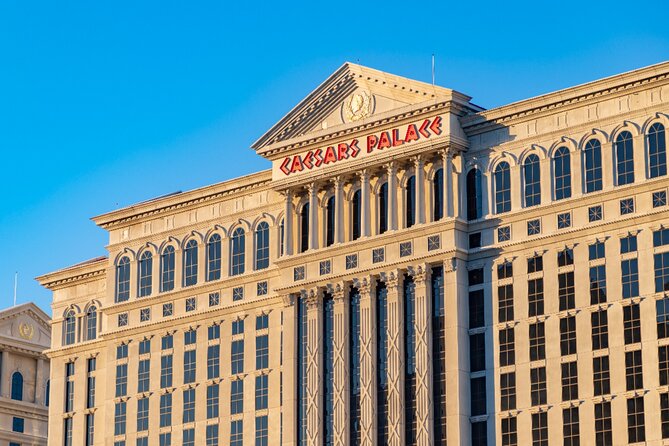
Next up is Caesars Palace, thriving here since 1966. The audio includes a very specific detail: the grand opening included Jimmy Hoffa, president of the Teamsters at the time.
The story also frames Hoffa as a “union-slash-crime boss” who helped fund the resort’s construction. It’s blunt. It’s Las Vegas. And it’s a reminder that the line between politics, money, and entertainment has never been clean.
If you don’t like heavy stories, you can still let this one play while you keep walking. The tour is designed for motion.
Bellagio: Lake Como inspiration and the lake that almost was
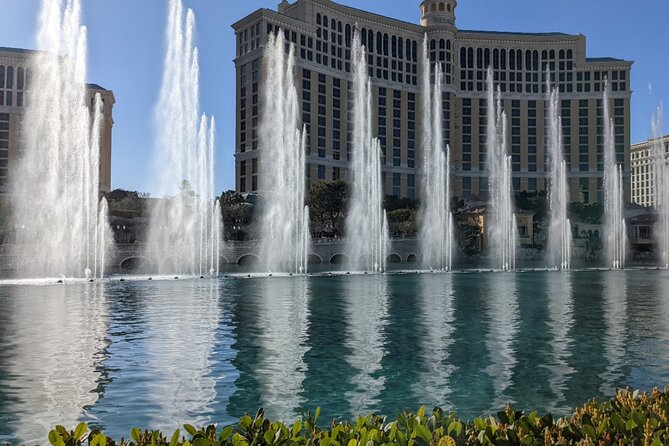
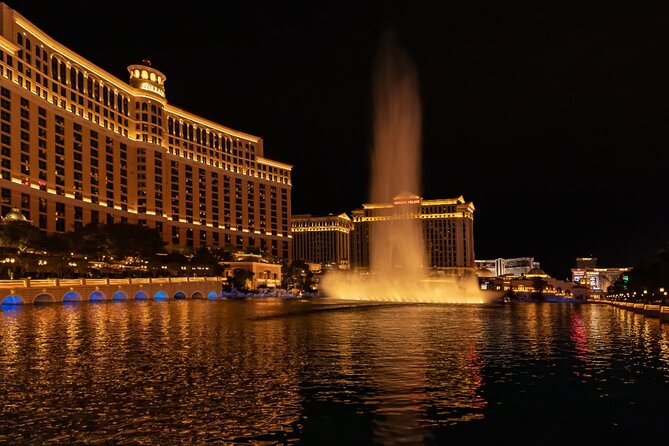
At Bellagio (opened 1998), the audio points to the name’s source: a village on the banks of Lake Como in northern Italy.
It also tells a “what if” about the design. Developer Steve Wynn initially proposed building a 50-acre lake on the site with an island in the middle for a French-Alpine themed resort named Beau Rivage. Then Wynn and his wife took a vacation to Lake Como, and the story connects that trip to the final direction.
This stop helps you understand why Bellagio feels like a controlled European fantasy instead of just another hotel.
ARIA and CityCenter: tech-forward rooms that run themselves
Then the tour turns modern. ARIA Resort and Casino opened in 2009 with a goal of modernizing the Strip using high-tech touches. The audio describes automated hotel rooms that respond when a guest enters: curtains open, TV and lights turn on, music starts, and climate controls adjust. When the guest leaves, the room shuts down to conserve power—no one has to touch a switch.
Next is CityCenter, also called the ARIA Campus. The tour frames it as a multi-use complex that includes Waldorf Astoria, condos, Vdara, Veer Towers, The Shops at Crystals, and a big shopping mall.
Worth noting: if you’re the kind of person who likes walking tour stories focused on people and events, the tech chapter might feel more about design than drama. But it’s still valuable because it explains how Vegas keeps shifting its identity.
Waldorf Astoria (Vegas version): old-world name, new setting
The tour includes the Waldorf Astoria on this strip stretch, clarifying it’s the Vegas recreation—not the New York flagship. The audio also name-checks that the NYC Waldorf has hosted everyone from gangster Frank Costello to Cuban dictator Fulgencio Batista.
That naming thread is part of the fun: Vegas borrows prestige brands, then places them into a totally different environment.
Park MGM: the smoke-free pivot
You’ll then encounter Park MGM, described in the tour as having the only totally smoke-free casino on the Strip. It’s newer and more modern than MGM’s older landmark, though the story also mentions it doesn’t have the same depth of history as the MGM Grand.
This is useful context because smoke policies influence how people experience the casinos. Even if you don’t go inside, you’ll understand why a “park-like” MGM sounds different from the older Vegas vibe.
New York-New York and the 2010 stamp scandal
Next, New York-New York (opened in 1997) brings a long list of Manhattan references to its facades. The audio describes it as copying the skyline using big-name buildings as inspiration—then adds fiberglass replicas like the New York Public Library and the Statue of Liberty, plus locations such as Ellis Island and Grand Central Terminal.
The story then flags a major real-world problem connected to the resort: a stamp scandal in 2010. That’s the kind of detail that makes the Vegas imitation feel less harmless. It implies there was actual fallout, not just costume design.
Excalibur, Luxor, Mandalay Bay: castles, pyramids, and a final naming puzzle
As you continue, the tour gives you a steady stream of themed landmarks:
- Excalibur: the cartoonish castle facade named for King Arthur’s sword. There are rumors about it being torn down, but the audio points out those claims aren’t verified—so it remains in place.
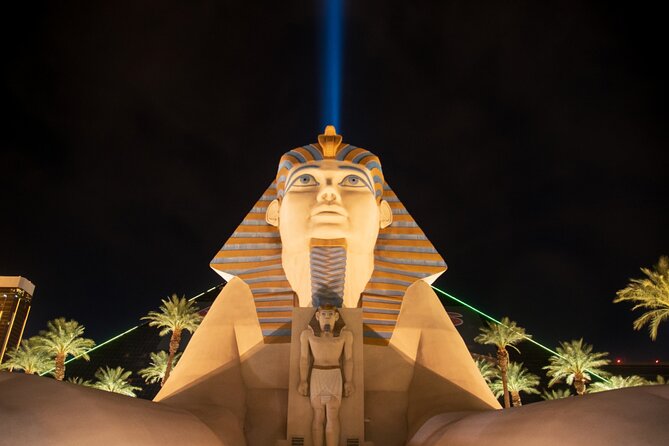
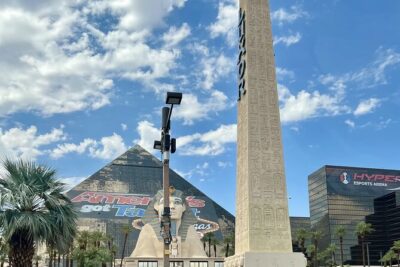
- Luxor: opened in 1993, named for an ancient Egyptian city. The audio also mentions the Luxor Sky Beam, a light that shoots up from the pyramid peak and can be seen from much of the Las Vegas Valley.
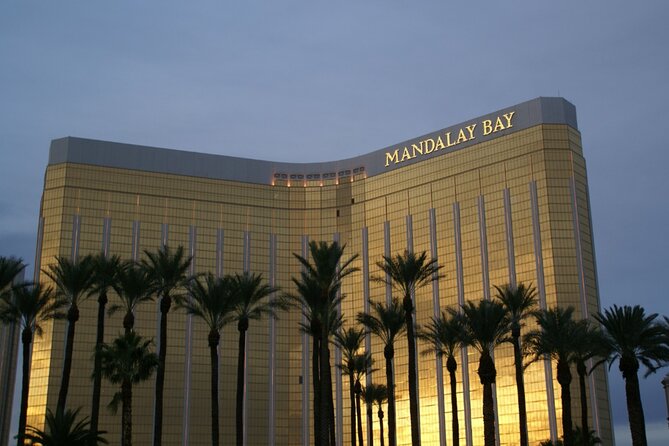
- Mandalay Bay: opened in 1999. The audio says ownership tested several names and that it began as Project Paradise. It connects the name to Mandalay, a city in Myanmar on the Irrawaddy River, and it notes that it’s hundreds of miles from the nearest bay—so the naming is explained as part logic, part branding.
These final stops work well because they shift from history to “why Vegas makes these choices.” Theme is the whole point—and the tour explains that theme like it’s a map, not a gimmick.
Price and value: when $14.99 turns into hours of walking
The price is listed as $14.99 per person. At the same time, the experience details also say the purchase is per car, not per person, which is a big deal if you’re traveling with someone who can share headphones. The tour also specifically suggests couples can share one tour by splitting headphones.
Then there’s the real value lever: lifetime access. No expiry date. You can use it on any trip, as many times as you want. So if you plan even one return to Las Vegas, this can pay off quickly.
Compare that to a guided tour: you’re not buying a seat in a bus group. You’re buying flexible self-guided time plus offline functionality. That combination is usually a better match for people who like to stop, look, and move again without feeling rushed.
Who this walking audio tour is best for
I’d point this toward you if:
- You like to walk the Strip anyway and want it to come with narration.
- You hate waiting for a group.
- You want offline maps so you can focus on the scenery instead of data signals.
- You’re okay with stories that identify what you’re seeing and explain the “why,” even if they aren’t mission-impossible secret hunting.
You might want to consider another format if you:
- Want ultra-detailed behind-the-scenes access that requires inside entry (this tour is built for exterior landmarks and self-paced walking).
- Know you struggle with hearing audio on the move in loud outdoor spaces.
Should you book this Las Vegas Strip self-guided audio tour?
Yes—with the right expectations. This is a solid way to turn a long Strip walk into something more thoughtful. The auto-play setup and offline maps are the practical magic tricks here. The route covers a big chunk of the famous hotel belt, so you get continuity instead of random photo stops.
Book it if you want an easy, independent way to learn what you’re looking at as you go. Skip it if you’re hunting for deep, hidden “secrets” that only reveal themselves with special access.
FAQ
How long does the Las Vegas Strip self-guided audio tour take?
It’s designed for about 1 to 2 hours.
What does it cost?
The price is $14.99 per person.
Do I need a cellular connection during the tour?
No. You download offline maps and the tour is meant to work without cellular or wifi after that download.
What language is available?
The tour is offered in English.
Where do I start the tour?
The meeting point/start is Tropicana Las Vegas – a DoubleTree by Hilton Hotel, 3801 Las Vegas Blvd S, Las Vegas, NV 89109. The activity ends back at the meeting point.
How do I start the audio once I’m onsite?
After booking, you’ll get an email/text with setup instructions and a password. Download Action’s Tour Guide App, then open the app at the start point and launch the tour version matching your starting direction.
Can I cancel for a full refund?
Yes. It offers free cancellation, and you can cancel up to 24 hours in advance for a full refund.
If you want, tell me what direction you’re planning to walk (toward Mandalay Bay or toward the northern end first) and how much time you truly have. I’ll help you pick a pace that fits the 4+ miles without turning it into a chore.
More Walking Tours in Las Vegas
- Las Vegas Downtown & Fremont Street – Guided Walking Tour
★ 5.0 · 636 reviews - Hoover Dam with Walk On Top Tour and Seven Magic Mountains Stop
★ 5.0 · 485 reviews - Must-See Spots Vegas Strip Walking Tour
★ 5.0 · 384 reviews - Hoover Dam Walk-On-Top Tour w/ Seven Magic Mountains & Vegas Sign
★ 5.0 · 361 reviews - Arts District Eats: Food, Art & Culture Walking Tour in Las Vegas
★ 5.0 · 191 reviews - Hoover Dam Top-to-Bottom Tour—Dam Walk, Powerplant & River Float
★ 4.5 · 155 reviews
More Tours in Las Vegas
- Half-Day Mojave Desert ATV Tour from Las Vegas
★ 5.0 · 7,350 reviews - Grand Canyon West Bus Tour with Hoover Dam and Optional Skywalk
★ 4.0 · 7,224 reviews - Ultimate VIP Hoover Dam Tour from Las Vegas with Lunch
★ 5.0 · 6,782 reviews - Lower Antelope Canyon and Horseshoe Bend Day Tour with Lunch
★ 5.0 · 6,764 reviews - Las Vegas Helicopter Night Strip Flight Tour with Optional Dinner
★ 4.5 · 5,693 reviews - Half-Day Emerald Cave Kayak Tour with Optional Hotel Pickup
★ 5.0 · 4,978 reviews
More Tour Reviews in Las Vegas
- Grand Canyon West, Hoover Dam Stop and Optional Lunch and Skywalk
★ 5.0 · 19,535 reviews - Grand Canyon West, Hoover Dam Stop, Breakfast, Lunch & Skywalk
★ 5.0 · 12,194 reviews - Half-Day Mojave Desert ATV Tour from Las Vegas
★ 5.0 · 7,350 reviews - Grand Canyon West Bus Tour with Hoover Dam and Optional Skywalk
★ 4.0 · 7,224 reviews - Ultimate VIP Hoover Dam Tour from Las Vegas with Lunch
★ 5.0 · 6,782 reviews - Lower Antelope Canyon and Horseshoe Bend Day Tour with Lunch
★ 5.0 · 6,764 reviews
Fresh off the Strip: new Las Vegas reviews



Audio Tours, compared.
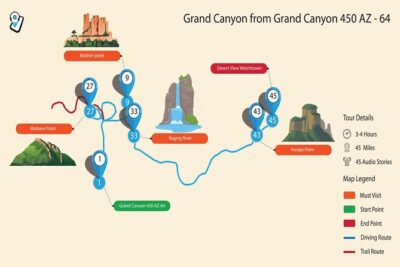 ★ 4.0Grand Canyon South & East Rim: Driving & Walking Audio TourFrom $16112 reviews
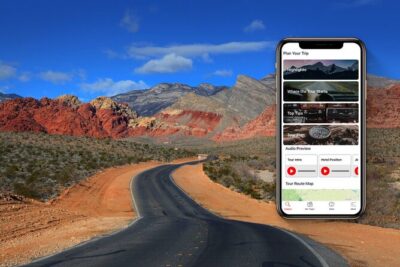 ★ 4.5Audio Driving Tour: Grand Canyon West, Hoover Dam Red Rock CanyonFrom $1626 reviews
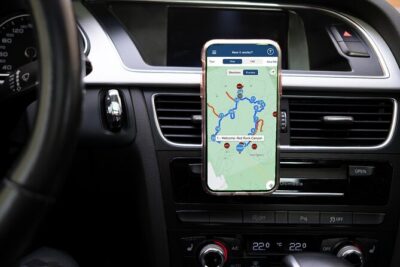 ★ 4.0Red Rock Canyon Self-Guided Driving Audio TourFrom $1421 reviews
 ★ 4.5Lake Mead & Valley of Fire State Park Self-Guided Audio TourFrom $156 reviews
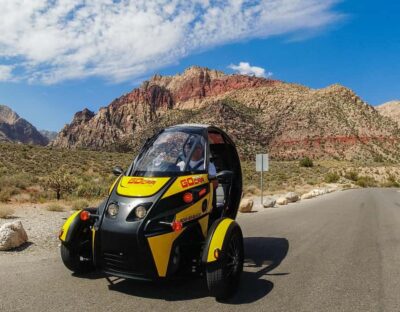 ★ 4.7Red Rock Canyon Ticket and Audio Tour in a GoCarFrom $1646 reviews
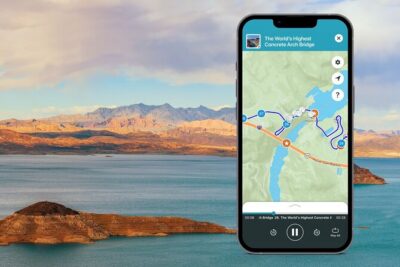 ★ 5.0Hoover Dam and Lake Mead Self-Guided Audio TourFrom $113 reviews
 ★ 4.1GoCar Mob History Audio Tour & Mob Museum TicketFrom $1263 reviews
 ★ 5.0Las Vegas Neon and Secrets: Self-Guided Audio TourFrom $293 reviews
Browse the lists this tour appears in