
REVIEW · DEATH VALLEY TOURS
Death Valley Day & Night Tour – Scenic Stops, Sunset & Stargazing
Death Valley looks different after dark. I like the hotel pickup and drop-off from the Las Vegas Strip, and I like how the day is built around real viewpoints plus a real night-sky session at Death Valley Junction. The trade-off: it’s a long day on windy desert roads, and that’s not a great match for everyone.
What makes this tour work is the mix of big-hitting stops and short walks, not marathon hiking. You’re guided to places like Dante’s View, Zabriskie Point, Mesquite Flat Sand Dunes, Badwater Basin, and Artist’s Palette, with time to look, breathe, and take photos. And if you’re lucky with skies, you end with stargazing that can truly feel like you left the city behind.
One more heads-up before you book: clear skies matter, and moonlight matters too. If you’re set on seeing the Milky Way, plan for conditions beyond anyone’s control.
In This Review
- Key things to know before you go
- How the 11-hour day-and-night plan actually feels
- Where your tour starts in Las Vegas (and why it matters)
- The fast welcome-sign photo and the Red Rock Canyon add-on
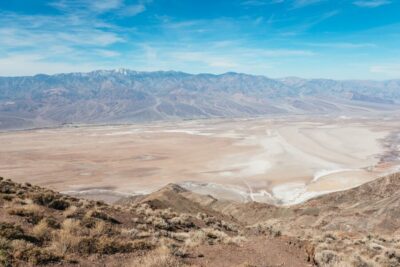
- Dante’s View: the high perch for Badwater Basin and the Panamint Mountains
- Zabriskie Point: golden badlands with a paved walk
- Mesquite Flat Sand Dunes: short walk, big photo potential
- Furnace Creek Visitor Center: restrooms, exhibits, and a real break
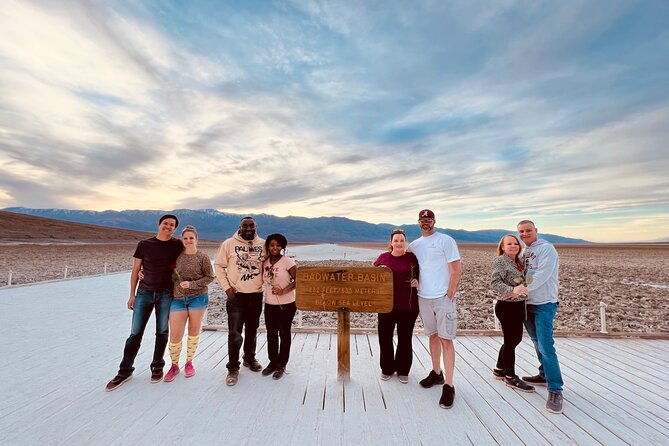
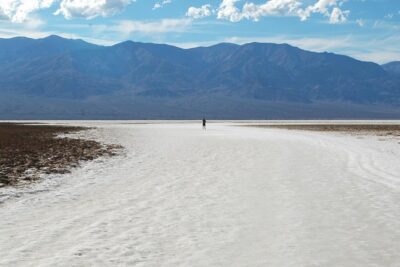
- Badwater Basin: salt flats at the lowest point in North America
- Artist’s Palette: mineral colors and the drive to the viewpoint
- Death Valley Junction stargazing: what you can expect at night
- Guides make or break the day (and the photo help is real)
- Price and value: does $299 buy you something real?
- Who this tour suits best (and who should think twice)
- Should you book this Death Valley day and night tour?
- FAQ
- How do I arrange hotel pickup in Las Vegas?
- What viewpoints and stops are included during the day?
- Is bottled water included?
- What is the stargazing portion like at night?
- Does the tour include food?
- What should I wear for this tour?
- Are restrooms available during the tour?
Key things to know before you go
- Hotel pickup on the Strip makes the whole day easier, especially if you’re staying on Las Vegas Blvd.
- A short-walk itinerary hits multiple classic views without requiring advanced hiking.
- Dante’s View and Zabriskie Point are built for wide-angle photos from high viewpoints and paved outlooks.
- Badwater Basin is the payoff with salt flats and polygon patterns at the lowest point in North America.
- Death Valley Junction is the night plan: major constellations and Milky Way visibility depending on seasonal conditions.
- Small group max 13 helps keep stops efficient and your guide’s attention more personal.
Deeper into Death Valley

How the 11-hour day-and-night plan actually feels
This is not a quick drive-by. You’re out most of the day—about 11 hours—moving between Death Valley’s most famous viewpoints and then switching gears for sunset and stargazing.
The pacing is practical. Many stops are 20–45 minutes, which gives you time to get your bearings, walk the short sections you need, and still make the next viewpoint before the light changes again. That matters in Death Valley because the sun shifts fast, and desert color can change dramatically hour to hour.
Also, you get bottled water included, plus the tour highlights say lunch and snacks are part of the deal. Translation: you can show up without packing a whole picnic.
Group size is kept small (up to 13 travelers). That’s a big deal when everyone is trying to park themselves at the same photo spot. With a tight group, your guide can manage the timing so you’re not spending half your day waiting.
Where your tour starts in Las Vegas (and why it matters)
You’ll get complimentary hotel pickup from hotels along the Main Strip (Las Vegas Blvd). You’ll want to confirm your pickup spot and time with the operator 24 hours before you go.
This pickup-and-drop setup is one of the main reasons people choose this kind of tour. Death Valley is not hard in a map sense, but it is hard in a logistics sense—driving, parking, finding the right turnout at the right time, and doing it all with limited daylight.
With pickup, you can focus on the experience: viewpoints, short walks, and then the night-sky session.
If you’re comparing this to renting a car, think about time. This tour is a full day, and you’re paying to avoid the mental load of scheduling multiple stops, driving longer distances between them, and figuring out the timing for sunset.
The fast welcome-sign photo and the Red Rock Canyon add-on
The day kicks off with a quick stop at the Death Valley National Park welcome sign. It’s a short photo moment—about 10 minutes—but it helps you start the day with a signature shot that anchors your whole visit.
The tour also highlights pairing Red Rock Canyon Overlook with Death Valley in one trip. If you’re the type who loves seeing desert geology in different “flavors,” this matters. Las Vegas-area red rock and Death Valley’s harsher basin-and-range world feel totally different, even when the driving distances are long.
This early part is mostly about momentum. You start moving, you see your first big desert view, and then you’re ready for the high viewpoints that make Death Valley famous.
More of the Strip lit up by night
- Big Bus Las Vegas: Sightseeing Night Tour by Open-Top Bus★ 4.0 · 3,612 reviews
- Las Vegas: Sightseeing Night Tour by Open-top Bus★ 4.3 · 2,304 reviews
- Big Bus Las Vegas: Hop-On Hop-Off Sightseeing Bus Tour★ 4.0 · 2,147 reviews
- Las Vegas: Hop-on Hop-off Sightseeing Tour by Open-Top Bus★ 4.3 · 858 reviews
- From Las Vegas: Death Valley Sunset and Starry Night Tour★ 4.9 · 207 reviews
- Death Valley Day & Night Tour – Scenic Stops, Sunset & Stargazing★ 5.0 · 124 reviews
Dante’s View: the high perch for Badwater Basin and the Panamint Mountains
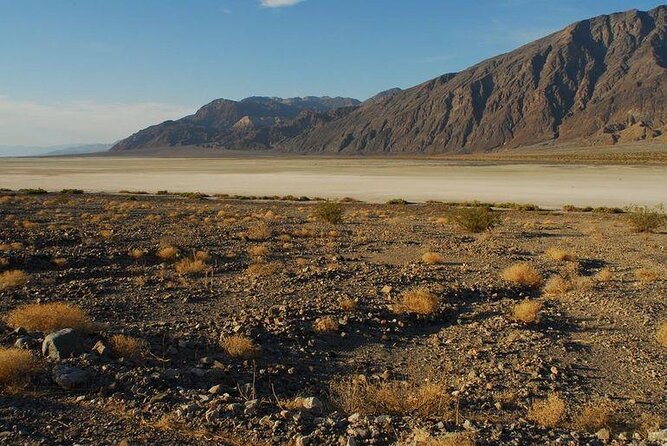
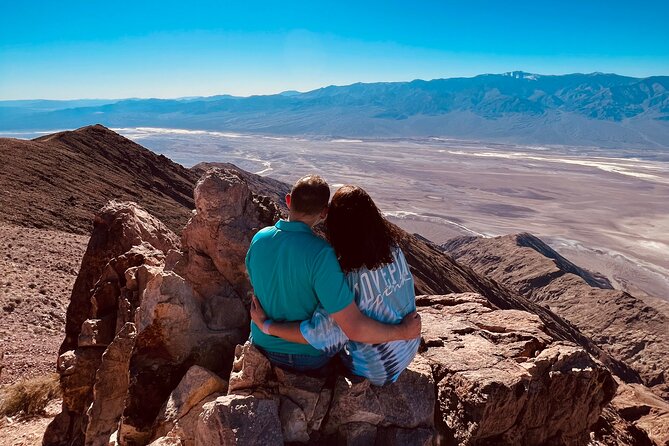
Next up is Dante’s View, nearly 5,500 feet above the valley floor. The point is simple: from here, the whole Death Valley story fits into one view.
You get about 30 minutes, including a short, easy walk along the ridge. That’s the sweet spot for most people—enough movement to stretch your legs, not enough to turn the day into an ordeal. Your guide helps with framed photos, which is useful because at Dante’s View the scale is the main challenge. It’s easy to under-shoot or end up with a view that looks flatter than it feels in person.
From this height, you can see Badwater Basin, the Panamint Mountains, and the wide desert spread between them. If you only have one “big-picture” viewpoint in your day, this is one to prioritize.
A practical consideration: the drive up can feel windy, and people sensitive to motion or roads can find this part challenging. If you’ve ever felt uneasy in winding mountain routes, take that seriously.
Zabriskie Point: golden badlands with a paved walk
Zabriskie Point is another classic, and you’ll get about 30 minutes. It’s built for easy access: a short paved walk to the lookout, then time to stand, look, and photograph.
The reason this stop is so popular is color and layering. You’re looking at golden badlands, dramatic ridges, and rock formations that shift visually as the sun changes. It’s also one of those places where your guide’s photo help can pay off—at Zabriskie Point, small composition tweaks make a huge difference.
If you want to stretch your legs without turning the day into a workout, this is a good match.
Mesquite Flat Sand Dunes: short walk, big photo potential
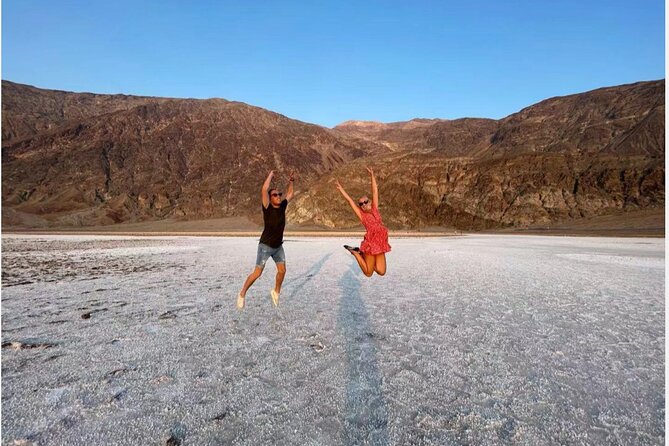
Then comes the surreal part: Mesquite Flat Sand Dunes. You’ll spend around 30 minutes here, including a short walk into the sand.
This isn’t “climb all day.” It’s more about getting close enough to see the rippled patterns and feel the soft shifting surface underfoot. That walk is also perfect for silhouettes and for photos that look like they belong in a science-fiction desert map.
One practical thing: in hot months, sand stays hotter than you’d expect. Wear shoes you trust, and plan for a slow pace once you’re on the dunes.
Also, if you’re thinking of stargazing later, you’ll want to avoid getting so overheated that you’re wiped out by evening. The day is long; pace yourself.
Furnace Creek Visitor Center: restrooms, exhibits, and a real break
Furnace Creek Visitor Center is a smart midpoint. You get about 45 minutes, which is long enough for what most people need here: bathroom time, water management, and a breather from constant viewpoint hopping.
The visitor center also offers informative exhibits about the park’s extreme climate. You’re in a place where conditions can be intense, so this stop helps you connect the scenery to the reality of what you’re seeing.
Food-wise, the tour continues with a dinner break at local restaurants after sightseeing. Combined with the stated lunch/snacks, this is one of the reasons the tour can feel low-stress compared with self-planning.
If you’re the type who gets cranky without food, this stop is your friend.
Badwater Basin: salt flats at the lowest point in North America
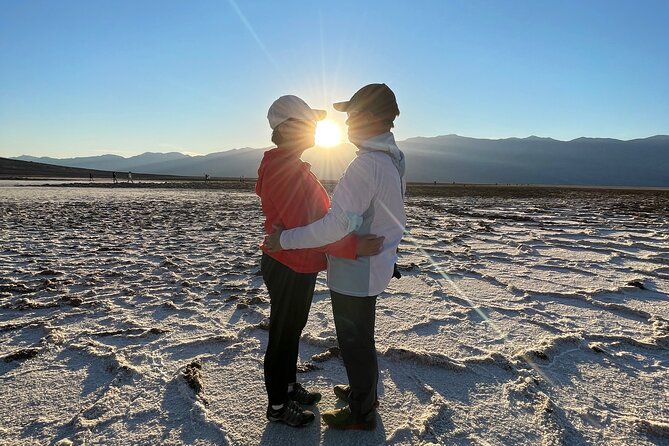
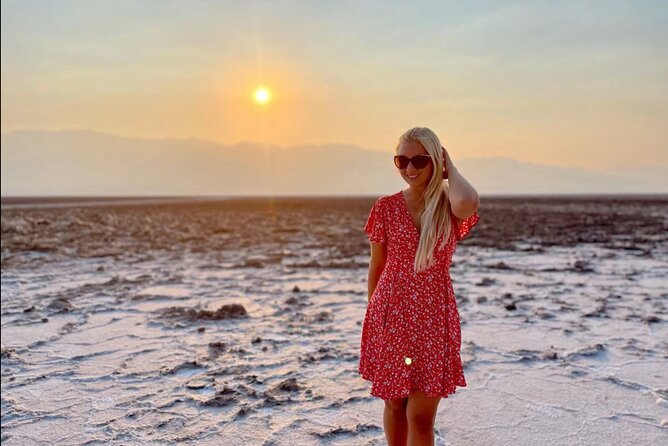
Now the day gets iconic. Badwater Basin is the lowest point in North America at 282 feet below sea level, and you’ll get about 30 minutes.
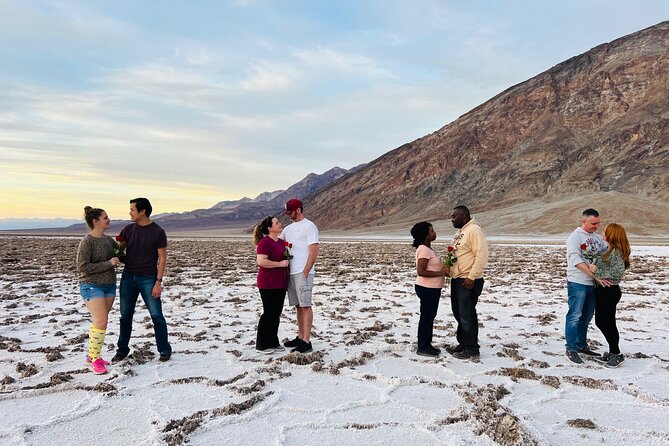
You walk onto the white salt flats, which can look unreal because the surface is so bright and flat. The “wow” here is texture. Your guide helps you explore safely and notice the polygon-shaped salt formations that appear across the flats.
This is one of those locations where a little time goes far. You don’t need long hours to get the main experience, but you do need to slow down long enough to see the patterns. A rushed stop can leave you with only a generic photo instead of the true detail you came for.
Artist’s Palette: mineral colors and the drive to the viewpoint
After Badwater, the colors turn up with Artist’s Palette. You’ll spend about 45 minutes, and the route involves Artist Drive to reach the viewpoint.
This stop is known for hills in shades of pink, green, yellow, and purple, formed by oxidized minerals. It’s not just “pretty rocks.” It’s a visual lesson in how geology changes over time, and you’ll see those colors at a scale that feels almost painted.
Time at Artist’s Palette is longer than some other stops because you need a moment to absorb it. If you’re into photography, this is also a good place to try a few different angles—especially if the light is shifting toward sunset.
Death Valley Junction stargazing: what you can expect at night
The night portion happens at Death Valley Junction, a dark-sky area known for views away from major city lights. You’ll spend about 45 minutes here.
Your guide points out major constellations, and you may be able to see the Milky Way depending on seasonal visibility. This is the big night payoff: the tour shifts from day-views to night-sky awareness.
Still, be realistic. Stargazing is weather-dependent, and moonlight affects what you see. If the sky is cloudy, you’re not getting Milky Way detail—just fewer stars.
If you’re booking specifically for Milky Way photos, aim for the darkest nights you can. Guides often recommend avoiding strong moonlight, and people do better when the sky is truly dark.
Practical tip from repeated advice: wear something comfortable for sitting and take your time adjusting your eyes. The sky usually looks best after you settle in.
Guides make or break the day (and the photo help is real)
The tour’s biggest strength is often the guide. Across the program you’ll see names like Alex, Jay, Lorenzo, Art, and Mama (Lankun) come up with the same theme: guides who know how to time stops for the best light and help you get photos you’ll actually want to keep.
Some guides go beyond “point and tell.” They’ll help with framing at Dante’s View and Zabriskie Point, and they’ll take photos of your group using their own camera setup. In more than one experience, people mention receiving photos afterward, plus extra clips like time-lapse style footage.
If you care about photos, this is a big advantage. You’re paying for access to the right spots and help making your pictures look intentional, not accidental.
One small photo tip you’ll hear: plan for phone storage, since you might end up with a lot of images (especially at dusk and after sunset). Also, bright colors show up better in night-sky and desert lighting, so pack something you can wear that pops.
Price and value: does $299 buy you something real?
At $299 per person for roughly 11 hours, this isn’t a bargain. But value in a tour like this isn’t only about ticket costs—it’s about planning, transport, and reduced effort.
Here’s what you’re getting for that price:
- Hotel pickup and drop-off from the Las Vegas Strip
- A full loop of major Death Valley viewpoints, with admission tickets included for many stops
- Bottled water included
- A day built around sunset timing and stargazing
- The tour highlight says lunch and snacks are included, plus a dinner break at Furnace Creek
So, if you were to self-drive, you’d still need a plan for when to arrive at each lookout, how to park without losing daylight, and how to get yourself into the dark-sky area after sunset. You’d also need to handle all the sitting and walking while managing heat, water, and timing.
Where value can feel weaker is when expectations are too rigid. If you’re expecting VIP treatment beyond the normal tour experience, check what’s included for your departure. If you’re expecting guaranteed Milky Way views regardless of conditions, that’s also a mismatch—night skies depend on weather and moonlight.
Who this tour suits best (and who should think twice)
This tour is a strong fit for:
- People who want to see many Death Valley highlights in one day without self-driving
- Anyone who wants guided photo help at the viewpoints
- People who care about ending with dark-sky stargazing, not just sunset selfies
- Couples and small groups who appreciate a small group size (max 13)
It may not be the best fit if you:
- Have mobility issues that make short walks and uneven desert surfaces hard
- Have vertigo or motion sickness concerns, since winding desert roads can be rough for some people
- Are sensitive to heat and long days—Death Valley can get brutally hot, especially in summer
If stargazing is your top goal, you should also be ready for a “conditions-first” outcome. You’ll still learn constellations and see the night sky, but the dramatic Milky Way detail depends on what the sky gives you.
Should you book this Death Valley day and night tour?
If you want the classic Death Valley highlights plus an actual night-sky stop—without renting a car and guessing your timing—this tour is a smart pick. The mix of viewpoints (Dante’s View, Zabriskie Point, dunes, Badwater, Artist’s Palette) plus stargazing at Death Valley Junction gives you the day-and-night contrast that makes Death Valley special.
I’d book it if:
- You like guided photo help and want your day to feel smooth.
- You’re comfortable with a long day and short walks.
- You understand stargazing depends on the sky being clear enough to show what you want.
I’d think twice if you’re motion-sensitive or have limited mobility needs. In that case, you might still love Death Valley, but you’ll want a plan with fewer road stress points and more flexibility.
FAQ
How do I arrange hotel pickup in Las Vegas?
Pickup is offered from hotels along the Las Vegas Strip. Contact the operator at the phone number on your ticket at least 24 hours before departure to confirm your pickup location and time.
What viewpoints and stops are included during the day?
You’ll visit Death Valley viewpoints including Dante’s View, Zabriskie Point, Mesquite Flat Sand Dunes, Furnace Creek Visitor Center, Badwater Basin, and Artist’s Palette. The night portion is at Death Valley Junction.
Is bottled water included?
Yes. Bottled water is included.
What is the stargazing portion like at night?
Stargazing happens at Death Valley Junction for about 45 minutes. Your guide points out major constellations, and Milky Way visibility depends on seasonal conditions.
Does the tour include food?
The tour overview states lunch and snacks are included. For any winery portion on related departures, the FAQ says food and beverages are not included.
What should I wear for this tour?
Hiking or athletic shoes are recommended. In cooler months (Oct to Feb), long pants and a warm jacket are appropriate. In warmer months (Mar to Sept), shorts, a light shirt, and a hat are appropriate.
Are restrooms available during the tour?
Yes. There are restrooms at the Furnace Creek Visitor Center and also at a few stops inside Death Valley. It’s recommended to use the restroom before departure.
More Tour Reviews in Las Vegas
- Grand Canyon West, Hoover Dam Stop and Optional Lunch and Skywalk
★ 5.0 · 19,535 reviews - Grand Canyon West, Hoover Dam Stop, Breakfast, Lunch & Skywalk
★ 5.0 · 12,194 reviews - Half-Day Mojave Desert ATV Tour from Las Vegas
★ 5.0 · 7,350 reviews - Grand Canyon West Bus Tour with Hoover Dam and Optional Skywalk
★ 4.0 · 7,224 reviews - Ultimate VIP Hoover Dam Tour from Las Vegas with Lunch
★ 5.0 · 6,782 reviews - Lower Antelope Canyon and Horseshoe Bend Day Tour with Lunch
★ 5.0 · 6,764 reviews
Las Vegas After Dark, By Bus
- Big Bus Las Vegas: Sightseeing Night Tour by Open-Top Bus
★ 4.0 · 3,612 reviews - Las Vegas: Sightseeing Night Tour by Open-top Bus
★ 4.3 · 2,304 reviews - Big Bus Las Vegas: Hop-On Hop-Off Sightseeing Bus Tour
★ 4.0 · 2,147 reviews - Las Vegas: Hop-on Hop-off Sightseeing Tour by Open-Top Bus
★ 4.3 · 858 reviews - From Las Vegas: Death Valley Sunset and Starry Night Tour
★ 4.9 · 207 reviews - Viator Exclusive: 10:15PM Las Vegas Night Tour by Open-Top Bus
★ 4.0 · 103 reviews
Deeper into Death Valley
- Best of Death Valley Small Group Day Tour from Las Vegas
★ 5.0 · 644 reviews - Death Valley Sunset and Stargazing Tour from Las Vegas
★ 5.0 · 536 reviews - From Las Vegas: Death Valley Guided Day Tour
★ 4.9 · 392 reviews - From Las Vegas: Death Valley & Rhyolite Ghost Town Day Trip
★ 4.8 · 289 reviews - Small-Group Death Valley National Park Day Tour from Las Vegas
★ 5.0 · 217 reviews - From Las Vegas: Death Valley Sunset and Starry Night Tour
★ 4.9 · 207 reviews
Fresh off the Strip: new Las Vegas reviews


Death Valley Tours, compared.
 ★ 5.0Best of Death Valley Small Group Day Tour from Las VegasFrom $199644 reviews
 ★ 5.0Death Valley Sunset and Stargazing Tour from Las VegasFrom $249536 reviews
 ★ 4.9From Las Vegas: Death Valley Guided Day TourFrom $199392 reviews
 ★ 4.8From Las Vegas: Death Valley & Rhyolite Ghost Town Day TripFrom $170289 reviews
 ★ 5.0Small-Group Death Valley National Park Day Tour from Las VegasFrom $279217 reviews
 ★ 4.9From Las Vegas: Death Valley Sunset and Starry Night TourFrom $249207 reviews
 ★ 4.8Death Valley NP Full-Day Small Groups Tour from Las VegasFrom $279134 reviews
 ★ 4.5Death Valley Day Trip from Las VegasFrom $297109 reviews
Browse the lists this tour appears in