
REVIEW · DEATH VALLEY TOURS
From Las Vegas: Death Valley Guided Day Tour
Death Valley compresses extremes into one day. I love the mix of ghost-town history with the raw geology of Furnace Creek and Badwater Basin, and I also like that the route hits both the highest and lowest paved viewpoints in one smooth loop. The big consideration is the long day and the early pickup, so plan to eat, shower, and sleep afterward—not shows or dinner plans.
Guides Brian and Jason (among others) bring a fun, no-fluff style. You get real stories about what you’re seeing, plus lots of photo stops, and the pacing tends to feel tailored to the group instead of a ticket to nowhere.
You’ll start with hotel pickup in Las Vegas and return for drop-off after about 12 hours, with bottled water on hand and a breakfast buffet included. It’s built for small groups (up to 12), which matters here when the heat and walking at viewpoints can add up fast.
In This Review
- Key highlights that make this Death Valley day trip worth it
- The best reason to go: you get scale, not just stops
- Leaving Las Vegas early: comfort during the long drive
- Ghost town stop: Rhyolite and the story behind the ruins
- Entering Death Valley: Furnace Creek is the center of the heat
- Highest and lowest paved viewpoints: why that combo hits hard
- Mesquite Flat Sand Dunes: walking the texture, not just looking
- Lunch or breakfast: keeping energy up without guessing
- How the guides make the day feel tailored
- Price and value: $199 makes sense if you count the real costs
- Who this Death Valley tour fits best
- What to pack and how to keep the day pleasant
- If weather or road access changes, the day still moves
- Should you book the Mojave Wave LLC Death Valley guided day tour?
- FAQ
- How long is the Death Valley guided day tour from Las Vegas?
- What does the price include?
- Is breakfast included, and is there lunch too?
- How many people are in the group?
- Where do pickups happen?
- Is there bottled water during the tour?
- What should I bring for the tour?
- Is the tour wheelchair accessible?
Key highlights that make this Death Valley day trip worth it
- Two extremes in one outing: highest and lowest paved viewpoints back-to-back so you feel the scale fast
- Rhyolite ghost town detour: Wild West ruins explained in plain, human terms
- Furnace Creek Visitor Center stop: a chance to see the hottest-place focus of the valley
- Mesquite Flat Sand Dunes + Artist’s Palette: dune walking with colored rock scenery on the same day
- Early timing for better conditions: you leave early enough to enjoy big views before the midday grind
- Small-group vibe with real guiding: limited to 12, and guides like Brian and Jason are known for humor and hands-on care
Deeper into Death Valley

The best reason to go: you get scale, not just stops
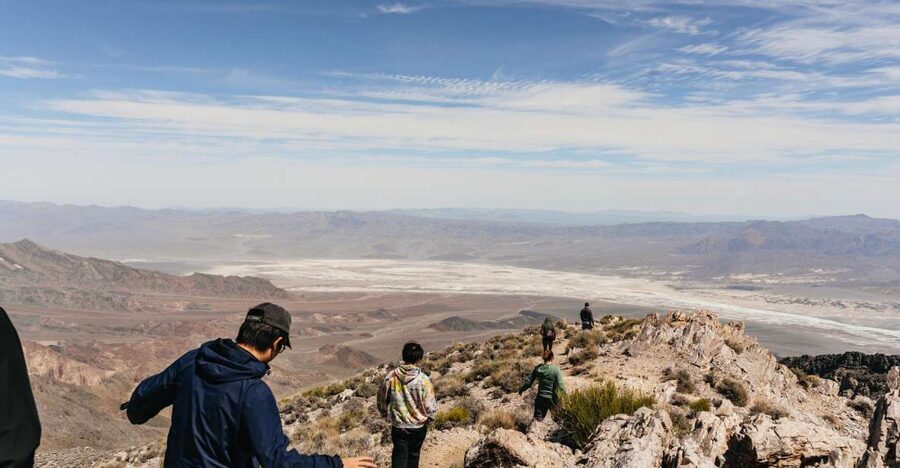
Death Valley is one of those places where a map can’t prepare you. You’re dealing with extremes—elevation swings, brutal heat potential, and scenery that looks almost too strange to be real. What I like about this tour is that it doesn’t feel like a box-checking drive-by. You actually move through the valley’s major “modes” in a single day.
The tour’s structure leans into the big contrasts: high viewpoints where you can take in the wide basin, then low paved overlooks that make you feel how far down you’ve come. That combination is the fastest way to understand why people describe Death Valley as both dramatic and oddly calm when you’re standing in the right spot.
Leaving Las Vegas early: comfort during the long drive
This trip runs about 12 hours, and pickup timing can be very early. In practice, that means you’ll spend less time battling peak heat and more time enjoying the places that require short walks and steady patience—viewpoints, dune areas, and a few historical stops.
Transport is a major part of the value here. The car rides are repeatedly praised, and that matters because a lot of Death Valley day trips rise or fall on how comfortable and organized the driving is. With a small group limited to 12, it’s less chaotic than the big-bus approach, and you’re more likely to actually ask questions and get answers.
One practical note: the confirmation of the exact pickup time and location comes by 9:00 PM the day before. And if you’re the type who likes to stack plans back-to-back, don’t. The tour runs as a unit, and schedule shifts can happen when roads or viewpoints are inaccessible due to weather.
Ghost town stop: Rhyolite and the story behind the ruins
One of the strongest parts of the day is the Wild West ghost town angle, especially Rhyolite. The tour includes a stop at Rhyolite, which boomed after gold was found in 1904. That detail matters, because without it the place can feel like random piles of stone. With it, you start to see how quickly fortunes rose and vanished in the desert.
What makes this stop work on a day tour is that it’s not just “look at old buildings.” You get context: why the town grew, why it faded, and why the remaining structures feel so eerie against the open desert sky. It’s the kind of stop that breaks up the geologic intensity of Death Valley with human scale—sudden wealth, hard living, and then silence.
If you like history but hate museum lectures, this stop is a good fit. It’s outdoor history with real explanations, and you can walk at your own pace without feeling rushed.
One more to line up against this Las Vegas booking:
- Red Rock Canyon Self-Guided Electric Bike Tour★ 5.0 · 783 reviews
- Las Vegas: Guided Las Vegas Desert ATV Tour★ 4.6 · 677 reviews
- Las Vegas Downtown & Fremont Street – Guided Walking Tour★ 5.0 · 636 reviews
- Las Vegas: Valley of Fire Guided Hike with Drinks and Snacks★ 4.9 · 548 reviews
- Las Vegas: Grand Canyon National Park South Rim Guided Tour★ 4.4 · 531 reviews
- Small Group Guided Colorado River & Emerald Cave Kayak Tour★ 5.0 · 500 reviews
Entering Death Valley: Furnace Creek is the center of the heat
Once you enter Death Valley, the tour focuses on key anchors in the valley’s story. Furnace Creek is front and center. You’ll visit the Furnace Creek Visitor Center, a place designed to explain the extreme conditions that make Death Valley famous.
This stop is the “why” moment. You’re seeing the valley’s hottest-place focus in the heart of the basin, and the interpretive setting helps you connect the dots: why the air feels different, why shadows matter, and why timing affects comfort so much. It’s also where you can reset mentally before moving into the sand and the viewpoints.
The tour also builds in water. Bottled water is included, and that’s not a small detail in a place where you don’t want to second-guess hydration.
Highest and lowest paved viewpoints: why that combo hits hard
The highlights promise both the highest and lowest paved viewpoints of Death Valley. That’s exactly what you want if you only have one day.
The high stop gives you perspective. From those elevated viewpoints, you can see how the valley spreads and how the roads snake through the basin. The experience is less about one photo and more about understanding the terrain.
Then you go down. The low paved viewpoint experience makes the scale feel physical. You can’t help but notice how the air, light, and even walking conditions shift as you head toward the lowest areas. It’s an instant lesson in how extreme this place really is.
If you’re wondering whether this feels redundant, it doesn’t. One stop is about context; the other is about consequence. Put together, they give you a complete sense of Death Valley’s shape without needing multiple days.
Mesquite Flat Sand Dunes: walking the texture, not just looking
After the viewpoints and Furnace Creek focus, you’ll head to the Mesquite Flat Sand Dunes. This is one of those places where the best part is the slow act of walking.
The tour includes time in the dunes area, and you’ll also see Artist’s Palette. That’s a great pairing because the dunes are soft and shifting, while the colored formations add structure and drama. It helps the scenery feel varied even when you’re still in the same general region.
A quick reality check: sand walking costs effort. Even short stretches can feel like a workout, especially if you’re not used to uneven ground or you’re trying to move quickly in the heat. Wear comfortable shoes and take it slow. The group size helps here—when the vehicle is waiting and the guide is managing time, you’re not constantly fighting crowd flow.
If your fitness level is low, this can still be doable, but you’ll want to keep expectations reasonable about how much you’ll want to walk.
Lunch or breakfast: keeping energy up without guessing
Food can be the hidden risk on desert tours. Here, breakfast buffet is included, and the tour notes that a sit-down lunch may also be offered depending on availability. Either way, you’ll have a scheduled meal that keeps you from turning the day into a snack hunt.
This is one of the places where value shows. Yes, the advertised price includes transport and entrance fees. But the meal plan also lowers stress. You show up prepared, and you leave fed enough to make the later viewpoints comfortable.
Just be aware that the tour lists food as included only to the extent of those planned meals. If you’re the kind of person who expects to eat multiple times outside a buffet stop, you’ll need to adjust expectations.
How the guides make the day feel tailored
The standout theme in the feedback is guide quality—especially how the guide turns a drive into a story and a route into a day that feels personal.
Guides like Brian and Jason are repeatedly described as:
- sharing lots of information throughout the day
- staying flexible if certain areas can’t be accessed
- helping the group move at a pace that feels right, not rushed
- taking extra steps like making time for bathroom stops and photo opportunities
- offering cold water and regular check-ins for comfort
One review detail I especially like: when storms or closures limit planned areas, the guide doesn’t just shrug. The day can still deliver strong alternatives, and the route can pivot to keep the experience from collapsing.
Also, humor shows up—dad jokes, playful facts, and an easy tone that helps you focus on the scenery instead of the fatigue.
Price and value: $199 makes sense if you count the real costs
At $199 per person for a 12-hour guided day with hotel pickup and drop-off, entrance fees, breakfast buffet, bottled water, and a guide, you’re paying for more than a seat.
Consider what you’d likely spend if you drove yourself:
- rental car and gas
- park or entrance fees
- the time cost of figuring out viewpoints, timing, and a route that won’t strand you late in the day
- the added stress of heat timing and navigation
This tour bundles that together, and the small-group setup adds a layer of attention you don’t get in big crowds. The comfort feedback on transport (with a very high share of perfect scores) is a good sign because the driving is half the experience, and you’ll feel it.
So is it expensive? It’s not cheap. But it’s priced like a day service built for convenience in a place that’s not easy to do well on your own in limited time.
Who this Death Valley tour fits best
This is a strong choice if you:
- want Death Valley highlights in one day, without rental-car hassle
- like guides who explain what you’re seeing in plain language
- enjoy both natural features (dunes, viewpoints, Furnace Creek area) and human history (ghost town stop)
- can handle early pickup and a long day
It may not fit you if you have limitations that make uneven ground or long sitting tough. The tour specifically notes it’s not suitable for people with back problems, heart problems, pregnancy, low fitness, or people with certain medical conditions. If any of that applies, it’s worth checking with a medical professional and asking the operator what the on-the-ground walking looks like.
What to pack and how to keep the day pleasant
Death Valley is not a place where you want to improvise clothing.
Bring:
- comfortable shoes (you’ll walk at viewpoints and dune areas)
- comfortable clothes
- weather-appropriate layers
- ID card (a copy is accepted)
Plan around the rules:
- no large bags or luggage in the vehicle
- no drones
- no smoking in the vehicle
- no intoxication, alcohol, or drugs
- bare feet are not allowed
If you’re prone to forgetting small basics, set yourself up. Wear what you’ll be comfortable in for hours, and keep small items accessible for quick stops. The heat can change your mood fast, and the easiest way to keep it fun is to be ready.
If weather or road access changes, the day still moves
Death Valley can be unpredictable. Weather damage can limit access to some areas, and the tour notes that schedules may shift. The good news is that the guides are known for adapting—swapping in alternate spots so you still get a full experience.
That approach matters because it keeps you from going home feeling like the tour fell apart. You might not see every single planned angle, but the goal stays intact: get you to strong viewpoints, sand-and-color scenery, and the valley’s key story stops.
Should you book the Mojave Wave LLC Death Valley guided day tour?
Book it if you want a one-day Death Valley hit with real guiding, water included, and a route designed to show scale fast. The small group limit (12) and the guide style—Brian and Jason especially—show up as the reason this works so well for people.
Skip it if you hate early starts, struggle with long days, or can’t handle limited walking and heat-related discomfort. And if you’re the type who needs a perfectly fixed schedule for the evening, treat that as a risk; it’s smarter to leave your post-tour plans flexible.
If your goal is Death Valley highlights done the stress-free way from Las Vegas, this tour is a solid bet. It costs money, but it saves time, effort, and decision fatigue—exactly what you want when you’re heading into one of the world’s most extreme places.
FAQ
How long is the Death Valley guided day tour from Las Vegas?
The tour runs for about 12 hours.
What does the price include?
It includes hotel pickup and drop-off, Death Valley entrance fees, a breakfast buffet, bottled water, and a live English-speaking guide.
Is breakfast included, and is there lunch too?
Breakfast buffet is included. The tour notes that a sit-down lunch may be available in Death Valley depending on availability.
How many people are in the group?
It’s a small group limited to 12 participants.
Where do pickups happen?
Pickups are available from or near major hotels on the Las Vegas Strip and Downtown, and as far south as the Silverton Hotel. The exact pickup time and location are confirmed by 9:00 PM the day before.
Is there bottled water during the tour?
Yes, bottled water is included.
What should I bring for the tour?
Bring comfortable shoes, comfortable clothes, and weather-appropriate clothing, plus an ID card (a copy is accepted).
Is the tour wheelchair accessible?
Yes, it is wheelchair accessible, though the tour lists certain conditions where it may not be suitable.
More Tours in Las Vegas
- Half-Day Mojave Desert ATV Tour from Las Vegas
★ 5.0 · 7,350 reviews - Grand Canyon West Bus Tour with Hoover Dam and Optional Skywalk
★ 4.0 · 7,224 reviews - Ultimate VIP Hoover Dam Tour from Las Vegas with Lunch
★ 5.0 · 6,782 reviews - Lower Antelope Canyon and Horseshoe Bend Day Tour with Lunch
★ 5.0 · 6,764 reviews - Las Vegas Helicopter Night Strip Flight Tour with Optional Dinner
★ 4.5 · 5,693 reviews - Half-Day Emerald Cave Kayak Tour with Optional Hotel Pickup
★ 5.0 · 4,978 reviews
More Tour Reviews in Las Vegas
- Grand Canyon West, Hoover Dam Stop and Optional Lunch and Skywalk
★ 5.0 · 19,535 reviews - Grand Canyon West, Hoover Dam Stop, Breakfast, Lunch & Skywalk
★ 5.0 · 12,194 reviews - Half-Day Mojave Desert ATV Tour from Las Vegas
★ 5.0 · 7,350 reviews - Grand Canyon West Bus Tour with Hoover Dam and Optional Skywalk
★ 4.0 · 7,224 reviews - Ultimate VIP Hoover Dam Tour from Las Vegas with Lunch
★ 5.0 · 6,782 reviews - Lower Antelope Canyon and Horseshoe Bend Day Tour with Lunch
★ 5.0 · 6,764 reviews
Deeper into Death Valley
- Best of Death Valley Small Group Day Tour from Las Vegas
★ 5.0 · 644 reviews - Death Valley Sunset and Stargazing Tour from Las Vegas
★ 5.0 · 536 reviews - From Las Vegas: Death Valley & Rhyolite Ghost Town Day Trip
★ 4.8 · 289 reviews - Small-Group Death Valley National Park Day Tour from Las Vegas
★ 5.0 · 217 reviews - From Las Vegas: Death Valley Sunset and Starry Night Tour
★ 4.9 · 207 reviews - Death Valley NP Full-Day Small Groups Tour from Las Vegas
★ 4.8 · 134 reviews
Fresh off the Strip: new Las Vegas reviews




Death Valley Tours, compared.
 ★ 5.0Best of Death Valley Small Group Day Tour from Las VegasFrom $199644 reviews
 ★ 5.0Death Valley Sunset and Stargazing Tour from Las VegasFrom $249536 reviews
 ★ 4.8From Las Vegas: Death Valley & Rhyolite Ghost Town Day TripFrom $170289 reviews
 ★ 5.0Small-Group Death Valley National Park Day Tour from Las VegasFrom $279217 reviews
 ★ 4.9From Las Vegas: Death Valley Sunset and Starry Night TourFrom $249207 reviews
 ★ 4.8Death Valley NP Full-Day Small Groups Tour from Las VegasFrom $279134 reviews
 ★ 5.0Death Valley Day & Night Tour – Scenic Stops, Sunset & StargazingFrom $299124 reviews
 ★ 4.5Death Valley Day Trip from Las VegasFrom $297109 reviews
Browse the lists this tour appears in