
REVIEW · DEATH VALLEY TOURS
Death Valley Day-Tour from Las Vegas
Death Valley is a full-day sensory shock. This tour stacks the biggest hits of the park—Badwater below sea level, Hell’s Gate views, and the old gold-mining ghost town of Rhyolite—without feeling like a drive-through. I especially like the nonstop “where is this going next?” variety, from salt flats to sculpted volcanic-looking ridges, and I like that you get real time for stops instead of only snapping from the bus.
My other favorite part is the way the guides turn the scenery into something you can read: Dennis did stories that made the desert feel less like empty space, and Clayton kept explanations tied to what you’re seeing right now. The main drawback to plan around is simple: this is a long day with a tight schedule in extreme heat—so if you want lots of slow walking and long rests, you may feel time pressure.
In This Review
- Key things to know before you go
- A long, high-impact Death Valley day from Las Vegas
- Price and value: is $298 worth it?
- The morning start: breakfast, then straight into the desert
- Rhyolite ghost town: gold-mining ruins with movie-set vibes
- Hell’s Gate: an above-the-valley photo viewpoint
- Badwater: standing at 282 feet below sea level
- Zabriskie’s Point and Devil’s Golf Course: color and texture overload
- Furnace Creek Museum: context without extra work
- The Salt Lake, Sand Dunes, and Artists Palette: finishing strong
- Getting picked up and transported: comfort helps on a long day
- Guide quality: why Dennis, Clayton, and Linda matter
- Heat, timing, and the reality of a packed schedule
- What to bring (and what not to)
- Should you book this Death Valley day tour?
- FAQ
- What’s the duration of the Death Valley day tour?
- What’s included with the ticket price?
- Do you offer hotel pickup and drop-off in Las Vegas?
- How often does this tour run?
- What do I need to bring for the tour?
- Is there a luggage limit?
- Is there a cancellation window?
Key things to know before you go
- A true day-long loop: expect 630 minutes of driving plus multiple major viewpoints and short stop times.
- Heavy photo stops: Hell’s Gate, Zabriskie’s Point, Devil’s Golf Course, Badwater, and the dunes are built for camera time.
- Rhyolite is a highlight for a reason: you’ll see the abandoned gold-mining town that also shows up in films.
- You travel in comfort: luxury SUVs or 12–14 passenger VIP mini-coaches, depending on the group.
- Food and water are handled: continental breakfast, lunch, snacks, and unlimited bottled water are included.
- Bring ID and pack light: you’ll need a passport or ID card, and large bags aren’t allowed.
Deeper into Death Valley

A long, high-impact Death Valley day from Las Vegas
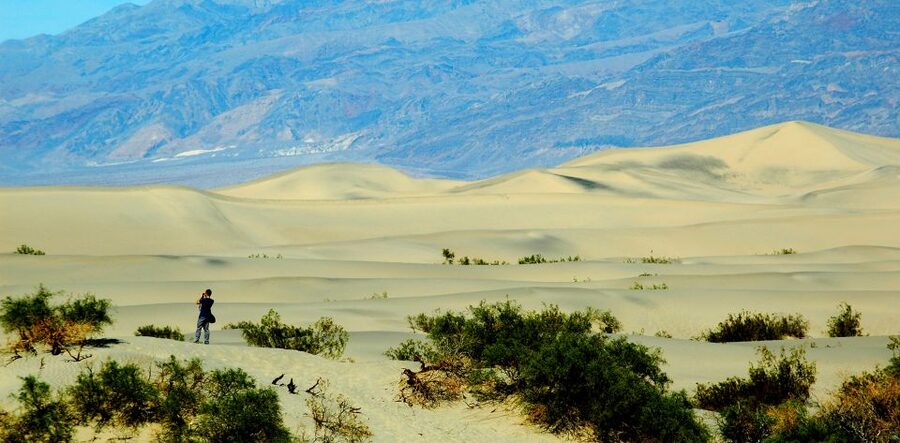
If you only have one day, you need a plan that hits the park’s most dramatic “wow” zones fast—and this tour is built for that. You start at the edge of Death Valley for your first look and photo stop, then work your way through some of the park’s best-known color, salt, and viewpoint areas. The route comes in from the east, which matters: it changes how the valley opens up in your photos as you gain elevation and then drop toward the salt basins.
This is also one of those trips where the desert stops being scenery and becomes the subject. You’re looking at landforms that took millions of years to shape, plus plants and animals that evolved to survive in a place that feels almost impossible. Even if you’re not a geology person, the way each stop contrasts with the next makes it easy to keep paying attention.
Duration matters here. At 630 minutes, you’re committing to a full day. That can feel like a lot at the start, but by the time you’re standing at Badwater or looking down from Hell’s Gate, you’ll understand why they pack so many places into one itinerary.
Price and value: is $298 worth it?
$298 per person is not a bargain, especially if you compare it to shorter excursions. But you’re not just paying for transportation—you’re paying for a whole day’s worth of curated stops, an on-the-ground guide, and comfort details that reduce your stress.
Here’s how the value adds up:
- Meals and hydration are included: lunch, continental breakfast, snacks, and unlimited bottled water.
- Hotel pickup and drop-off are included: free pickup and drop at Las Vegas Strip and downtown hotels.
- You’re transported as part of the experience: the tour uses luxury SUVs or a VIP mini-coach, not a barebones ride.
Where the price can feel less justified is if your priorities are narrow. If you only want a single viewpoint and a couple of photos, you might do better with a shorter or cheaper option. But if you want the full mix—salt, viewpoints, dunes, and the Rhyolite ghost town—this is one of the more efficient ways to cover them in a single day.
The morning start: breakfast, then straight into the desert
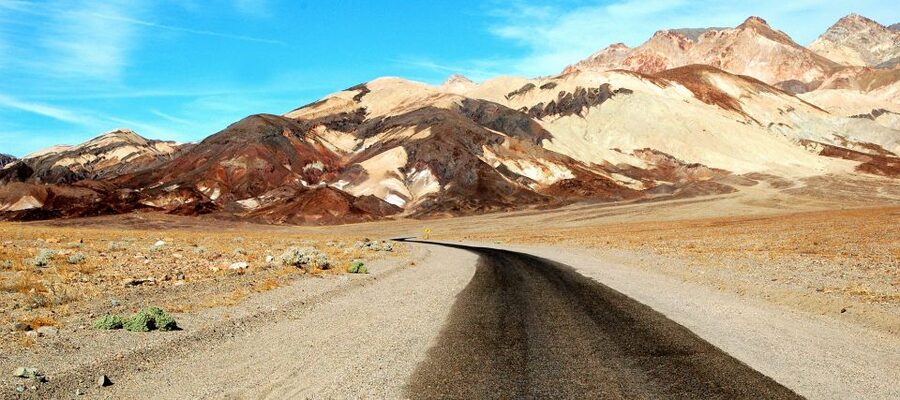
You begin with a continental breakfast and then roll out for that first entrance-the-park moment, where you can look around and reset your expectations. That opening stop is useful because Death Valley can trick you at first. From the road it looks endless and flat, but once you start moving and climbing, the terrain reveals itself in layers—colors, ridges, and distant sculpted peaks.
Then you head deeper into the park through a winding highway and the east side entrance. This matters for three reasons:
- It helps the valley unfold gradually (great for photos).
- It prevents the day from feeling like one long straight line.
- It gives your eyes a chance to adjust to the harsh light.
If you’re coming from Las Vegas, the temperature drop or change you feel is often less important than your body learning to handle the sun and dryness. You’ll want to lean on the included bottled water and plan for hat, sunscreen, and sunglasses if you don’t already do that automatically.
- Grand Canyon West, Hoover Dam Stop and Optional Lunch and Skywalk★ 5.0 · 19,535 reviews
- Grand Canyon West, Hoover Dam Stop, Breakfast, Lunch & Skywalk★ 5.0 · 12,194 reviews
- Half-Day Mojave Desert ATV Tour from Las Vegas★ 5.0 · 7,350 reviews
- Grand Canyon West Bus Tour with Hoover Dam and Optional Skywalk★ 4.0 · 7,224 reviews
- Ultimate VIP Hoover Dam Tour from Las Vegas with Lunch★ 5.0 · 6,782 reviews
- Lower Antelope Canyon and Horseshoe Bend Day Tour with Lunch★ 5.0 · 6,764 reviews
Rhyolite ghost town: gold-mining ruins with movie-set vibes
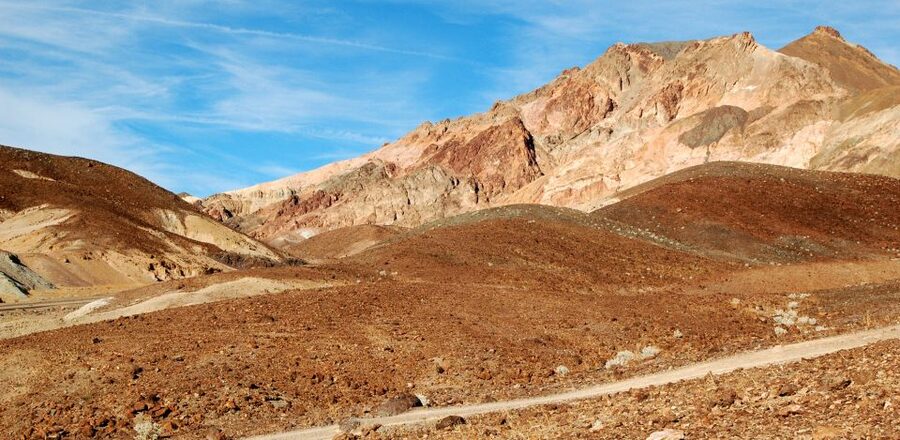
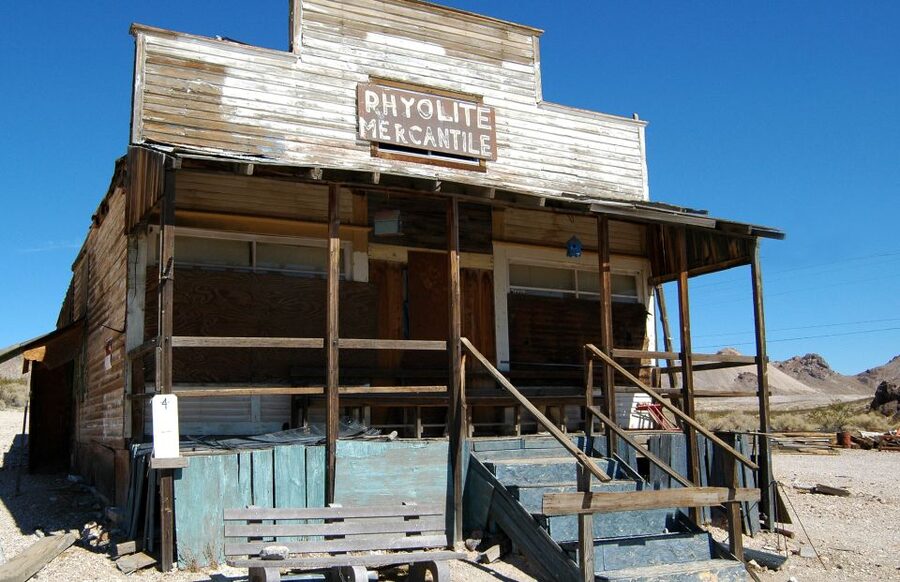
Rhyolite is one of the stops that turns the tour from landscape sightseeing into story. This is a long-abandoned gold mining community, and you’ll see it from the viewpoint and photo angles that capture the “how did people build here?” feeling.
It’s also a good break from pure desert textures. Instead of just salt and rock, you get human-made geometry—ruins and open spaces that make it easier to imagine the era when people were here chasing ore. The guide-led context helps a lot. Dennis’s style, for example, wasn’t just pointing at structures; it was tying the ghost town to the broader idea of how settlements grew and faded in harsh places.
My advice for this stop: treat it like a short walking/photo session, not just a quick look. Even with limited time, moving a few steps changes the light on the buildings and the background ridges.
Hell’s Gate: an above-the-valley photo viewpoint
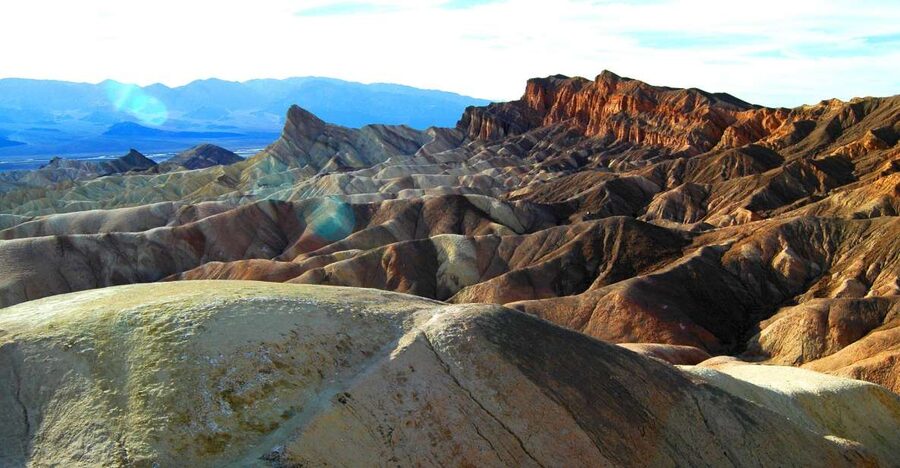
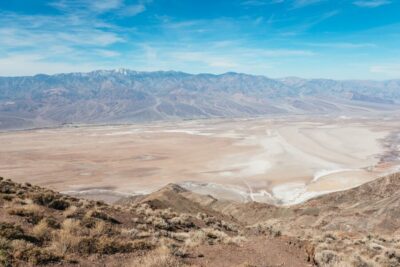
After the ghost town, the tour aims you toward viewpoints that show you the valley as a whole. Hell’s Gate is the standout in this category because it’s well above the valley floor. You’re not just looking at a flat basin; you’re seeing layers, depth, and long lines that make the desert feel massive in a way you can’t get from road level.
This is where the day earns its “must-see” reputation. Badwater is impressive, but it’s more of a singular destination. Hell’s Gate gives you scale, which is what most photos need.
Practical tip: if you’re particular about framing, give yourself an extra minute before you start clicking. At high viewpoints, the light can shift quickly as you move, and small changes in angle make a big difference.
Badwater: standing at 282 feet below sea level
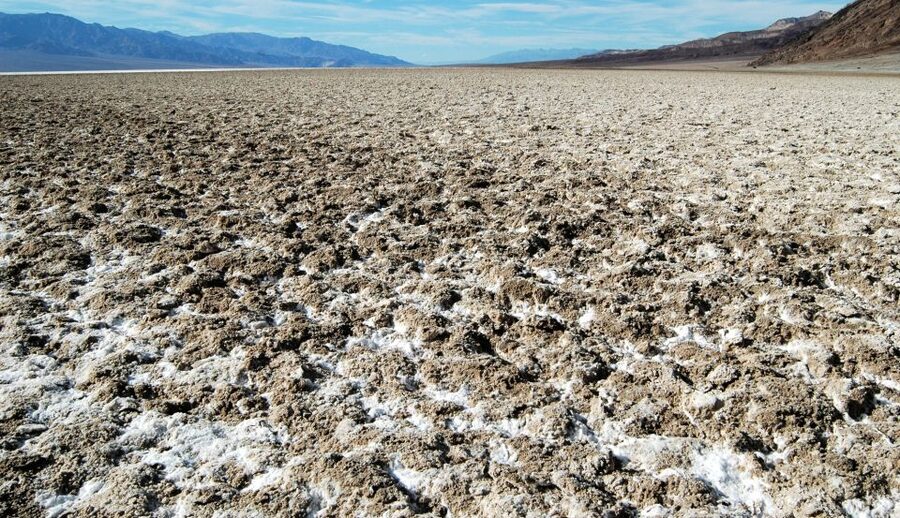
Then you hit Badwater, at 282 feet below sea level. It’s salty, stark, and memorable in a way that surprises people who expect it to look like a beach or a typical lake.
This is one of those stops where you’ll probably feel two things at once:
- awe at the “below sea level” fact
- disbelief that anything can look this dry and still be alive in tiny ways
The tour typically builds in photo time here, but keep in mind this is still part of a full schedule. If you get cold hands from grabbing your camera settings, or if your feet start to feel hot on the ground, don’t ignore it. In this climate, comfort delays can turn into missed shots fast.
What to do with this stop: take wide shots first (you’ll want the full salt basin), then switch to close details second—textures and the way the light breaks on the salt.
Zabriskie’s Point and Devil’s Golf Course: color and texture overload
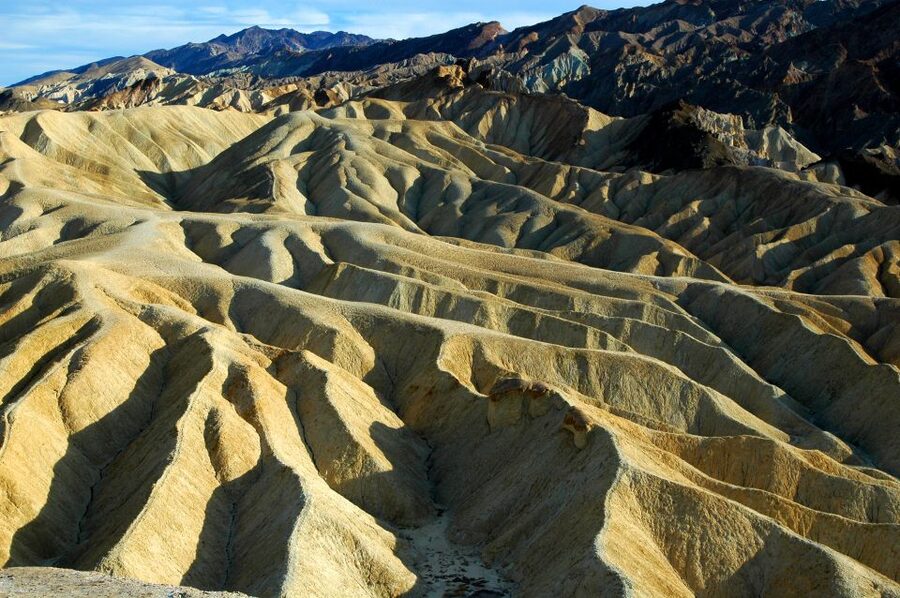
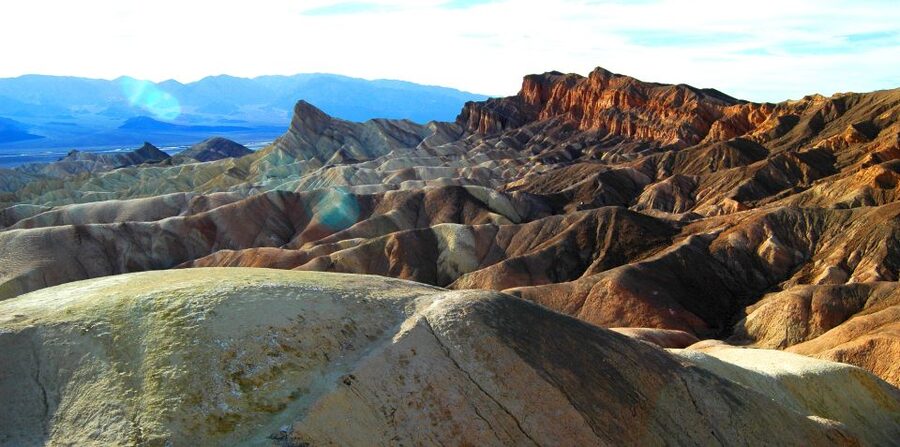
After Badwater’s stark statement, the tour continues with more variety. Zabriskie’s Point gives you broad views and dramatic angles that usually read well in both landscape and portrait framing. You’re looking for that high-contrast look: bright rock and shadow lines that make the terrain feel sculpted rather than random.
Then comes Devil’s Golf Course. The name tells you the mood, but what you’re really photographing is the texture—crack patterns and formations that look like nature took a pencil to the ground. It can be visually loud, in the best way.
My photo advice: bring a small plan before you arrive. If you wait until you’re there to decide what you want to shoot, you’ll end up with one “okay” set and rush the rest. For places like this, you’ll get the best results by doing a quick sweep: wide, mid, then detail.
Furnace Creek Museum: context without extra work
At Furnace Creek, you get a break from only doing photo stops. The stop at the Furnace Creek Museum is valuable because it gives you a way to connect what you’ve been seeing all day. Even if you only skim exhibits, you come away with a clearer sense of why the desert looks the way it does.
This kind of stop also matters emotionally. After a long stretch of bright sun and intense terrain, it’s helpful to reset for a bit. A museum stop is a “slow down” moment that can make the rest of the day feel easier.
The Salt Lake, Sand Dunes, and Artists Palette: finishing strong
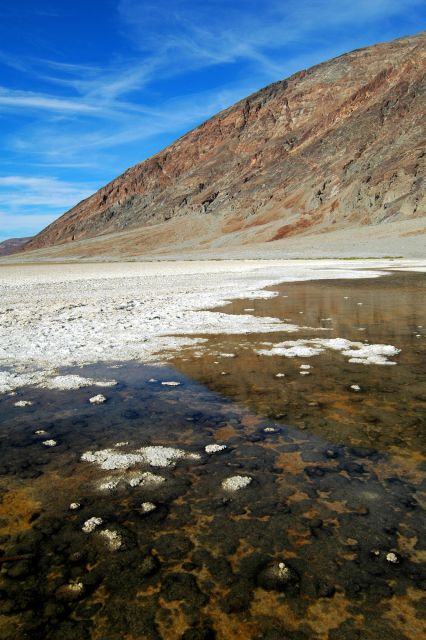
As the day progresses, the scenery shifts again—salt basins and then dunes, then the colorful look at Artists Palette. Salt Lake keeps the emphasis on white, shimmer, and the way the ground can reflect light so strongly it changes how everything looks in photos. If you’ve ever struggled with glare shots, you’ll understand why this section is worth time.
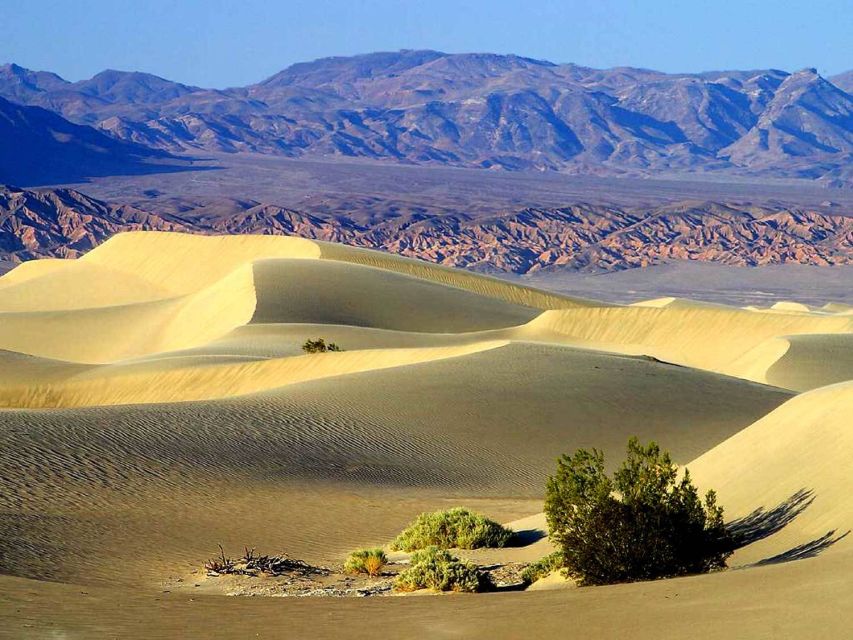
Then the Sand Dunes shift the mood. Dunes add curves and repeated textures. This is a good moment to use the sun angle to your advantage. Shadows stretch and soften the ridges, and the color can look different than the rock stops earlier in the day.
Finally, Artists Palette wraps things up with color. This is where rock layers and mineral tones make the desert feel almost painted. It’s a contrast to the salt flats and gives your photo set variety at the end.
One caution: late-day timing can be tricky if you’re traveling with a tight schedule. If you care about color, keep an eye on the light as the day winds down, not just when you arrive.
Getting picked up and transported: comfort helps on a long day
You get free hotel pickup and drop-off at Las Vegas Strip and downtown hotels. That alone saves you from the hassle of timing taxis or rideshares, and it keeps you focused on the park.
On the road, you’ll travel in luxury SUVs or a 12–14 passenger VIP mini-coach. Either way, it’s designed for comfort on an all-day loop. A roomy vehicle also matters because you’ll likely be handling camera gear, water, and snacks.
Group size is another factor. You may be in a private or small group option depending on availability and how they combine parties. That can affect how often the guide can accommodate extra photo requests.
Guide quality: why Dennis, Clayton, and Linda matter
The best part of any tour like this is the person who can explain what you’re looking at without turning it into a lecture. In the guide stories I heard, names like Dennis, Clayton, and Linda came up with a consistent theme: they were able to connect desert features to real-world desert logic.
That’s more than trivia. It changes how you walk around at stops. When you understand why salt forms where it does or how the valley’s structure shapes views, you feel less like you’re just checking boxes and more like you’re reading a map.
If you’re sensitive to clarity, it’s worth knowing this is an English-language guided experience. I recommend you plan to ask questions early in the day so you get comfortable with the guide’s pacing and communication style while you still have time to adjust.
Heat, timing, and the reality of a packed schedule
Death Valley is famous for extreme dryness and heat. Even with bottled water and snacks included, you’ll still want to think about your limits. This is a day where the sun can affect your energy level fast, especially if you’re also doing walking and photo stops.
The schedule is built to see many places. That’s great for coverage, but it can feel rushed if you’re the type who wants long, slow immersion at every stop. The upside is you’ll still hit the major points—Hell’s Gate, Badwater, Zabriskie’s Point, Devil’s Golf Course, Furnace Creek Museum, Salt Lake, Sand Dunes, and Artists Palette—so you won’t leave with only one great photo.
My practical strategy: prioritize two or three stops as “must linger” for your own pace. Everything else becomes “get the shots and enjoy it,” not “perfect every angle.” That keeps you from feeling behind all day.
What to bring (and what not to)
The tour is straightforward about essentials:
- Bring a passport or ID card.
- Don’t bring luggage or large bags.
Because you’re not bringing big luggage, you should be ready with a small day pack that covers essentials: water bottle if you like (they also provide unlimited bottled water), sunscreen, hat, sunglasses, and something to keep you warm if temperatures drop later.
You’ll also want to protect electronics. The air is dry and bright, and you’ll be moving between sun and shaded areas in the vehicle. A simple lens cloth and a small towel can save your photos from dusty moments.
Should you book this Death Valley day tour?
I’d book it if:
- you want a single-day “greatest hits” approach to Death Valley from Las Vegas
- you care about photo stops and want multiple major viewpoints instead of just one or two
- you like having meals handled—continental breakfast, lunch, snacks, and unlimited bottled water
I’d think twice if:
- you want lots of unhurried walking at every stop
- you’re uncomfortable with long driving days in harsh heat
- you dislike schedules where the group keeps moving to the next viewpoint
For most people with one day to spare, this hits a strong balance: enough stops to make the drive worth it, enough time at the big names to get good photos, and enough comfort details that you can focus on the scenery instead of logistics.
FAQ
What’s the duration of the Death Valley day tour?
The tour runs for 630 minutes.
What’s included with the ticket price?
You’ll get a continental breakfast, lunch, snacks, unlimited bottled water, and a live English-speaking tour guide.
Do you offer hotel pickup and drop-off in Las Vegas?
Yes. Free hotel pickup and drop-off are provided at all Las Vegas Strip and downtown hotels.
How often does this tour run?
It operates on Mondays and Wednesdays each week, and on any other day when combined parties of five or more are available.
What do I need to bring for the tour?
You’ll need a passport or an ID card.
Is there a luggage limit?
Luggage or large bags are not allowed.
Is there a cancellation window?
Yes. You can cancel up to 2 days in advance for a full refund.
If you tell me your travel month and whether you’re a photography-first traveler or more of a short-walk-and-enjoy-person, I can help you decide which stops to prioritize and how to pace yourself on the day.
More Tours in Las Vegas
- Half-Day Mojave Desert ATV Tour from Las Vegas
★ 5.0 · 7,350 reviews - Grand Canyon West Bus Tour with Hoover Dam and Optional Skywalk
★ 4.0 · 7,224 reviews - Ultimate VIP Hoover Dam Tour from Las Vegas with Lunch
★ 5.0 · 6,782 reviews - Lower Antelope Canyon and Horseshoe Bend Day Tour with Lunch
★ 5.0 · 6,764 reviews - Las Vegas Helicopter Night Strip Flight Tour with Optional Dinner
★ 4.5 · 5,693 reviews - Half-Day Emerald Cave Kayak Tour with Optional Hotel Pickup
★ 5.0 · 4,978 reviews
More Tour Reviews in Las Vegas
- Grand Canyon West, Hoover Dam Stop and Optional Lunch and Skywalk
★ 5.0 · 19,535 reviews - Grand Canyon West, Hoover Dam Stop, Breakfast, Lunch & Skywalk
★ 5.0 · 12,194 reviews - Half-Day Mojave Desert ATV Tour from Las Vegas
★ 5.0 · 7,350 reviews - Grand Canyon West Bus Tour with Hoover Dam and Optional Skywalk
★ 4.0 · 7,224 reviews - Ultimate VIP Hoover Dam Tour from Las Vegas with Lunch
★ 5.0 · 6,782 reviews - Lower Antelope Canyon and Horseshoe Bend Day Tour with Lunch
★ 5.0 · 6,764 reviews
Deeper into Death Valley
- Best of Death Valley Small Group Day Tour from Las Vegas
★ 5.0 · 644 reviews - Death Valley Sunset and Stargazing Tour from Las Vegas
★ 5.0 · 536 reviews - From Las Vegas: Death Valley Guided Day Tour
★ 4.9 · 392 reviews - From Las Vegas: Death Valley & Rhyolite Ghost Town Day Trip
★ 4.8 · 289 reviews - Small-Group Death Valley National Park Day Tour from Las Vegas
★ 5.0 · 217 reviews - From Las Vegas: Death Valley Sunset and Starry Night Tour
★ 4.9 · 207 reviews
Fresh off the Strip: new Las Vegas reviews




Death Valley Tours, compared.
 ★ 5.0Best of Death Valley Small Group Day Tour from Las VegasFrom $199644 reviews
 ★ 5.0Death Valley Sunset and Stargazing Tour from Las VegasFrom $249536 reviews
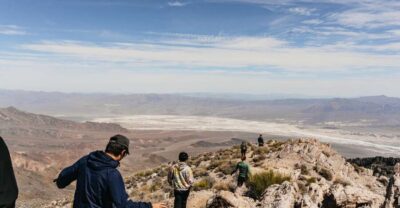 ★ 4.9From Las Vegas: Death Valley Guided Day TourFrom $199392 reviews
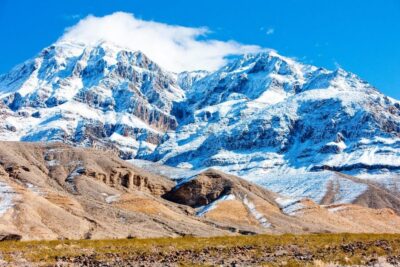 ★ 4.8From Las Vegas: Death Valley & Rhyolite Ghost Town Day TripFrom $170289 reviews
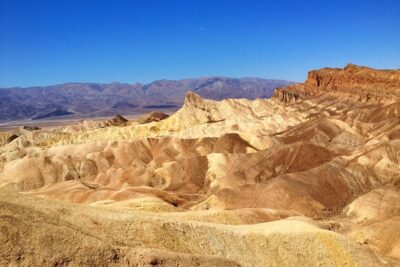 ★ 5.0Small-Group Death Valley National Park Day Tour from Las VegasFrom $279217 reviews
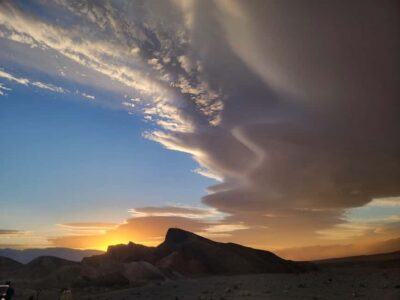 ★ 4.9From Las Vegas: Death Valley Sunset and Starry Night TourFrom $249207 reviews
 ★ 4.8Death Valley NP Full-Day Small Groups Tour from Las VegasFrom $279134 reviews
 ★ 5.0Death Valley Day & Night Tour – Scenic Stops, Sunset & StargazingFrom $299124 reviews
Browse the lists this tour appears in